
One of Japan’s few working women directors takes on gender. What could she possibly have to say?
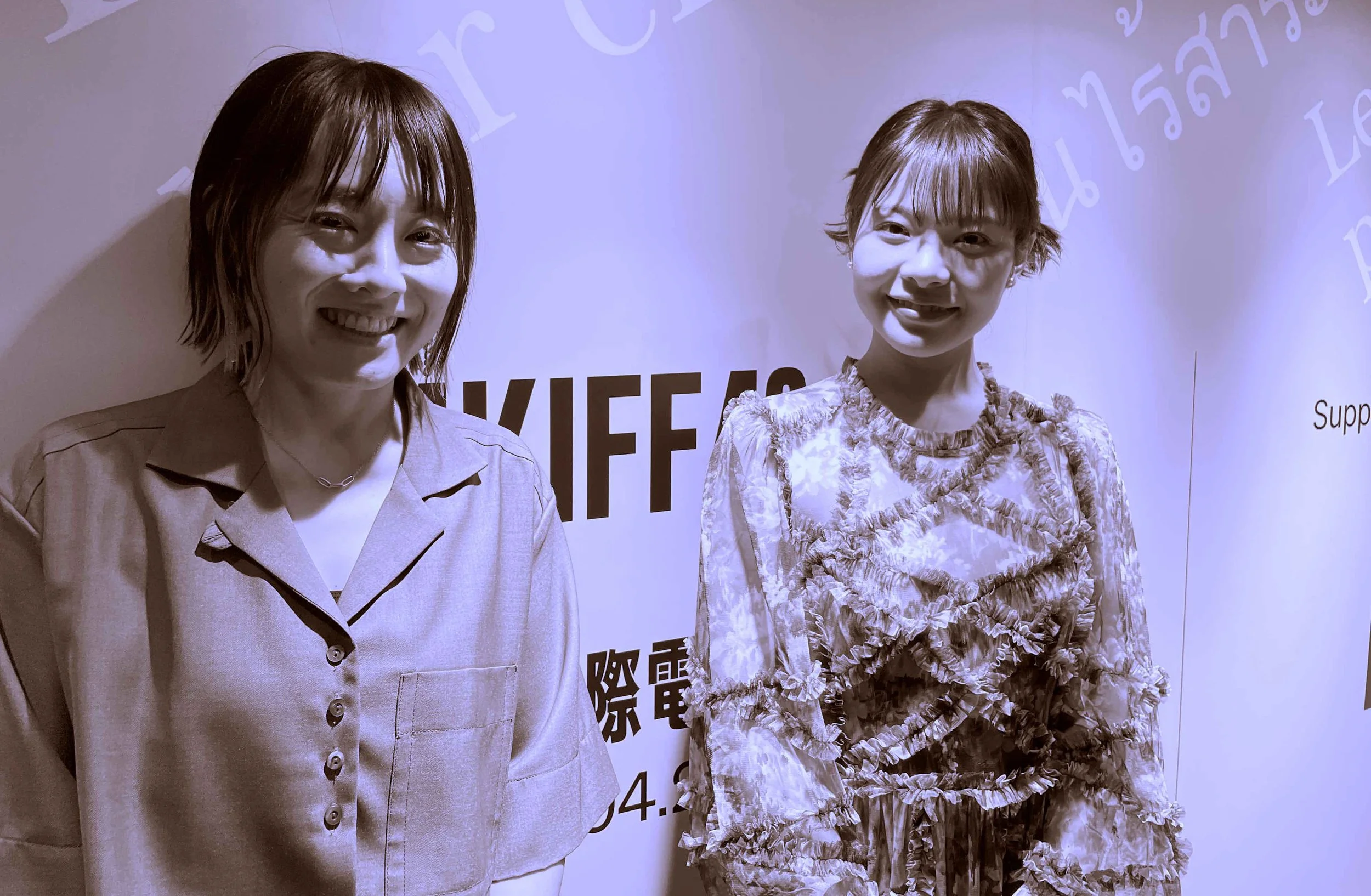
Chihiro Amano and Yukino Kishii
Chihiro Amano’s Sato and Sato | 佐藤さんと佐藤さん is most definitely about gender – gender roles, gender expectations and breaking the moulds of both. That said, it’s also about masculinity, a hot button topic these days. “Oh, definitely, especially men of different occupations, ages and backgrounds,” says Amano (2019’s Mrs. Noisy). It’s literally a couple of hours since Sato and Sato made its world premiere at HKIFF 49 and Amano and her lead actor Yukino Kishii are still dressed for the occasion. By all accounts the film, with its accessible visuals and equally accessible storytelling, was well received. Sato and Sato is very much a standard marriage drama, just with gender swapped traditional characters. The story about Sachi Sato (Kishii) taking up full time work as a lawyer after her law student husband Tamotsu Sato (Hio Miyazawa) fails the bar exam pivots on Sachi’s attempts to juggle various moving emotional parts. Among those are Tamotsu’s feelings of failure, inadequacy, fear and guilt over, first, not being the family breadwinner and, second, doing women’s work: Tamotsu becomes a full-time stay at home dad. Over the span of 15-odd years, the Satos cross paths, directly or indirectly, with men across the spectrum: An old-school codger who doesn’t want a woman divorce lawyer and demands his wife face him away from court; Tamotsu’s brother, a very manly farmer; an openly affectionate long-distance husband; and an abuser whose waitress partner is actively hiding from him. “There’s no one answer about what a man is. It’s why I put all those different men in the story. It’s what I see every day in Japan. Tamotsu is different from other men, and I wanted to show that men like that exist.”
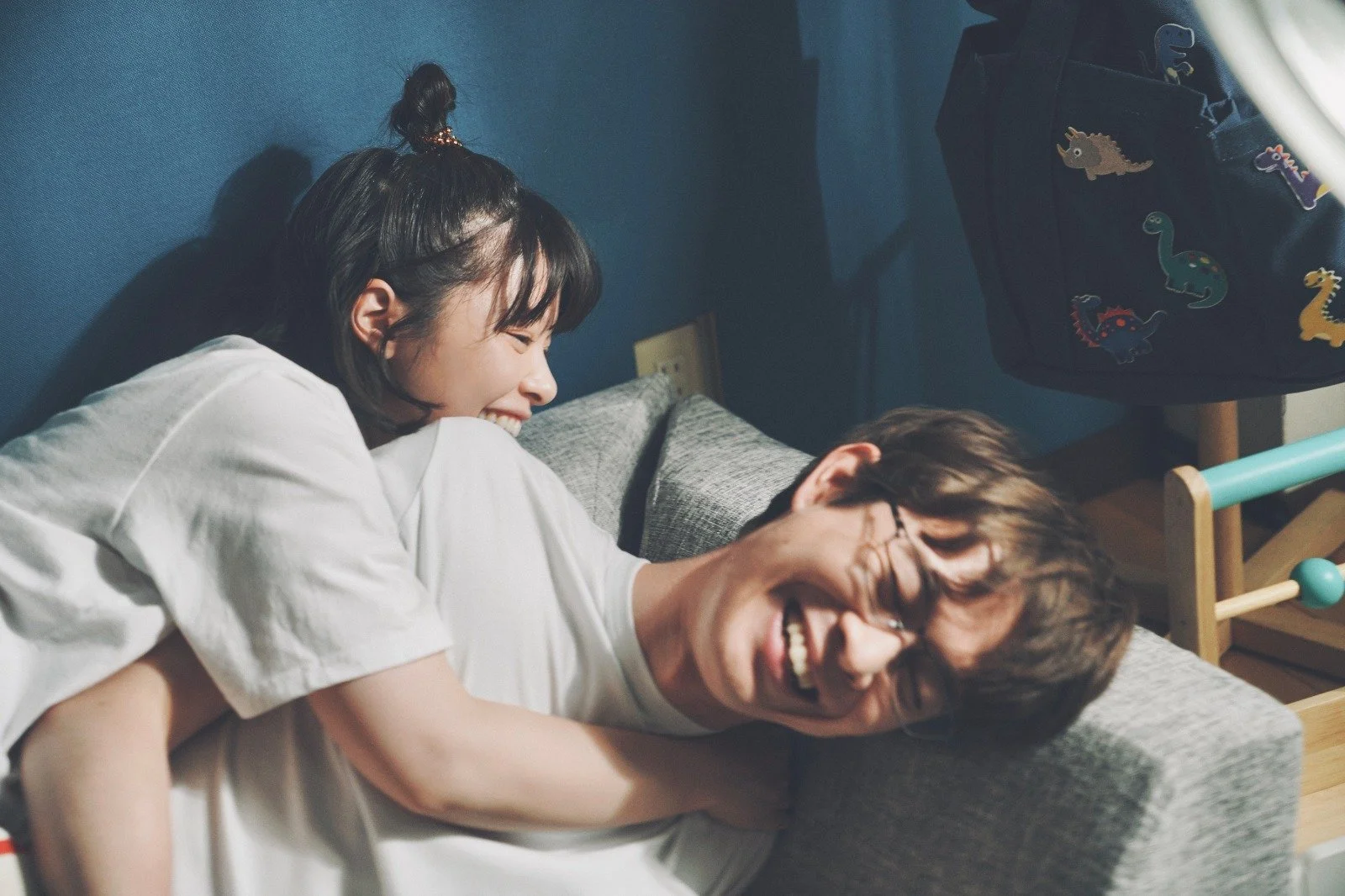

Back in 1983, dad staying at home with the kids was comedy fodder for films like the Michael Keaton-starring Mr Mom, but as the world increasingly grapples with defining masculinity – what “being a man” is, or being a woman, both or neither – and what insecurity surrounding it can mean, there’s far more drama around the subject. Barry Jenkins’s Moonlight and Jane Campion’s The Power of the Dog come to mind as recent examples. On top of that Amano, who wrote the script too, was feeling short-changed after she had a baby and – surprise, surprise – was the parent that stayed at home. It was time for Japanese men to enter the conversation.
“A lot of the film was inspired by my own marriage, because I was more like Tamotsu. I had to stay at home and take care of my child while my husband was out there making money and doing whatever job he liked,” recalls Amano. “I felt that was a little unfair. When I finally went back to making movies I cycled through a lot of different emotions. And then I thought maybe it would be interesting to switch male and female from my experience.” The script rolls her experiences and those of friends into an amalgam embodied by Kishii’s Sachi. As many side-eyes as Tamotsu gets, Sachi is subjected to the same scepticism, and makes just as many sacrifices. When Tamotsu whines to her about constant work events and that yeah, raising a child is work too, he’s every woman, everywhere, who ever argued that to a partner or was made the bad guy for going back to work. It’s right there in the title. Sato and Sato is a cute little joke when Sachi and Tamotsu are dating, but it morphs into a symbol of their fundamental equality – and ironic symbol of inequality.
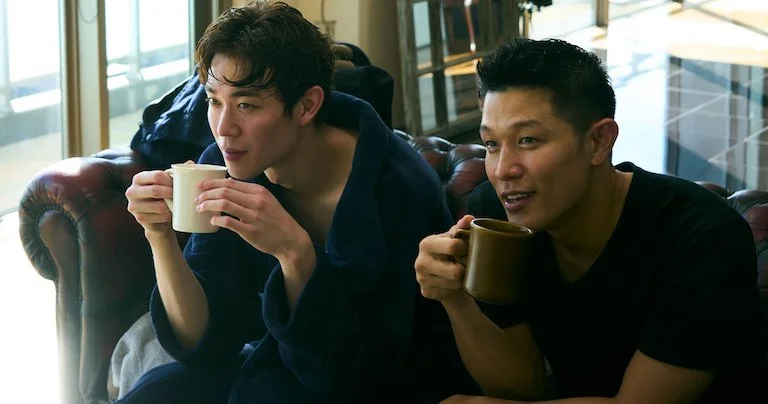
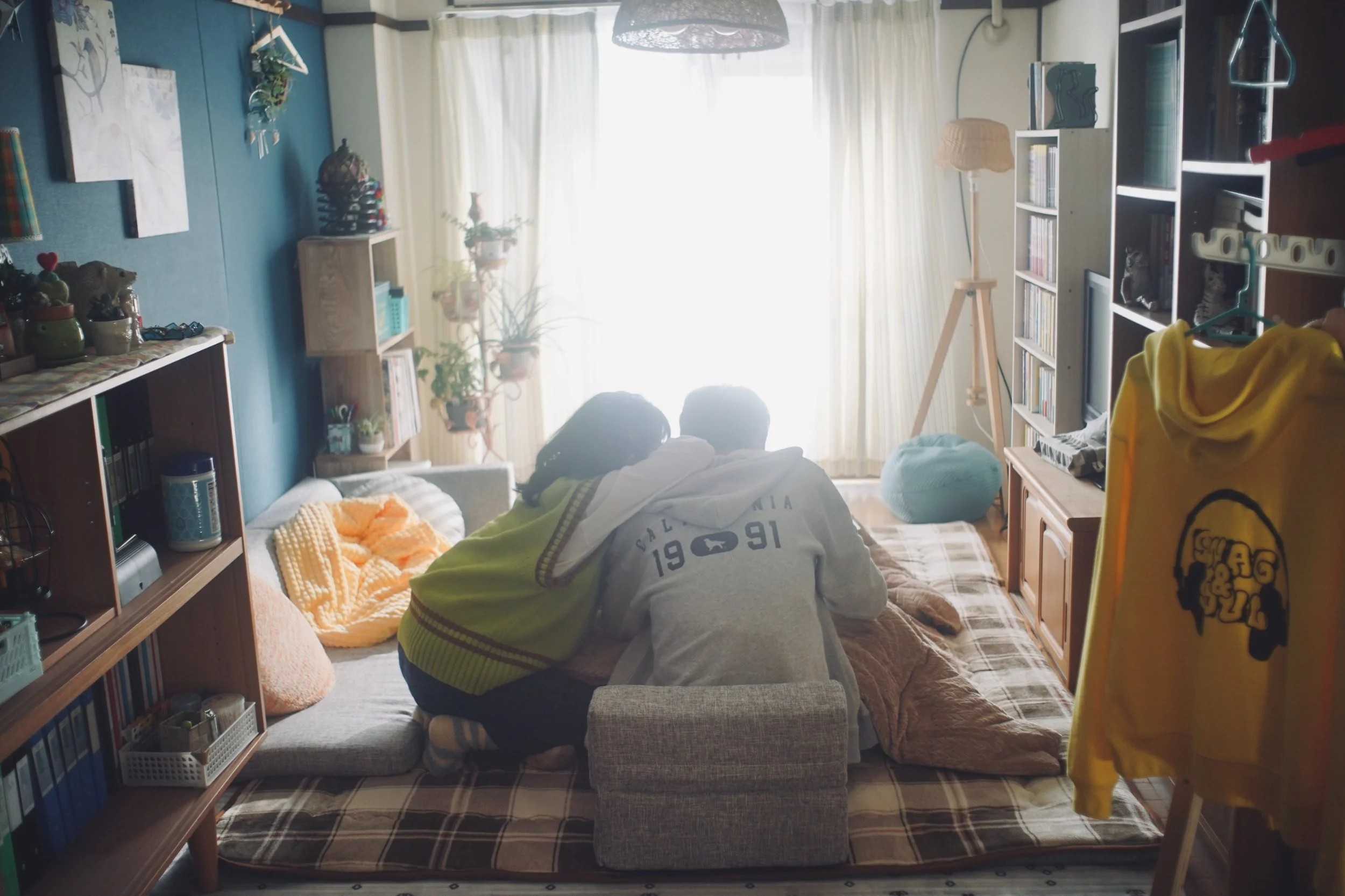
Sato and Sato isn’t inflammatory or controversial (at least not to most of us) but it does challenge a norm at a time when the world seems to be regressing socially. To tell the story Amano needed actors that were willing to go there, and she got her first choice for both Satos in Kishii and Miyazawa. Miyazawa is a fast-emerging fixture on the Japanese indie scene, starring as the hustler-trainer in Egoist (above, left) and in 52-Hertz Whales as the dickhead boyfriend, and Amano chose him for the qualities he’d demonstrated that would allow him to be “embarrassed, and ‘weak’ and not always in control.” As for Kishii, who really broke out after Sho Miyake’s Small, Slow But Steady (top, right) it wasn’t fearlessness that attracted the two to each other but a meeting of storytelling minds. Kishii cops to not really vibing personally with what she calls the “entertainment” flooding theatres, and wants to stick to “films that are cinematic. [Sho and Amano’s] are human stories and I want to be part of those.”
Strangely, perhaps luckily, Kishii had never put much thought into gender or gender issues prior to working on Sato and Sato, but admits, “Every so often I would think, ‘Oh yeah, that’s true.’” For some, the resolution the Satos land on will seem like a punishment for Sachi. For others it will look like reality. Not surprisingly there’s not a lot of Kishii in Sachi, and Kishii is certainly not as outwardly emotional as Sachi is when her life blows up and her marriage goes off the rails.
“In a way I admire Sachi for being able to express herself, and I learnt a lot from her,” says Kishii, which gets a guffaw from Amano. “I was like that before I got married, but since then I’ve been quicker to speak my mind,” she finishes. “And when you have a child you have even more reason to.”
Where we were
The Mira Hong Kong, TST • Hong Kong International Film Festival
Hong Kong • April 13, 2025