
Looking for something that doesn’t involve dudes in pantyhose but has the same nutty fantasy to it and oodles of CGI?
Ramayana: Rise of a Legend
Director: Nitesh Tiwari • Writers: Nitesh Tiwari, Shridhar Raghavan, based on Valmiki’s Ramayana
Starring: Ranbir Kapoor, Sai Pallavi, Yash, Ravi Dubey, Arun Govil
India • 3hrs 28mins (including intermission)
Opens Hong Kong November 12 • IIB
Grade: B
It’s no mystery that film industries move in cycles, and I’m not talking about financial swings or genre trends (everyone has to have a universe now). I’m talking about the fluid hipness of a given country’s culture at any given time. Back in the 1980s when non-Japanese nerds discovered Akira Japan became the poster-child for “gross national cool.” Of course, South Korea said, “Hold my beer” and sunk a ton of money into their culture industries starting in the late 1990s, which we’re still consuming to this day. Taiwan and Hong Kong had their time in the spotlight. Guillermo del Toro, Alfonso Cuarón and Alejandro González Iñárritu made Mexico all the rage for a stretch. Ever since SS Rajamouli had a global “Holy shit, did you see this?” moment with RRR in 2022 all eyes have been on India. Indians will be all, “Yeah, and?” but to many outside the sub-continent, for whom Indian cinema is Devdas, Slumdog Millionaire (uh, no) and the art house scene, high spec mainstream shit like Aditya Dhar’s Dhurandhar, Nikhil Nagesh Bhat’s Kill, and box office hit Chaava (by Laxman Utekar) is new. The wheel has turned to India and the latest bananas spectacle striking while the iron is hot is Ramayana: Rise of a Legend | रामायणम्.
Based on the 500,000-word 700BCE Sanskirt epic poem Ramayana, essentially the Indian Iliad, or Le Morte d’Arthur (kinda), or Beowulf, or Gilgamesh, or Journey to the West (yes, yes, that’s a novel… but you get the idea) Ramayana is as ambitious as it is glittery gold, and fully leans into its fantastical roots (yo, we got flying, winged elephants and giant ogres) and foundational moral philosophies. And Nitesh Tiwari could be the perfect director for the job, given his work on 2016’s Dangal, the highest grossing Indian film ever. Of course, he had help from scads of production designers and art directors, led by Ramesh Andhale, two directors of photography (Mahesh Limaye and Pankaj Kumar), two titanic composers in Hans Zimmer and AR Rahman, and an army of costume designers to help realise what could be an unfilmmable text. It is the most expensive Indian film ever produced (gulp, US$400 million for two) and spent two years in post. It shows.
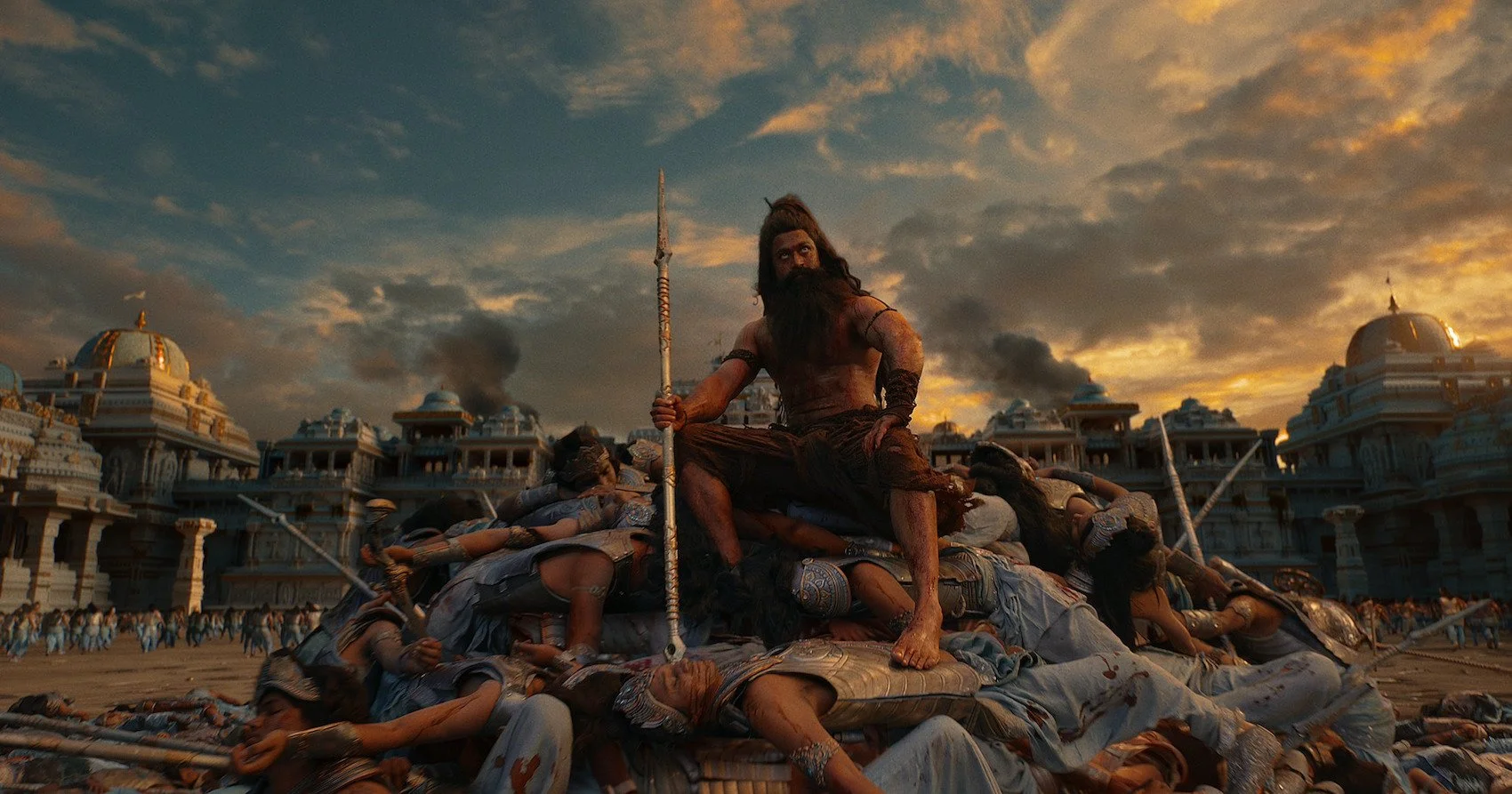
And he isn’t the star because…?
Ramayana Part 1 tracks the life of Prince Rama (most of the time Ranbir Kapoor, Brahmastra: Part One – Shiva), from a privileged childhood as the favourite of four sons and chosen heir to Ayodhya King Dasharatha (Arun Govil), through to his 14-year exile with his wife Sita (Sai Pallavi, Kali) and brother Lakshmana (TV star Ravi Dubey in his first film). Rama is also an avatar of Vishnu, so that eventually gets the attention of Ravana (Kannada “Rocking Star” Yash, KGF), the war mongering king of Lanka and an Asura clan former slave. Years before, the Vishnu-sanctioned Devas defeated the Asuras in a great war, and as a young man, Ravana (at the time called Dashanan) took his mother’s advice and went on a long meditation to plot revenge. He’s sanctioned by Brahma, who dug the cut of his jib and granted Ravana’s request to be invincible to godly – not human – hand (that’s going to be important in Part 2). Meanwhile, Rama’s scheming step-mother Kaikeyi (Lara Dutta) gets Rama, Sita and Lakshmana banished to the forest where they confront all manner of demon, tree people, rakshasas (here kind of like Orcs) and, worst of all, Ravana’s sister Surpanakha (Rakul Preet Singh), who’s looking for a husband and chooses Rama. Uh oh. There’s way more going on of course, because the source material is about three times as long as the Iliad and Odyssey combined. Try this, Nolan.
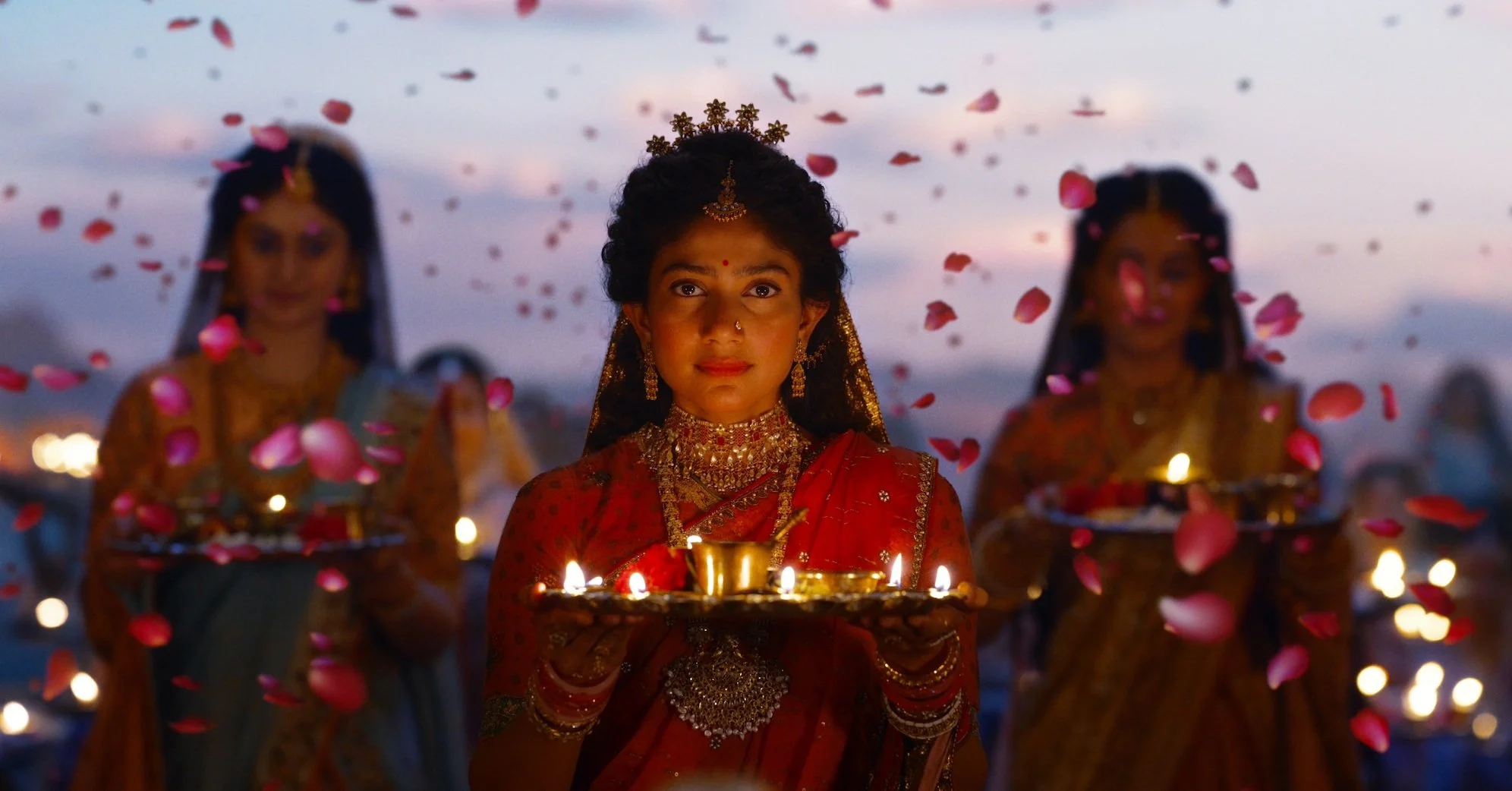
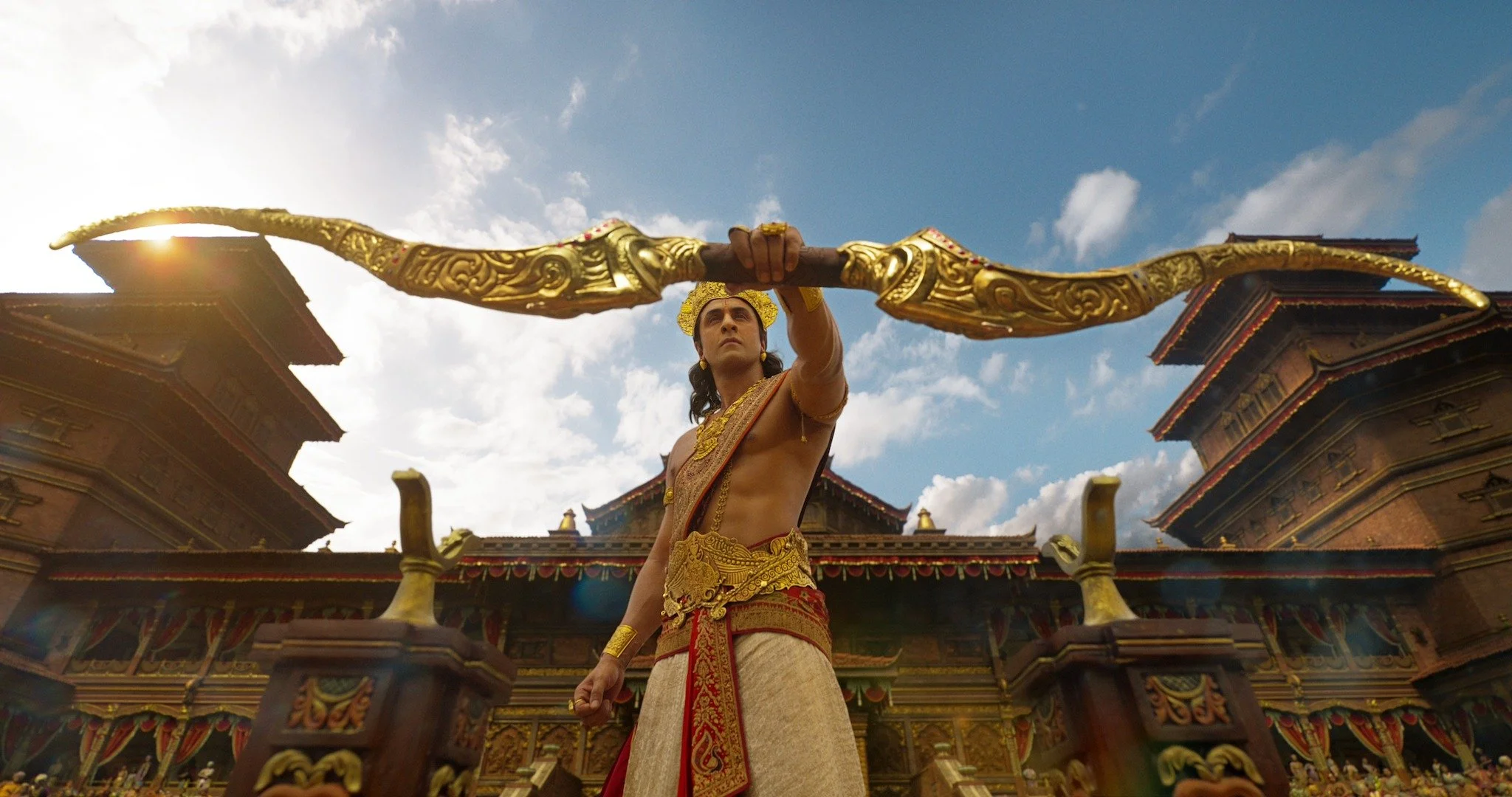
Ramayana is a strong first part to a long, complex, hard to distil foundational work that’s as culturally defining as the Bible and been adapted for the screen a billion times, but Tiwari is clearly confident modern tech can help bring something new to the table, and do justice to the vivid prose. It should come as no surprise to find it looks tremendous and has the expected volume of ridiculous, OTT Bollywood set pieces as only Bollywood can do them; it’s thin on song and dance numbers however, though not on music, but take that how you will. If “Naatu Naatu” was a high point of your year in ’22 you’ll be disappointed. But Ramayana clips along at a solid, ornate pace, rarely feeling padded out and is blessed with its share of striking images and sequences. Readers are likely to point out a pile of missing details (like how Rama came to be Vishnu’s avatar) and characters, but for the most part Tiwari and co-writer Shridhar Raghavan (Chandni Chowk to China, the Indian version of The Night Manager) strip the poem down its most critical parts and spin an accessible yet not entirely gutted epic.
Sad to say, though, that Tiwari’s hard visual work is let down by a deadly dull, one-note leading man. Kapoor (this guy is really a Kapoor?) has had his successes, and he’s immensely popular at home, but his Rama is not a prince anyone would follow into the wilderness or into battle. Kapoor manifests Rama’s feelings of sorrow, love-sickness, rage, contemplation, betrayal and all stops in between in the same mildly bemused, maybe a little sleepy expression: This is not the king that will establish a nation’s character. Fortunately, Yash (also a producer) is on hand and he totally rocks (if the shoe fits…) as Ravana. Maybe it’s because his unflinching gaze signals bloody conquest almost 100% of the time, but even so Yash gives his angry avenger such an attitude it’s hard not to root for him despite knowing he’s 1) the villain and 2) going to get his ass handed to him in the next chapters. Is it the greatest Indian spectacle of the last decade? No. But it’s a good place to start if you’ve ever wondered what all the fuss was about – for Bollywood and the Ramayana. And am I going to be there at Diwali, 2028 for Part 2? Hell, yes I am.