
World Apart
Director Tetsuya Nakashima has come a long way from ‘kamikaze Girls’ and ‘Memories of Matsuko’. Not that he wouldn’t go back.

Tetsuya Nakashima
“I’m happy to hear that,” says writer-director Tetsuya Nakashima, lounging in a hotel room the morning after his latest film – his first in seven years – The Brightest Sun | 時には懺悔を (below left) had its world premiere at the Hong Kong International Film Festival. Nakashima is referring to being told the film is on the grim side, and feels a long, long way from the romp that made him a household name on the festival circuit and among niche film buffs, Kamikaze Girls, in 2004 (right) AKA Amelie on crack. The Technicolor romp starring Kyoko Fukada as Rokoko France-obsessed Momoko and Anna Tsuchiya as the juvie-bound biker Ichiko was as heightened and absurd as Sun is muted and realistic. It’s also, arguably, Nakashima’s most mature film so far. He wasn’t actively leaving candyland behind – Kamikaze was followed by the stylised musical Memories of Matsuko in 2006 – it was just a natural progression of life and art. “My life now is what interested me about the story. It has nothing to do with my family personally, but maybe it was influenced by everyone around me, relationships with friends, other people.”
Part murder mystery, part family drama, part character study, Sun follows Drive My Car’s Hidetoshi Nishijima as Mitsuo Satake, a drunken PI looking for the murderer of fellow detective Yonemoto. As the haze clears it becomes obvious the prime suspect is Yonemotos’s last client, Tomie (Haru Kuroki), who’s looking for a missing child afflicted with spina bifida. After that the skeletons start bursting out of all the closets, demanding Satake and his unwanted partner Satoko Nakano (Hikaru Mitsushima), wrestle with them. Most of the hand-wringing stems from the choices they – as well as Tomie, the missing child’s adoptive father (played by Kankuro Kudo) and the dead man – made as parents. The film drops layer upon layer upon layer into the relationships and motivations of the characters, links them all to each other, and makes the ballsy decision to jettison a key factor of the mystery format: A villain.
“Satake isn’t a bad guy,” Nakashima shrugs. “I think he’s sweet, maybe he’s a little bit lonely. But I don’t tell stories about just one person. I don’t love this character or hate that one. There are many families in this because one family will have a connection with other people. Here, a little boy and connects with different families, and it reveals and expanding web of past hurts. We all have an impact on each other.”
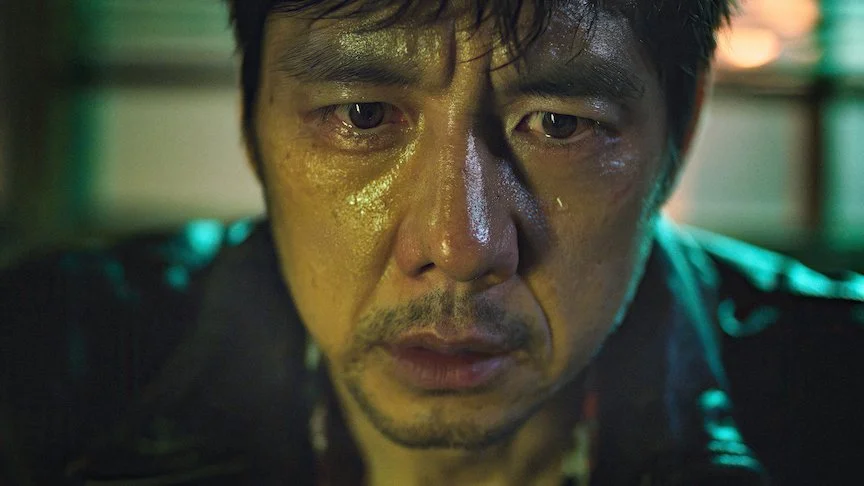
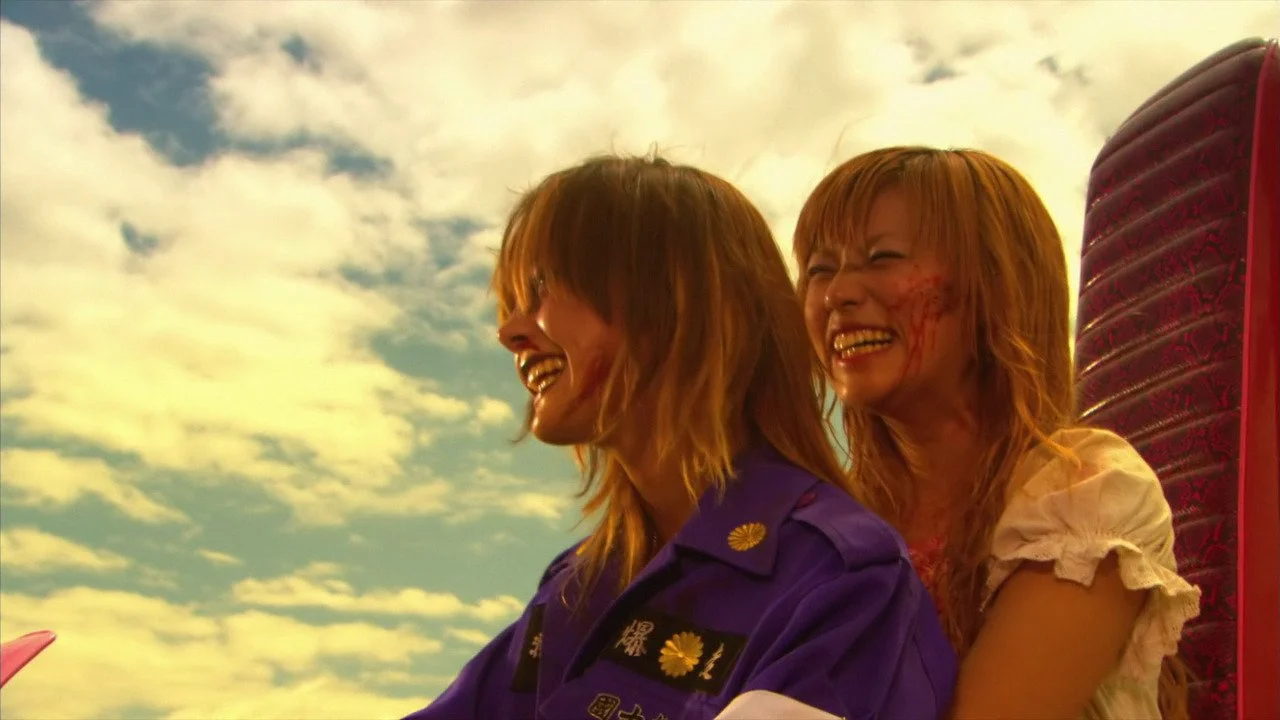
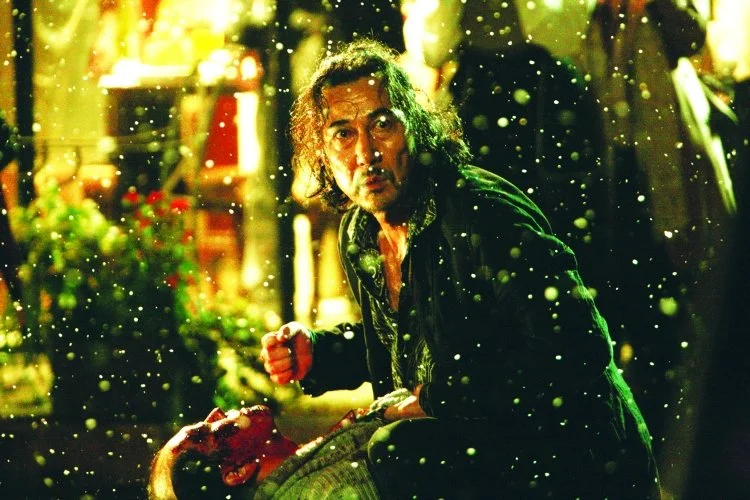
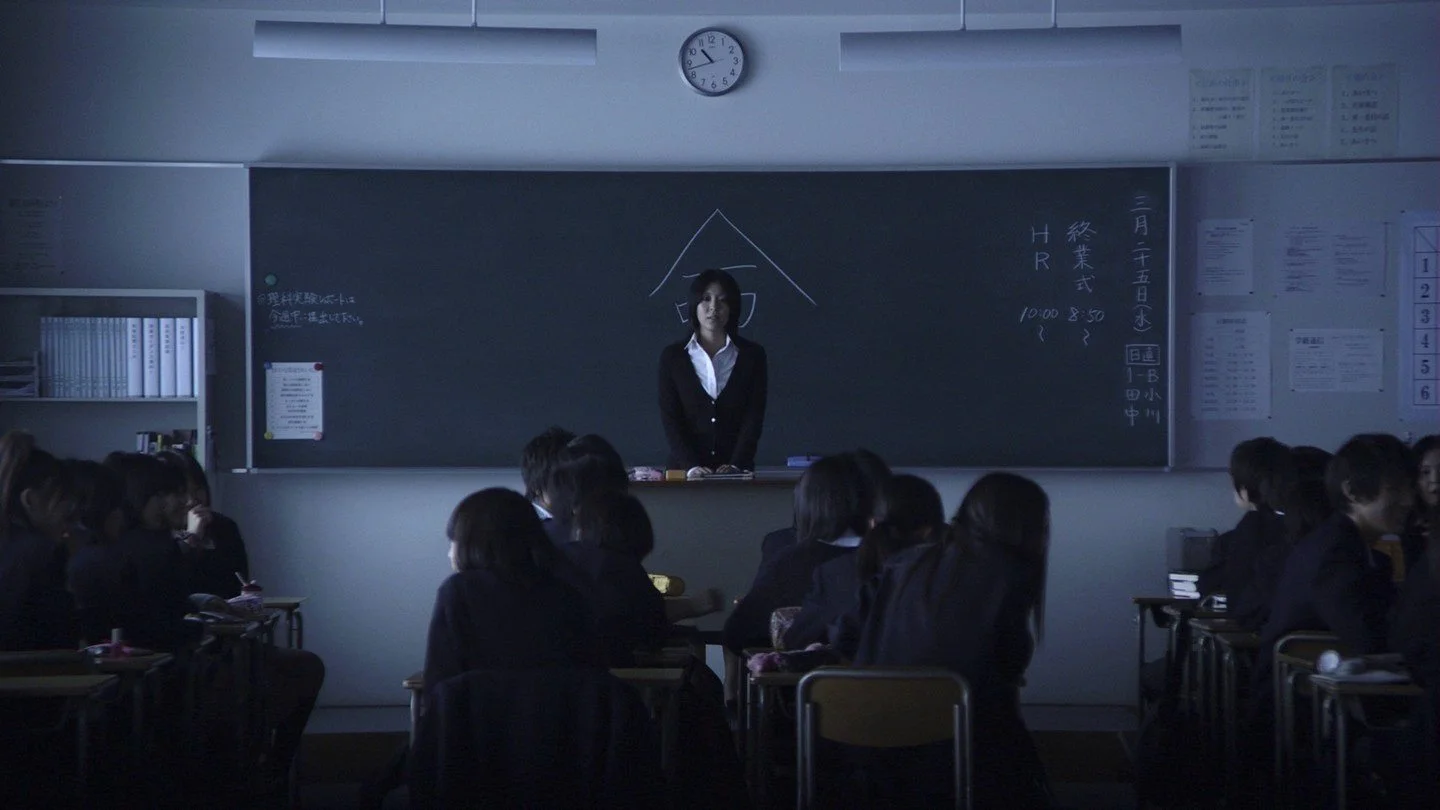
The Brightest Sun is mature, yes, but not mature in age or skill level. It’s mature in content and theme: it doesn’t get more adult than parenthood. Nakashima’s made films about parents beofre. Confessions (2010, below right), based on Kanae Minato’s bestselling novel, starred Takako Matsu as middle-school teacher Yuko looking for her young daughter’s killer, who she’s convinced is in the home room class she teaches and proceeds to torture psychologically. The World of Kanako (2014, left) starred industry stalwart Koji Yakusho as a scumbag ex-detective combing Tokyo’s skeevy underworld looking for his missing daughter. Kanako was a particulary nasty piece of work, in which the parent, Yakusho’s Fujishima, was even less heroic in the conventional sense of the word than Matsu’s Yuko was. For Sun, Nakashima pivots away a teensy tiny bit from irredeemability – many of the characters’ endings are ambiguous – while still rolling in issues of isolation, neglect, alcoholism, rage and the frustrations that come with raising a child and the frequent so-called failures parents face.
The Brightest Sun is also based on a book (by Uchiumi Bunzo), which Nakashima first read about 20 years ago and has been wanting to adapt for film ever since. The book focuses heavily on a special needs child, who the director says, “Parents don’t know what to do with when they’re born.” Disability is still a thorny subject in Japan and in this film, Nakashima is speaking to people who may be a little bit less inclined to engage with the issue at all, in Japan or elsewhere. “Twenty years ago maybe this was too much for Japanese cinema, but these days I think people are more open to accepting stories like this. Maybe they need a movie like this.”
Stepping away from filmmaking isn’t something Nakashima planned to do (the hiatus came after 2018’s forgettable It Comes), but as he points out, “My films are not entertainments. They’re heavy, and not a lot of people want to take the risk. I would love to make more films but I just haven’t had the opportunity. There are a lot of directors in Japan making films similar to mine, but they’re working with lower budgets. I usually need a lot of money.” He lucked out in managing to get Nishijima, his first choice, to agree to star.
“That wasn’t very hard,” he recalls with a rare chuckle. “He read the script and that was that. He didn’t need convincing. But as you say, without him there’s no movie.” Not only does Nishijima come with the star power – and critical cred – to generate interest from distributors and production houses, Nakashima is confident Satake could only be played by Nishijima. “It’s very important that [Satake] is not very emotional. He listens and reacts very little and Nishijima is very good at relaying this kind of loaded stoicism.” Satake is a classic case of a protagonist we may not agree with, or for that matter like, but we do have to understand him, and Nishijima nails it in balancing icy indifference, lingering sorrow and simmering rage. As for Nakashima, he’d love his next film to be sooner than seven years away, but that’s up to fate (Sun has no confirmed release date just yet, and in late April was pushed back to 2026 in part due to an ongoing nudity controversy on the Kanako set). He’s even open to another musical. “I do want to show the reality of society,” he finishes. “But maybe if I can find the right book or story and the right collaborators I can get away from reality for a bit.”
Where we were
The Mira Hong Kong, TST • Hong Kong International Film Festival
Hong Kong • April 11, 2025