
Godzilla still looks like a million bucks, and Ghidorah’s fine too. Now if we can just do something with these humans…
Godzilla Minus zero
Director: Takashi Yamazaki • Writer: Takashi Yamazaki
Starring: Ryunosuke Kamiki, Minami Hamabe, Min Tanaka, Hidetaka Yoshioka, Miou Tanaka, Sakura Ando, Jun Kunimura
Japan • 2hrs 15mins
Opens Hong Kong November 5 • IIA
Grade: B
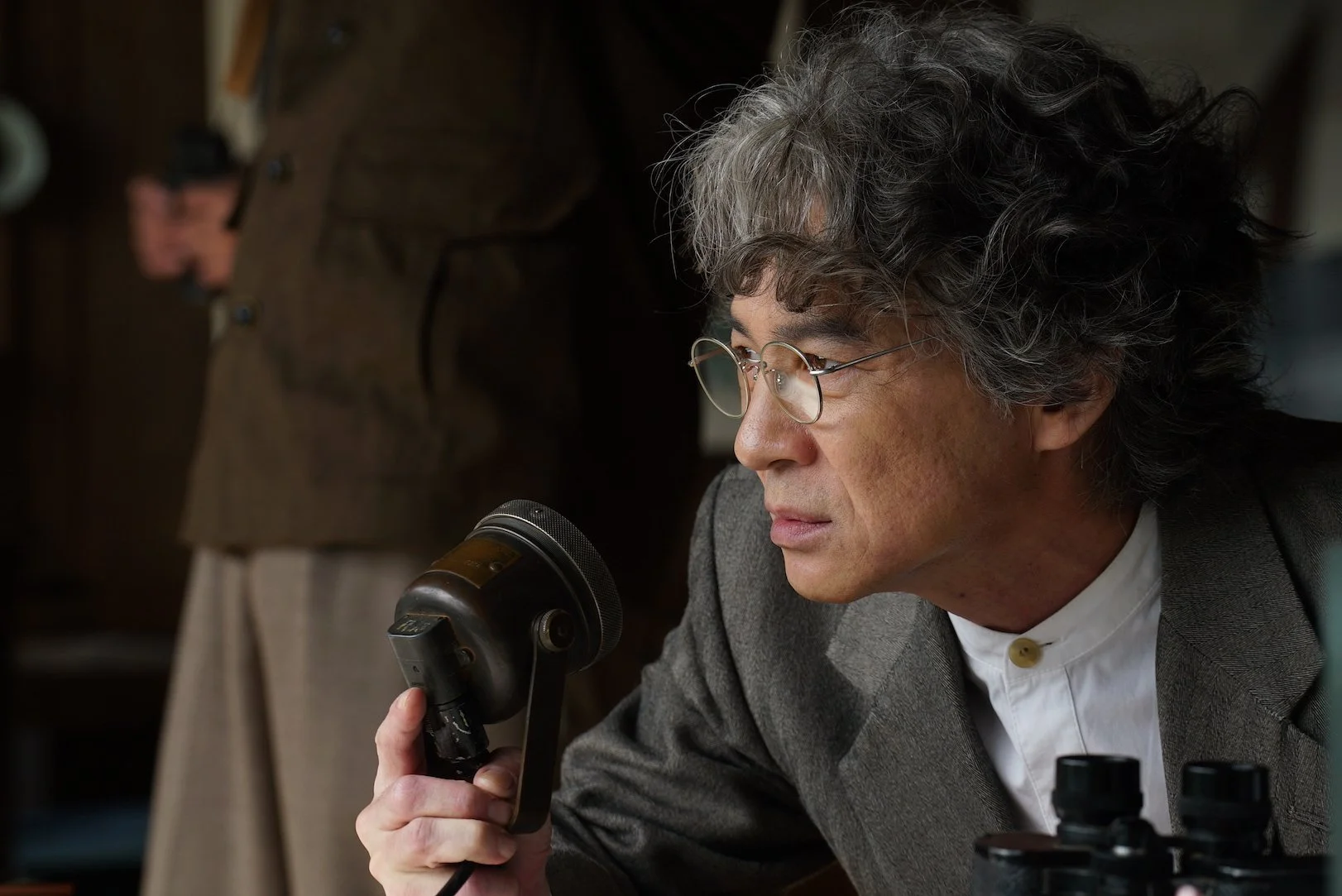
Three years after Godzilla rose from the sea and trounced Tokyo in 1946, and after he had his head blown off and sunk to the bottom of Sagami Bay, Kenji Noda (Hidetaka Yoshioka), the lusciously-tressed architect of Godzilla’s defeat, is in charge of the newly formed Disaster Response Bureau. Noda and his team respond to all kinds of disasters but monsters, kaiju, that’s really their game. So when some new flying creature appears in Matsumoto City, images of which are captured by Hiroshima survivor and biologist Dr Murakami (Min Tanaka), who barely escapes the carnage and heads right to Noda’s office. He’s named the monster Ghidorah, and along with Noda’s crew that includes genius meteorolgist Aoyama (Masami Nagasawa), they get to working on a way to kill it.
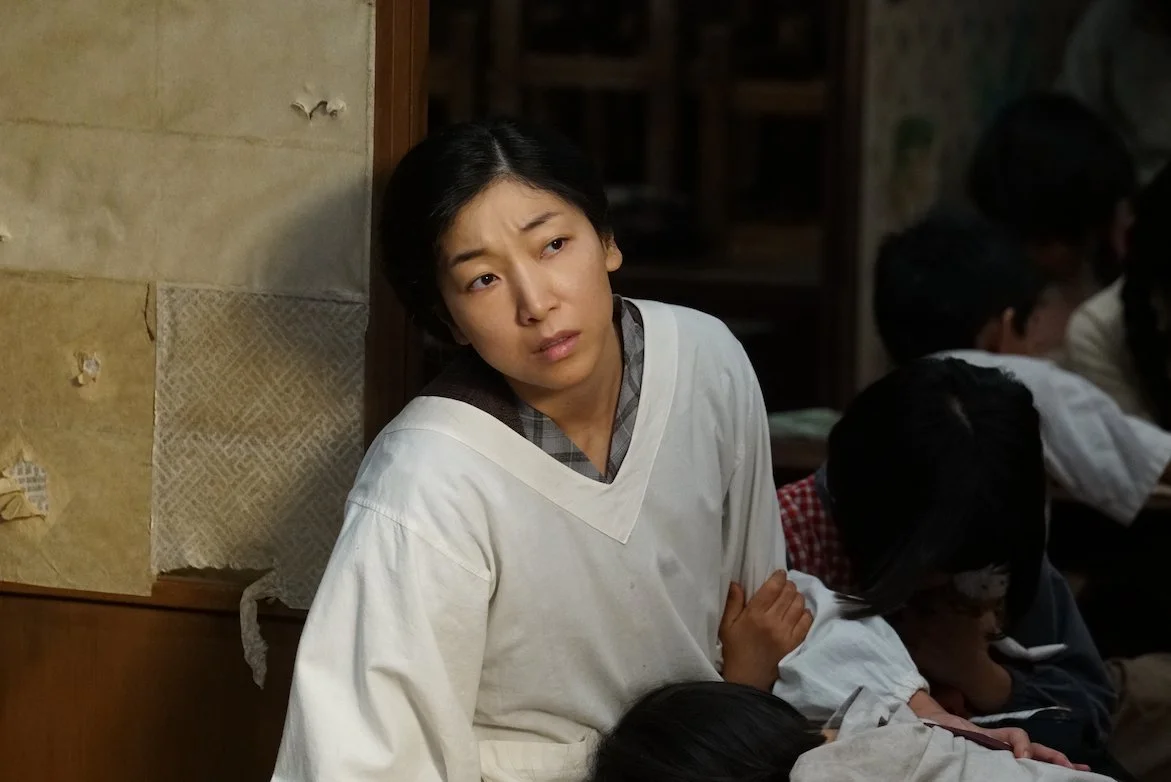
Meanwhile, retired Second World War kamikaze pilot and hero of the Godzilla defeat Koichi Shikishima (Ryunosuke Kamiki) and his wife and Ginza attack survivor Noriko (Minami Hamabe) are living the post-war dream but not believing it for a second, and raising their found/adopted daughter Akiko (Sae Nagatani, just dreadful) and letting Akiko rub her good fortune in the faces of the urchins next door (they have dirt on their faces, hence urchins), who live in Sumiko’s (Sakura Ando) war orphanage. Over a regular get-together one night, Noda tells Shikishima what’s going on, and before you know it he’s back in the cockpit – Noriko kinda sorta there with him – to fight off (now) King Ghidorah and a resurrected, super-charged Godzilla.
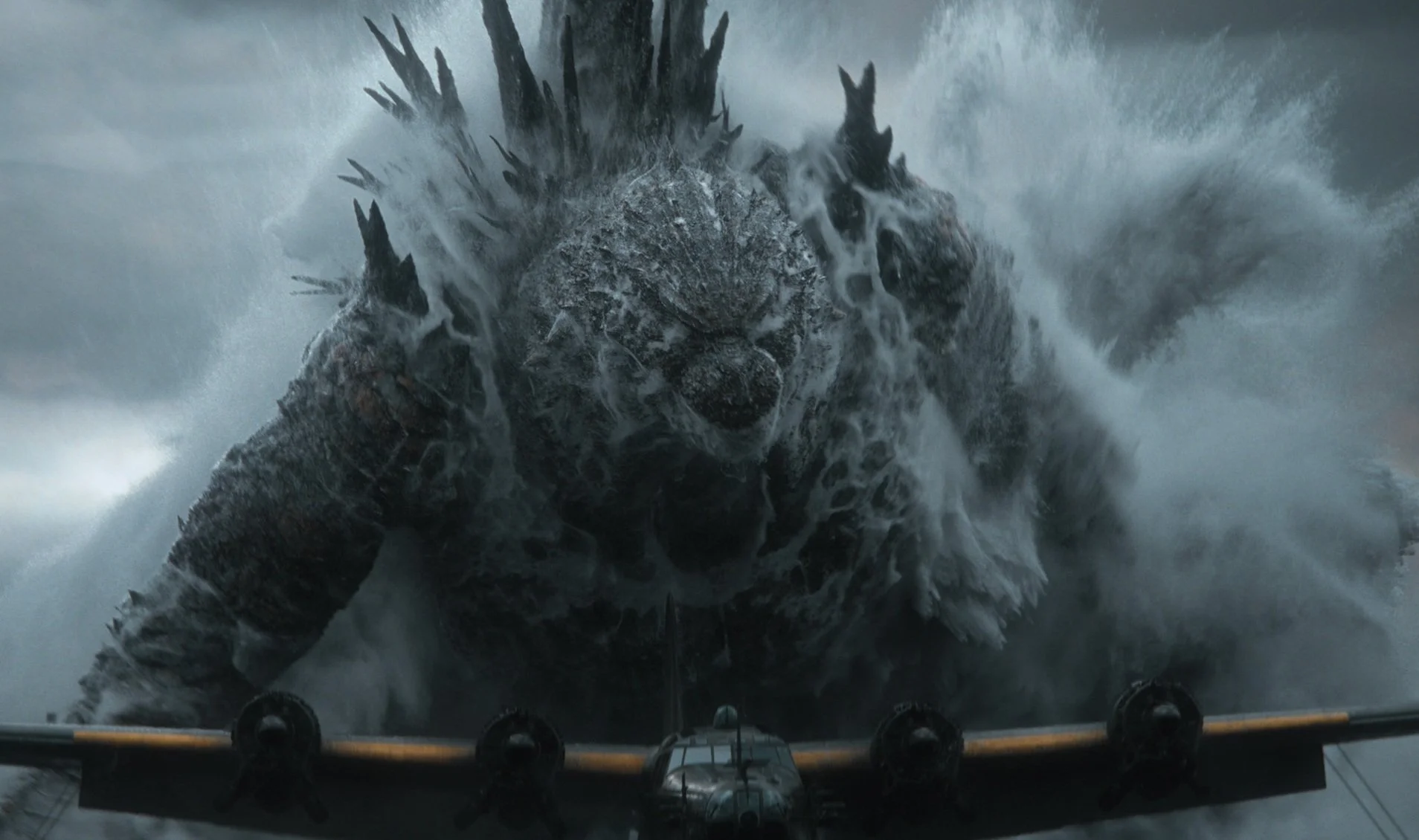
Still good to see him
Now, don’t get me wrong. I’m a Godzilla nerd so any Godzilla is good Godzilla. He’s the ultimate post-modern metaphor (mostly for anti-war themes) that can be moulded to fit whatever ails us. There’s plenty of fun in Gareth Edwards and Adam Wingard’s Godzilla films; I’ll be front of the line to see Godzilla x Kong: Supernova. But there’s just something a teeny tiny bit more satisfying about Toho Godzilla movies, from Ishiro Honda, to Takao Okawara and his odd baby Godzilla, to Ryuhei Kitamura and Hideaki Anno’s reboots. So when VFX wizard Takashi Yamazaki put a fresh, post-Iraq/Ukraine/Gaza and dare I say, post-COVID spin on the ol’ man in 2023’s Godzilla Minus One we were all here for it. Modern in theme (though Yamazaki has been accused of pro-military nationalism) and tech, it seemed Minus One was the G-man we’d been waiting for. No rubber suits. No models. Given its success (and an Oscar win) a sequel with a budget for Japan’s first IMAX production ever was a no-brainer.
And in Godzilla Minus Zero | ゴジラ-0.0 Yamazaki delivers. The film opens with a tremendous Ghidorah attack, with lots of splintering wood, frantic screams and high voltage energy beams being fired from mutant kaiju’s mouth. It’s fantastic. The subsequent set pieces are Shikishima’s raid on a dormant Ghidorah, a brief moment of Godzilla waking up, and of course their throwdown in Tokyo and there are stand-out moments in each. Ghidorah’s swinging head in crystalline IMAX is a whole thing. There are stakes in Yamazaki’s kaiju rampages, and his subtext is… text. There is no subtext. Doesn’t matter. It helps that Toho owns the copyright to the Godzilla theme (juiced by Naoki Sato) and his distinct roar. It’s turned up to 11 here, but it’s the one we know and love.
And the stellar Godzilla action is what makes Godzilla Minus Zero so frustrating. In between atomic breath blasts in Minus One, there was a complete story about fear and bravery, the scourge of war, survival, shame and redemption. It all slotted together perfectly and, as stated, completed its arcs. Godzilla as a franchise, perhaps more than any other, lends itself to sequels, sidequels and spin-offs that are barely connected, so there was no compelling reason for Yamazaki to return to these characters and this part of Tokyo to continue his Godzilla tale. Sure there’s no reason not to, but a flabby familiar narrative with no substantive story or ideas is unforgivable – or more a let down. If the idea was to comment on American imperialism and militarism – the USAF officers are hilarious, as are some gum-chomping grunts in the closing frames – it’s barely there. If the idea was just to set-up a third film (Godzilla Plus One?) pivoting on G’s regenerative qualities (hello!), you don’t need over two hours to do so. Is it about PTSD? The failure of the state to provide for its most vulnerable citizens? All of the above? Whatever the case, why was there so much talking about all this shit, and why does it take so long to get from one monster mash to the next?
Cinematographer Kozo Shibasaki (Yamazaki’s Space Battleship Yamato) clearly had a blast with the IMAX cameras and made the most of the giant format; Godzilla really fills a screen. But Ando’s badass presence was sorrily missed, as was Kuranosuke Sasaki’s fishing boat captain sass and Miou Tanaka’s navy captain Hotta; a glorified cameo by Jun Kunimura as a doctor with vital knowledge from the first Ginza attack is just edgelording us. Nagasawa, still recognisable from Crying Out Love in the Center of the World and Our Little Sister, is a welcome addition, though maybe she’ll be critical to part three (?), but Hamabe’s (Let Me Eat Your Pancreas) job seems to be to sit down a lot. Credit to Yamazaki for loftier ambitions this time around, but his G-force is already waning. This is still good Godzilla; it’s just a so-so Godzilla movie.