
Bleak. Beautiful
Animation buffs who actually want to see the hand of the artist will always have Joe Hsieh to look forward to.

Joe Hsieh Wen-ming
For lack of a better word and at the risk of sounding like an old lady in the UK countryside, Taipei-born animator Joe Hsieh Wen-ming is delightful. Knowing the legit dark content teeming through his shorts, The Garden of Delights (2004), 2006 ifva award winner Meat Days – “That was my first ever award, a special mention, and it really encouraged me,” – The Present (2012), Night Bus (2020) and last years’s Praying Mantis, all in the “Joe Hsieh Animation Collection” at Hong Kong International Film Festival this year, expecting him to be some kind of black-clad goblin is entirely understandable. But Hsieh is… delightful: quick to joke, thrilled that anyone watches his work, and meeting “Why are your films so weird?” comments with a shrug. “I’m really normal! I’m cheerful and I enjoy life,” Hsieh says with a laugh, copping to the fact his macabre stories and gleefully grotesque imagery sends a specific message. He’s a good hang.
If Hsieh’s oeuvre so far must be reduced to a soundbite, it slots somewhere alongside Ralph Bakshi’s 1970s lava-lamp freakout Fritz the Cat, his horny 1992 repsonse to Who Framed Roger Rabbit, Cool World, and VFX master and animator Phil Tippett, whose waking nightmare Mad God is the most recent example of truly bananas animation. On top of challenging content, another element that binds Hsieh to filmmakers like Bakshi and Tippett is his dedication to 2D and hand-drawn art. No shade to Pixar, CGI or 3D, but “It’s just not me. I appreciate what it can do but I don’t think it’s a match for me.”
True that. Hsieh’s disturbing films so far have pivoted on a half-insect prostitute that lures johns to her home to feed to her half-insect child; a grim and grisly fight for food in a futuristic wasteland where babies get the Snowpiercer treatment; a mystery-thriller featuring a vengeful monkey; vagina-forward deer-women; misguidedly love-struck pious attic-dwellers; and more autonomous eyeballs than you can count – as a start. The rough hewn, raw visuals complement Hsieh’s running themes the way Pixar polish would clang. “Everyone has their favourite genre, or style or subject. I’ve always loved cinema, but I’ve always been more into thrillers and horror. Romance doesn’t move me; I’m not touched by love stories,” he says. “I was drawn to Alien, and Rosemary’s Baby, and I’m not ashamed to say I love Child’s Play. Praying Mantis is my Rosemary’s Baby. I like the crazy – in movies and in life. I guess I like to find the beauty inside the grotesque.”
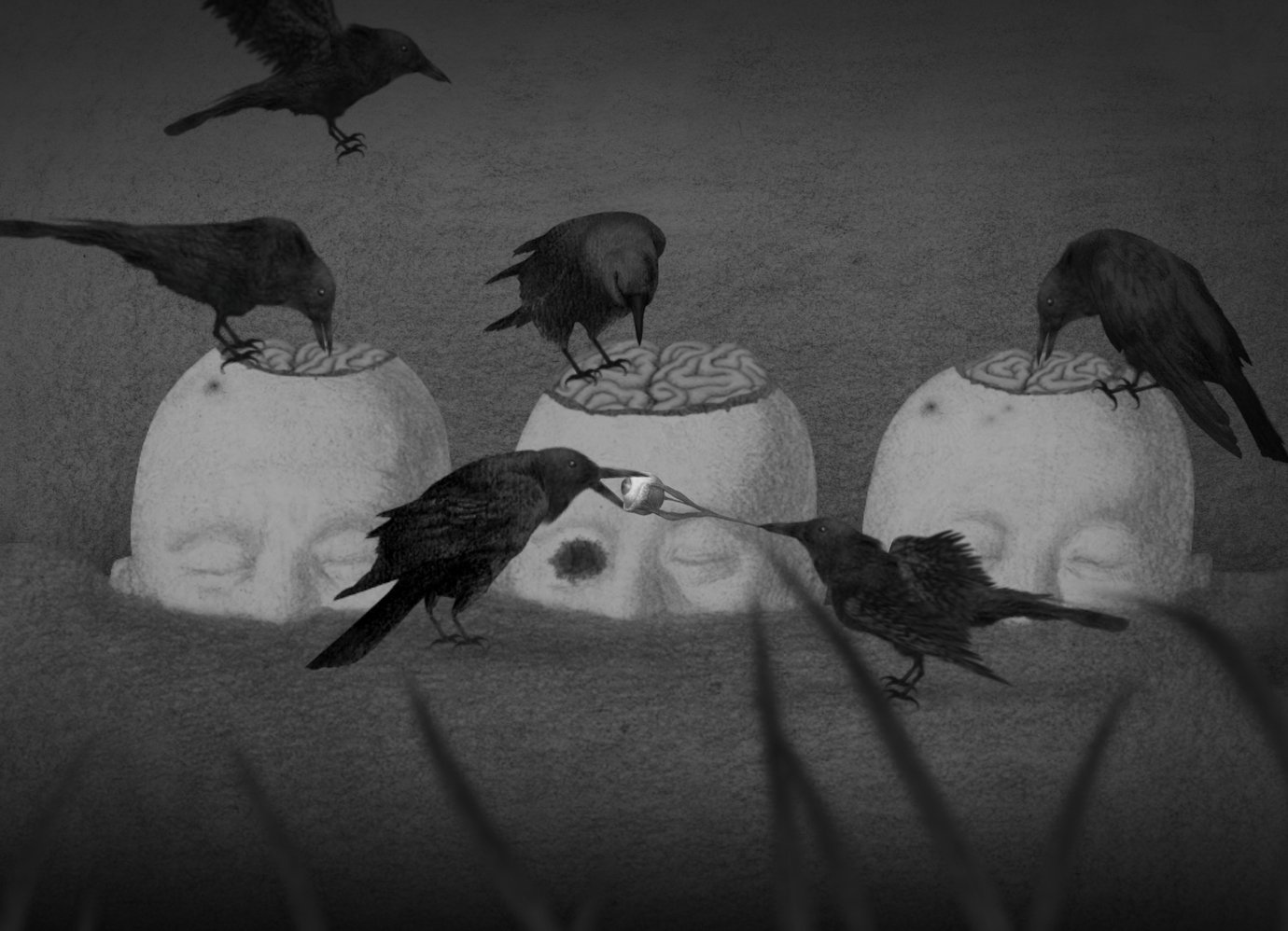
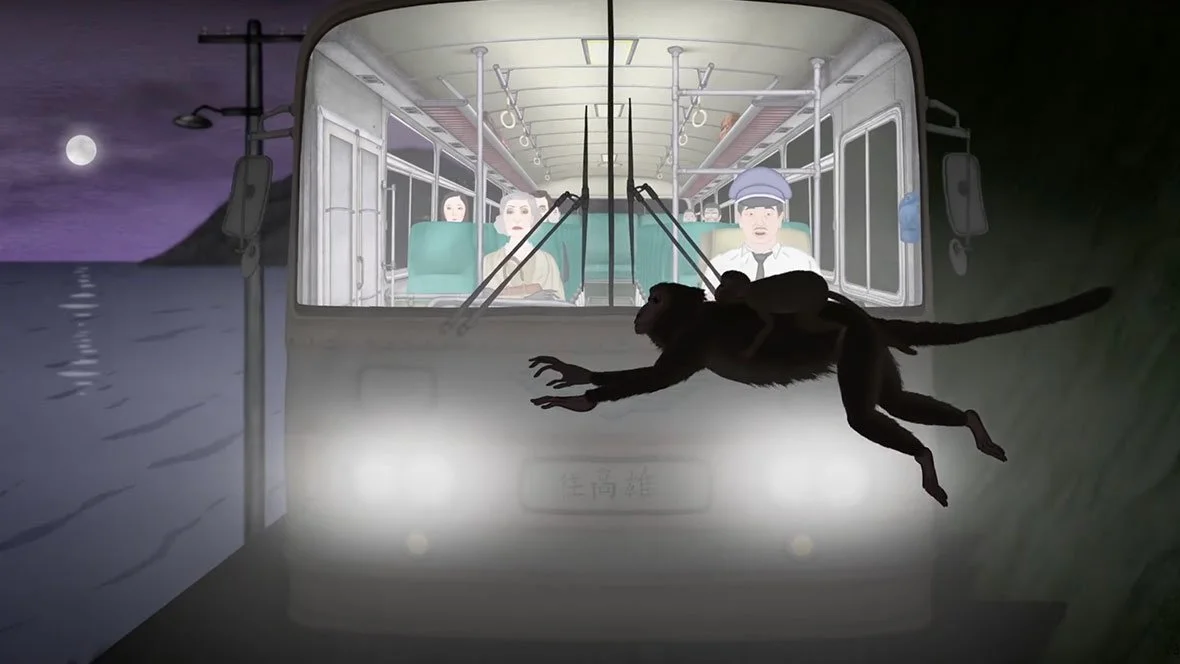
Hsieh studied traditonal painting and then animation at the Taipei National University of the Arts and the Tainan National University of the Arts, though his tastes and creative preferences were entrenched well before that. As a kid he was really into drawing and painting, which his mother encouraged, and his scribbling and sketching led him to teach himself (!) stop-motion animation, and the game-changing discovery of stop-motion puppet animator Kihachiro Kawamoto. “His films are pure art, and I was lucky enough to meet him in Hiroshima once. We kept in touch until he died in 2010. Even though his puppets were ghostly and exaggerated, and he inspired me I could lean into my heritage to find my voice.”
Hsieh’s devotion to his own style and his beloved 2D has made him an animation star. He’s a Clermont-Ferrand International Short Film Festival Grand Prix nominee (for Night Bus), a double Golden Horse Film Festival winner (Bus and Praying Mantis), two-time HKIFF Firebird winner, as well as TIFF, Venice and SXSW prize winner (Mantis again), among others. Hong Kong director Yonfan tapped him to serve as animation director on his 2019 period romance No. 7 Cherry Lane. Hsieh’s made himself one of the most visually recognisble animators working, which he grafts onto themes of our relationship to nature, sacrifice, resilience and marginalisation. Despite having no sisters, he writes some of the most authentic women in any format – he’s Taiwanese animation’s answer to Pedro Almodóvar, which elicits a “Yes! I love Almodóvar’s films.” Hsieh’s women, therefore, were modelled on actresses from Hong Kong’s golden years like Maggie Cheung, Joey Wong and Brigitte Lin. Hsieh admits all their faces are kinda sorta in his characters.
“I’m not that macho, so I endured my share of bullying, and I remember once some kid threw a stone at me and it hurt my eye. Ever since I’ve had a thing about eyes. Maybe my films are a reflection of me, but we are all me, and we are all strong deep down. We just need a reason to be strong. All my characters, in their way, are strong and positive.”
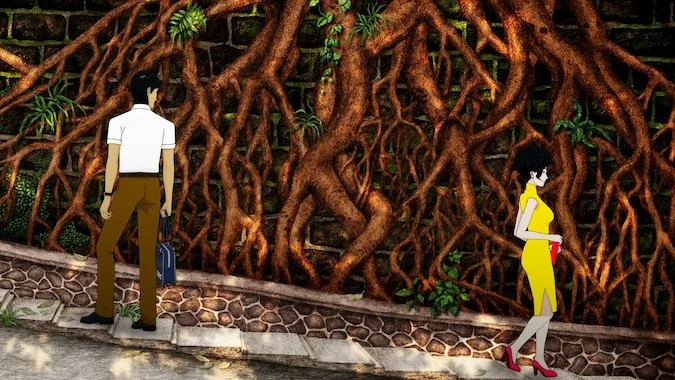
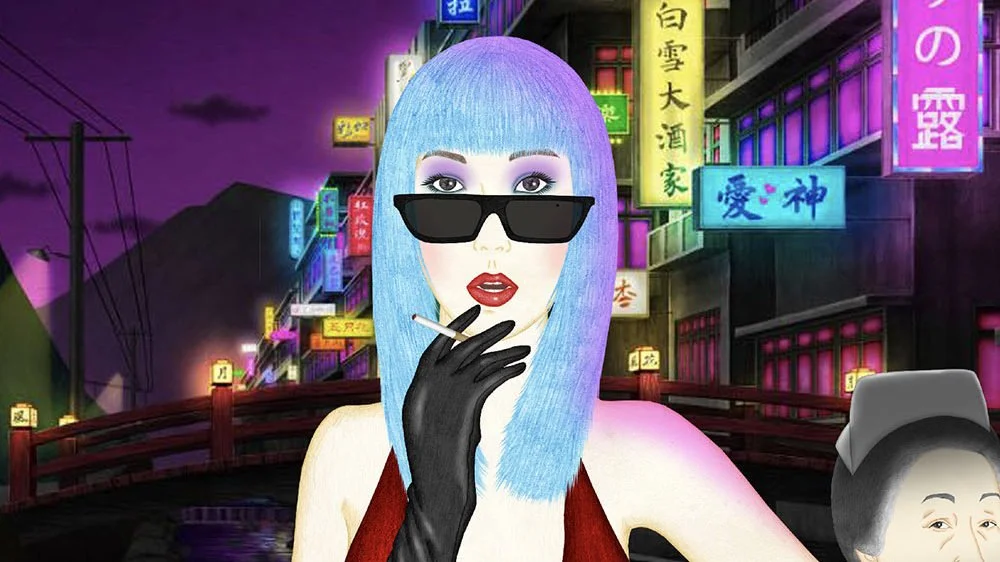
When he’s not spending several years on a film, Hsieh teaches animation, specifically suggesting his students avoid the same-sameness that CG and too much deference to anime can cultivate, no matter how safe that sameness may be. He also hopes animation can maintain the momentum it seemed to gain after a banner 2025 at the box office, and the likes of low-budget, de facto DIY films like Flow winning an Oscar. In a perfect world only the film would matter, and Hsieh admits receipts and prizes count. However, “We don’t need to follow the industry model as we know it. I have my own system and a group of people that have worked together many times. We’re happy the way it is. But yes, successes like Flow give us all a bit of joy.”
Outside Japan and increasingly China, Hsieha also agrees that animation is still largely an underfunded film sector in much of Asia and definitley in Hong Kong, that not a lot of investors are keen to take a flyer on. “I think things are similar in Taiwan,” he says, noting ironcially, “But you had a hit here last year in Another World. People went to see it in theatres, and I think that’s great for the next animated feature,” he theorises, whatever that may be (it may be Toe Yuen’s A Mighty Adventure). “But I like a challenge. I have a small crew and I like the freedom for us to work without the pressure that comes from expectations.” Hsieh is currently working on a short that with a little luck will blossom into a feature. And though he could make a faster, (possibly) less labour intensive live-action film, he’s sticking to drawing – because he can get into the crazy and the grotesque. “It’s about a beauty pageant, and all the backstage drama,” he expains, letting slip he’s also working with a songwriter. “It might be a musical.” Someone fund this film.
Where we were
The Mira Hong Kong, TST • Hong Kong International Film Festival
Hong Kong • April 6, 2026