
Everyone’s Problem
KAFA grad Yoo Jae-in has a few things to say about how women’s issues are all our issues.
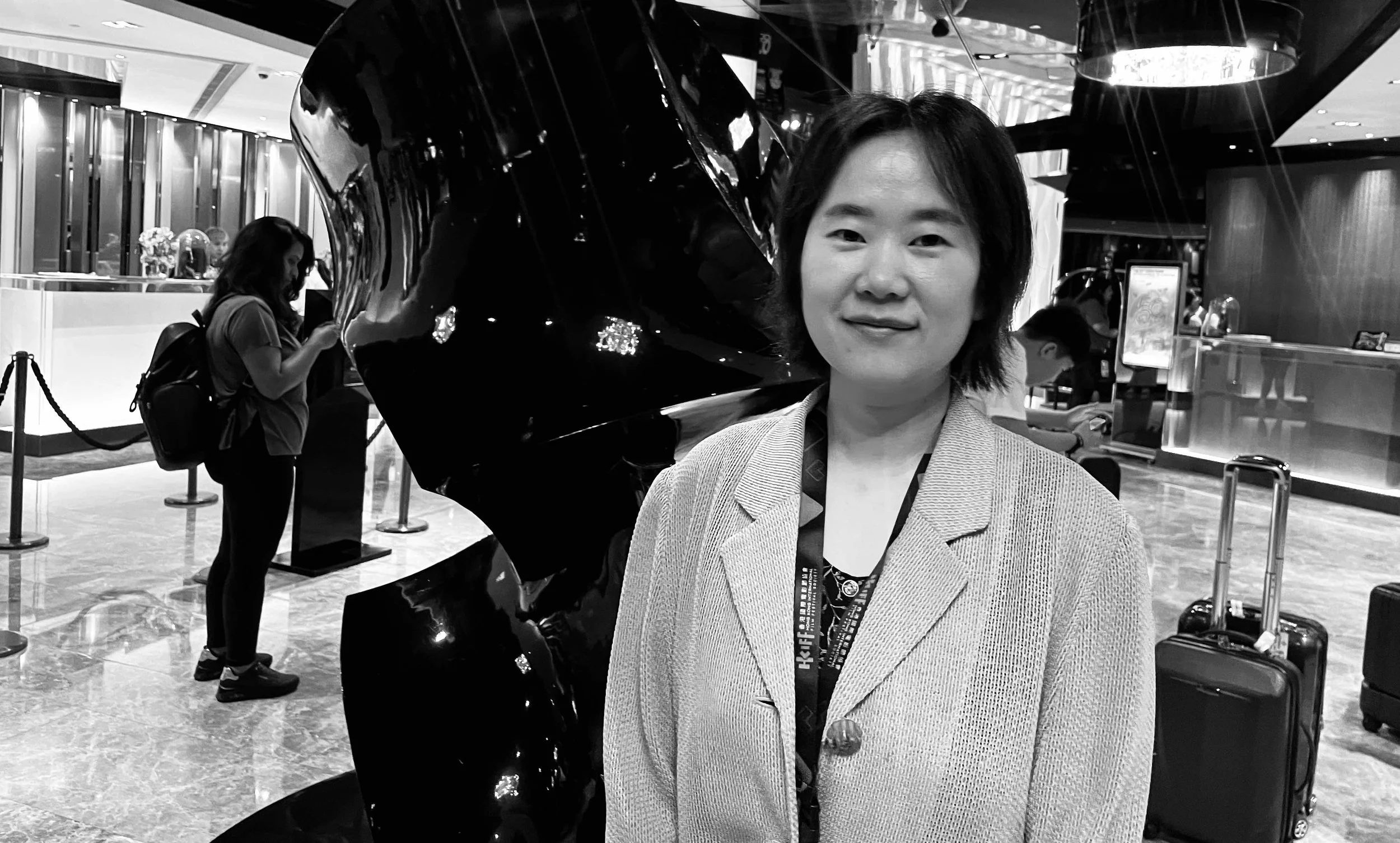
Yoo Jae-in
“The industry still hasn’t recovered from the pandemic, and a lot of movies produced at that time haven’t been released,” says South Korean director Yoo Jae-in through a translator. “I don’t personally think counting the number of views is the healthiest industry metric – of big budget films with huge views. Small and medium-sized productions are a better way forward, and this could be a more vibrant ecosystem that also includes the public.”
Yoo is relaxed but engaged, not quite lounging on a hotel sofa as she discusses her decidedly small debut feature En Route To | 지우러 가는 길. The abortion drama about two high school girls on a hunt for illegal drugs just wrapped its screenings at HKIFF after a world premiere at Busan last year and a high profile slot at Berlin in February, and given the state of women’s rights in most parts of the world it should stay on the radar for some time. “This isn’t a new topic,” Yoo sighs. “But it’s necessary in Korean society to talk about it. When I was thinking about making my first feature I wanted to look at this subject because abortion laws have not yet been established. It’s not a crime but there are no guides. It’s still not a safe choice, it’s expensive, and this new drug – Mifegyne – exists but is unavailable. Movies in the past have focused on surgical methods, but the coming generations might have a medical option, though right now it’s considered an illegal drug in Korea,” she says. As of March, 2026 the Korean government was still arguing among its ministries about term limits, drug classifications, who’s in charge and what kind of controls there should be on medical abortion (how many women do you think have been consulted?), arguments still raging seven years after the Constitutional Court struck down the country’s abortion ban. Needless to say, a vibrant online black market for illegal distribution has sprung up in the vacuum, and that’s the narrative driver of En Route To. “It’s very tricky situation that will demand a lot of debate,” Yoo understates.
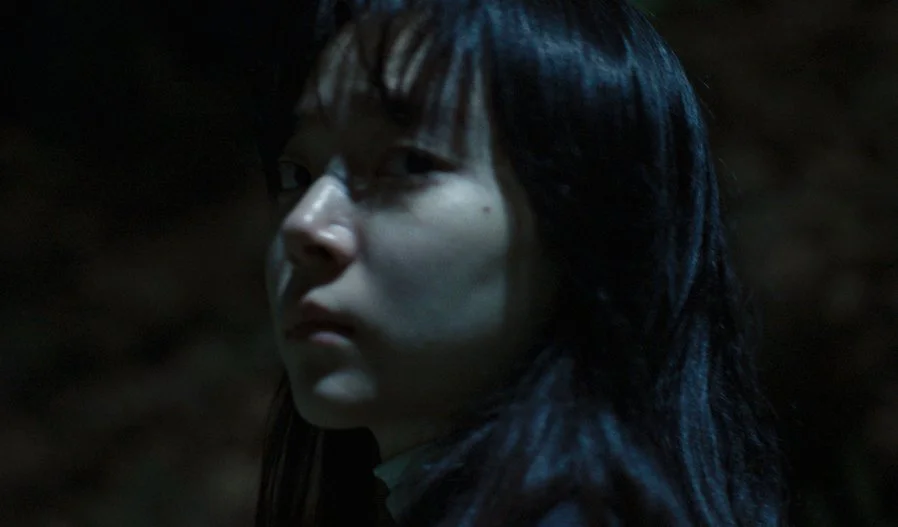
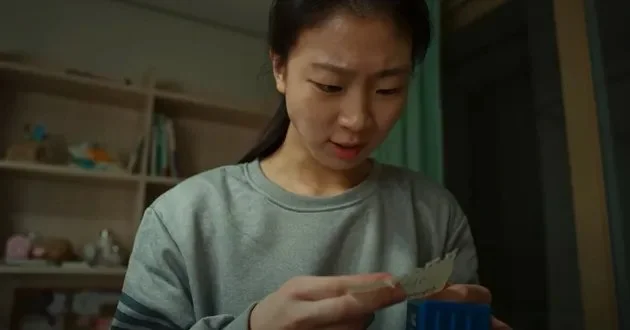
En Route To is a lot of movies in one. When high schooler Yun-ji (newcomer Sim Su-bin) finds herself pregnant by her married homeroom teacher, she steals a wad of cash from her dormitory roommate Kyung-sun (Lee Ji-won) in order to buy some dodgy abortion pills online – some sub-standard Plan Bs. Kyung-sun is the resident “bad girl”, the daughter of a single mother, and she’s also the school’s resident vape dealer, so she’s flush. Kyung-sun is initially pissed that Yun-ji stole the money she’d been saving for an overseas work-study trip, but when she finds out why she resigns herself to helping the less worldly Yun-ji out of her significant jam.
Comparisons to Cristian Mungiu’s 4 Months, 3 Weeks and 2 Days, Eliza Hittman’s Never Rarely Sometimes Always and Audrey Diwan’s Happening are par for the course for En Route To, really the case with any film that deals with young women contemplating the termination of a pregnancy. But 4 Months is about a women subjected to Ceaușescu-era economic policy, Never Rarely pivots on two friends forced to cross state lines for care because Pennsylvania policy doesn’t take abuse into consideration, and Happening chronicles how a young woman’s bright future is almost obliterated by – hold on to your shorts – policy that alienates her and drives her to a back alley hack job. Korea’s current policy quagmire aside, En Route To also illustrates how abortion is the end point of much larger issues that women have to deal with that impacts everyone.
“I didn’t really take much inspiration from those films. I wanted to come at this story from a new approach,” explains Yoo. “Abortion is a personal story and I wondered how people wrestle with these kinds of topics. But the connection between the individual and society is important – and how society sees a woman’s body was something I wanted to explore, because society is trying to control women’s bodies with the law.”
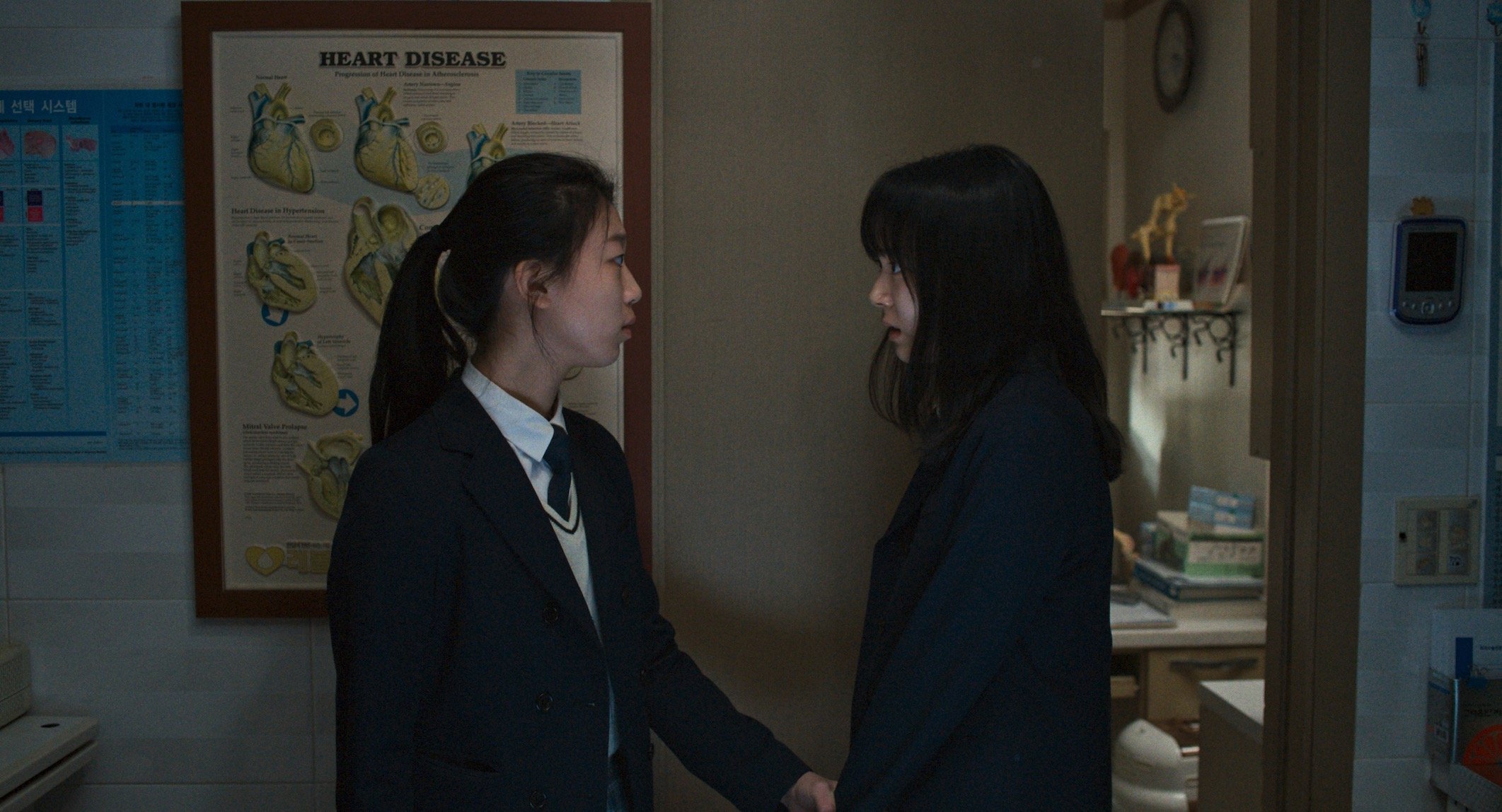
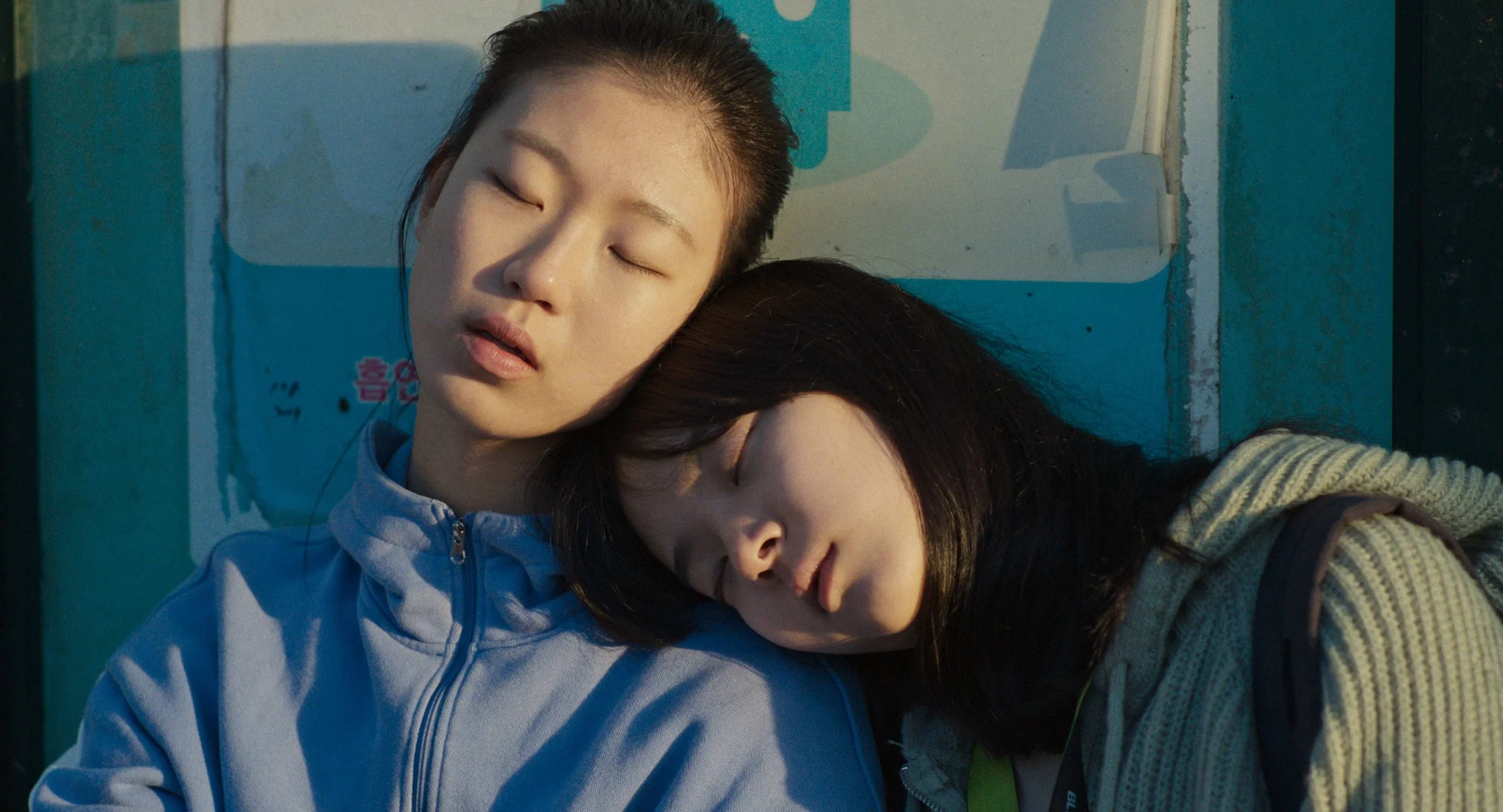
Beyond simply a policy screed, En Route To’s script is built on multiple layers that can be peeled back without much fuss. Yoo’s camera (and cinematography by Baek Jae-ryung) has a social realist tone to it, with steady images in clean compositions. She lets the action unfold organically and compels the viewer to absorb what’s happening and why. It’s a plain film language that Yoo admits is very much her. “Even when I speak this is my style. I think I’m straightforward and not really into flashiness,” she says. “I just focus on the story I want to tell, and focus on reality.”
The film is a coming-of-age drama in which young women learn to support each other and forge a friendship as a side effect. It’s also a romantic drama, where the naïve Yun-ji learns the hard way that relationships can be thorny and imperfect, particularly when her baby daddy’s wife, Min-young (Jang Sun), enters the picture and when she finds herself in a home for unwed mothers. It’s about parental absence and obligation, and asks if two useless parents are truly better than one committed one. And yes it’s about body autonomy and forcing women into dangerous corners.
There’s a lot on that plate; Yoo is well aware of that. But she didn’t want the inciting incident, the abortion, to exist in a vacuum, and most critically she wanted to tie all the players together. “We are a society, a group, and we are all affected by decisions made by each of us, so Yun-ji and Kyung-sun’s friendship is very important. The school is a mini-society, so that’s why they try to figure out the a better solution for a different future, a better future,” states Yoo. “Individualism is gaining traction in Korea; success is seen as a result of individual decisions, so it’s a source of tension.” She pauses. “But we are still affected by decisions made by others.”
Where we were
The Mira Hong Kong, TST • Hong Kong International Film Festival
Hong Kong • April 6, 2026