
Man, oh man. This is one of those films that demands a media literacy class first.
Mercy
Director: Timur Bekmambetov • Writer: Marco van Belle
Starring: Chris Pratt, Rebecca Ferguson, Kali Reis, Annabelle Wallis, Kylie Rogers
USA • 1hr 40mins
Opens Hong Kong January 22 • IIA
Grade: D
It will be hard to beat the copaganda that is Mercy for most tone deaf movie of 2026. Yeah, I know the year is 20 days old but this is gold in terms of WTFery and “Are you listening to yourself?” On the surface Mercy is a fleet, serviceable courtroom thriller set in a vaguely futuristic Los Angeles – like, maybe June – grafted onto a screen life flick, but one that’s much better than the mess that was last year’s mind-boggling War of the Worlds but not as clever as Searching; either way these need to stop. Monitors make for boring viewing. Lifting several pages from Steven Spielberg’s Minority Report, director Timur Bekmambetov, he of the terrible, unnecessary remake of Ben-Hur, the goofily enjoyable Abraham Lincoln: Vampire Hunter, Night Watch and Wanted, brings some crunchy action flair to Marco van Belle’s sloppy script, and tries his best to keep the dull as dishwater basics of looking at desktop windows and folder names suspenseful. But Mercy is a salad of reactionary paranoia, unfounded fears and panicky wypipo buzzwords, with “rampant” crime, Black and brown criminals, and of course, unchecked AI at the root of the problems (it’s not). There are some good, valid ideas about many of those things, especially the unexplored connection between voluntarily sacrificing privacy and mythic ideas of security buried in there somewhere, but it’s another one of those fear-mongering echo chambers about various scourges demanding eradication (but not, oh, say the measles) and the need for militarised police forces. This is entirely unsurprising given it was produced by MGM, which is owned by Amazon, which of course is owned by a Panicky Billionaire’s Club member who is the target of much of the “anger” the LAPD needs to corral in Mercy. It does my head in just contemplating this mixed messaging. Or maybe it’s not that mixed.
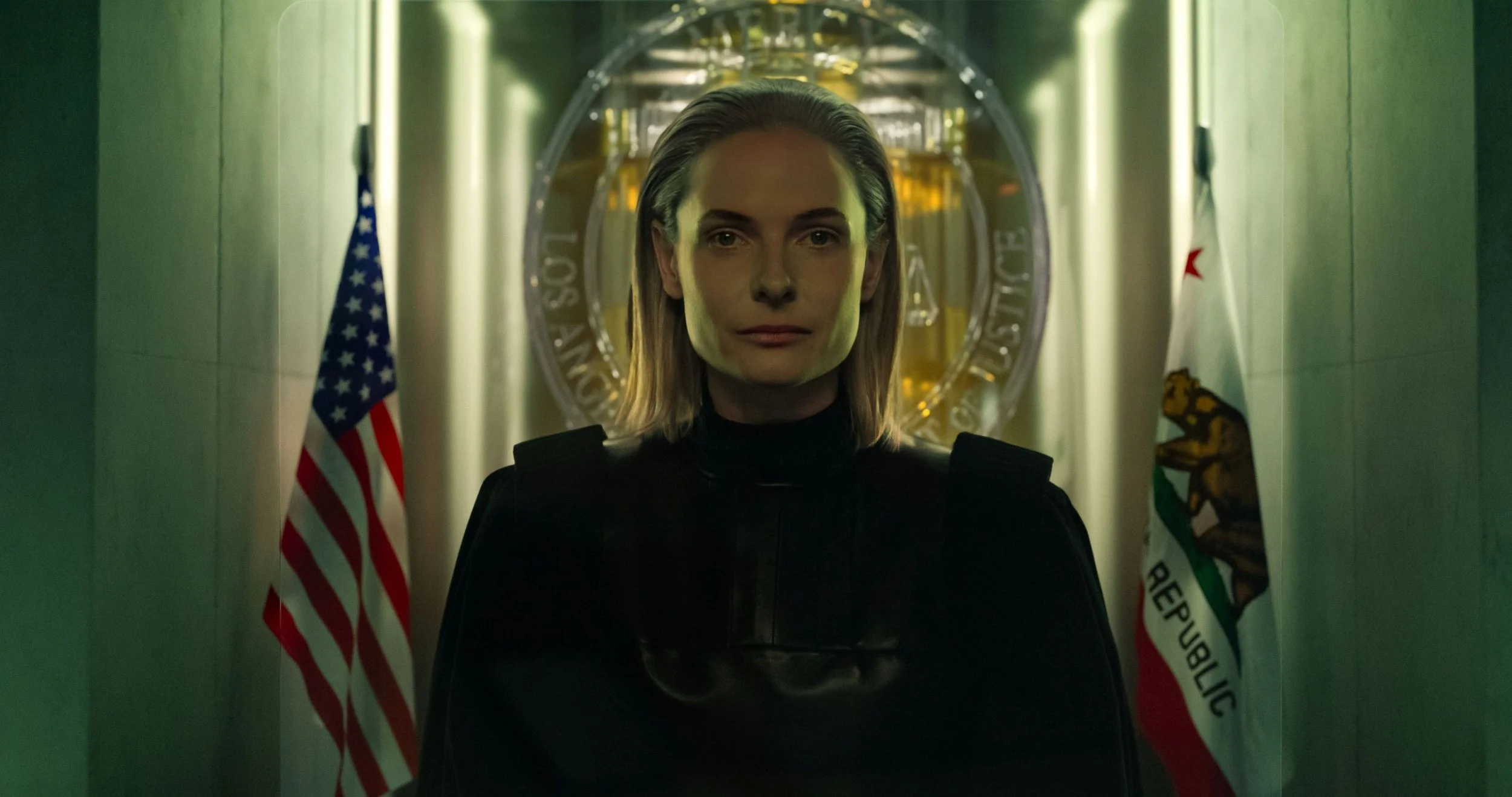
Ferguson remains cool
Bekmambetov and van Belle begin with an exposition dump disguised as neo-Miranda rights, in which top-of-the-line, cutting-edge AI tech Judge Maddox (Rebecca Ferguson), AKA Mercy, explains why alcoholic LAPD detective Chris Raven (the Worst Chris, Pratt) is currently in the big chair with his fat piggies out. He’s been arrested for the murder of his wife Nicole (Annabelle Wallis) and has 90 minutes to prove his innocence or face execution. None of this appeals bullshit or an actual defence lawyer. He’s the 19th Mercy case to be held, and so far the infallibility of data and software (hahahahaha) and the public’s acceptance, nay celebration, of this system of justice for bad guys has led to crime rates falling 68% in a few months or some shit, after the first successful Mercy trial and execution of unhoused junkie murderer David Webb. Damn those addicts and poors! People, it seems, were desperate and afraid, with the city defined by dangerous red zones and open revolution (it’s very possible January 6 archive footage is in there somewhere and yeah, okay) something needed to be done. And if you think David Webb isn’t important, you haven’t seen a movie. Ever.
Pratt spends most of the movie strapped to the Mercy Court chair trying to get below the 92% reasonable doubt threshold Maddox demands to halt the trial (there’s no hint at what comes next if she does). He has all of LA’s cloud data available to peruse, thanks to Maddox, and occasionally calls in favours from his partner Jaq Diallo (Kali Reis, True Detective) and his AA sponsor Rob Neslon (Chris Sullivan, Taserface in Guardians of the Galaxy Vol. 2). He wonders if he forgot something and maybe is guilty. He recalls what started his drinking to start with. He questions the system he helped build. Strangely, this is not a real time thriller, even though the gimmick is built into the film’s DNA. Oh well.
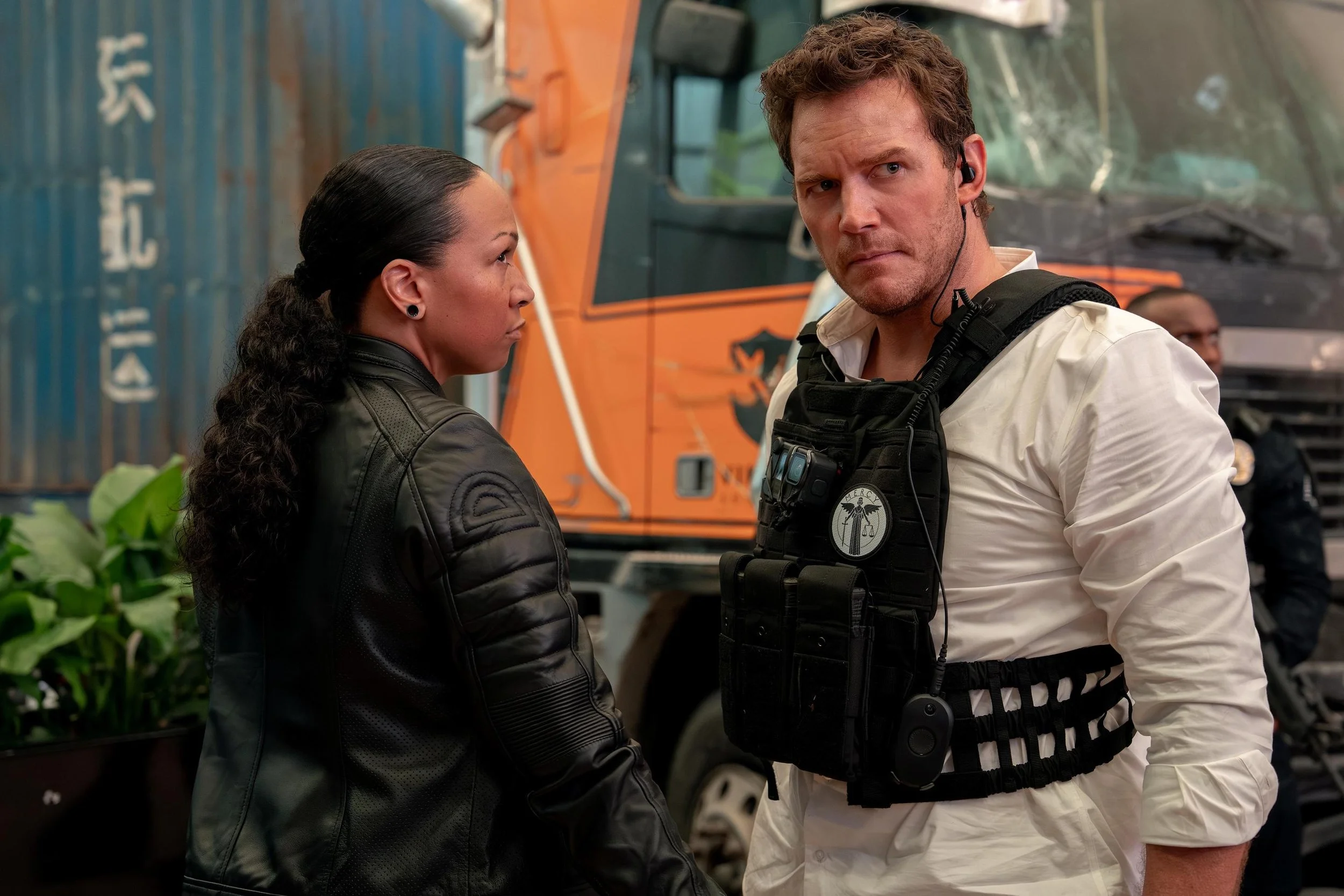
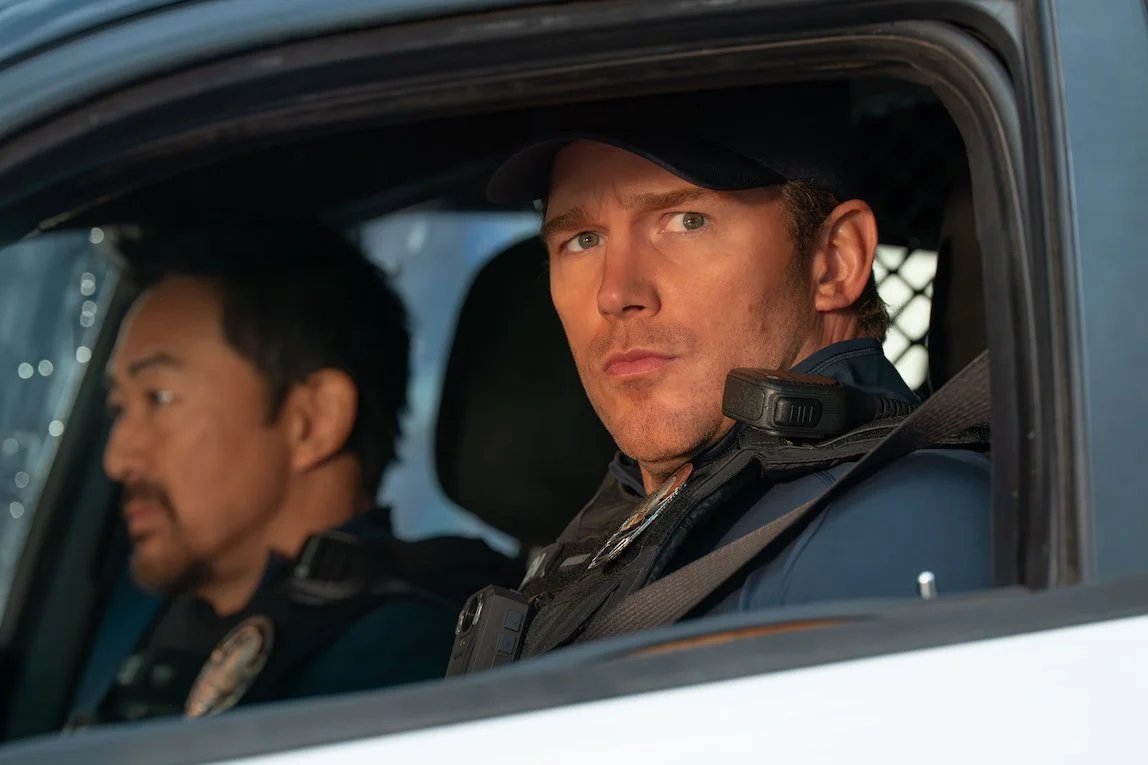
Mercy is free of the razor sharp satire of RoboCop, the thorny debate of Minority Report or the concise observations of Black Mirror (it would be a better 45-minute TV episode), and is at its most believable when the LAPD doesn’t shoot a belligerent, cop-attacking drunk white dude. Anyone else would be bleeding out in seconds. But Mercy’s fantastical elements aren’t its problem, and it’s unlikely anyone expects verité from it; it’s free to be ridiculous. But it’s ridiculous in a dangerous way, dishing out inflammatory images with zero context. All those angry “criminals” coming for the cops and threatening fiery rebellion? They’re angry and rebellious because of the cops, and because of justice systems being gamed by the cops, and by the wealthy who both almost exclusively serve. Read the room, people. Mercy puts a gloss on the boys in blue and suggests the courts are open to admitting their mistakes, and no amount of Pratt portraying a flawed man with a short fuse, a drinking problem and potential for domestic violence is going to distract from the Death Wish stylings of the film’s core messages. The ever-so slight wrestling over our increasing reliance on – and blind belief in – AI and final, easy resolution that, duh, maybe don’t have a judiciary reliant on it too is as lazy as it is obvious. This all but dismisses the elephant in the room: state access to so much data – almost all of it willingly handed over.
But, again, despite being a garbage film Bekmambetov is decent with action set pieces, and the renegade truck finale that has a big rig smashing through downtown Los Angeles, crashing into other cars, people and buildings is great in its wince-inducing energy, just don’t ask the how and why of it. But it’s also exhausting, with extra bits and bobs and conspiracies we don’t really need shoehorned into a script that feels bloated regardless of its relative brevity. Pratt tries hard to emote through his “everyman” brand – this demands a far more compelling actor than Pratt – Ferguson delivers her usual effortless superiority and Reis has undeniable charisma, even though Jaq as well as Nicole are underwritten, the latter to the point of invisiblity. They all looked super-bored, and combined they paper over Mercy’s dodgy messaging and gaping thematic holes and render it harmless entertainment. Ironic.