Life Support
Let’s get into the time machine and see what director Vincci Cheuk thought ‘Vital Signs’ was all about way, way, way back when.
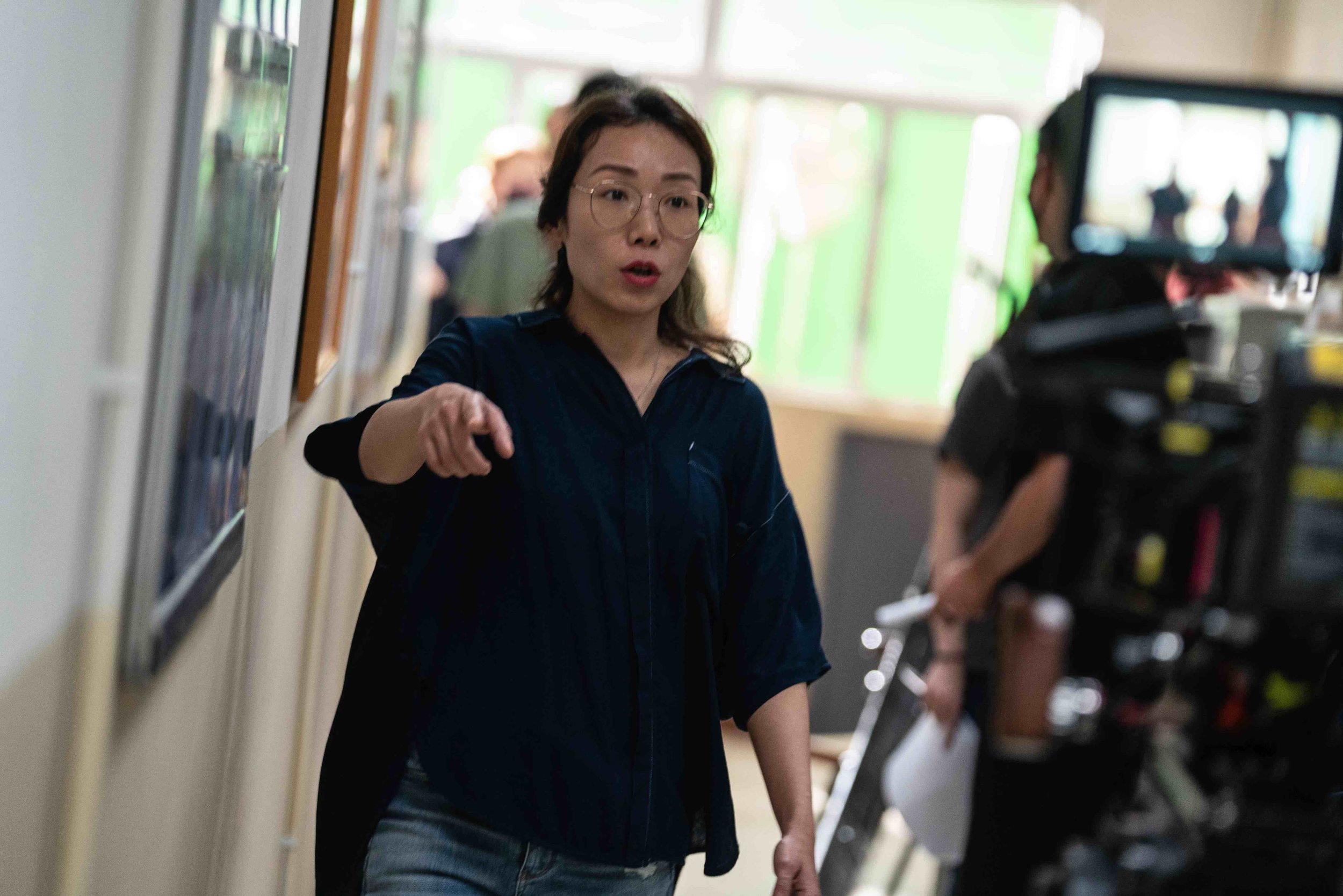
Vincci Cheuk Wan-chi
Almost exactly two years ago, in 2023, Vincci Cheuk Wan-chi’s fourth feature, Vital Signs | 送院途中, had a European premiere at the Far East Film Festival in Udine after its closing bow at Hong Kong International. At the time it was set for release “soon.” The wait took longer than expected. Finally scheduled for May 1, 2025, there is still no confirmation as to what caused such a long delay; rumours suggest poor test screening reactions, others suggest content, but screenings would have occurred after the appearance at FEFF. What we can guess is that the cut being released in Hong Kong cinemas this week is probably not the one presented at either HKIFF or Udine. When we met Cheuk and the film’s up-and-coming co-star Neo Yau Hok-sau at the Italian festival, there was no (vital) sign that this film would have such a complicated release route. At the time, unaware of what was to come, what struck most was the multifaceted personality of Cheuk the filmmaker and how much she poured of her perceptions of Hong Kong into the film.
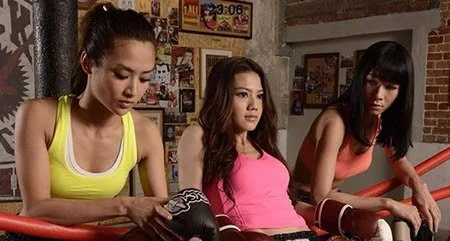
Depending on when you discovered her, you could say Cheuk was a child prodigy, a radio DJ (as GC Goo-Bi), a stand-up comedian, an author, an actor (The Midnight After), a playwright (Unidentified Human Remains and the True Nature of Love), a screenwriter (contributing to Sylvia Chang’s 20:30:40) or a filmmaker (Kick Ass Girls, below, right). When Cheuk is asked to define herself, her words are simple. “I always present myself as a creative. And I’m always a writer.
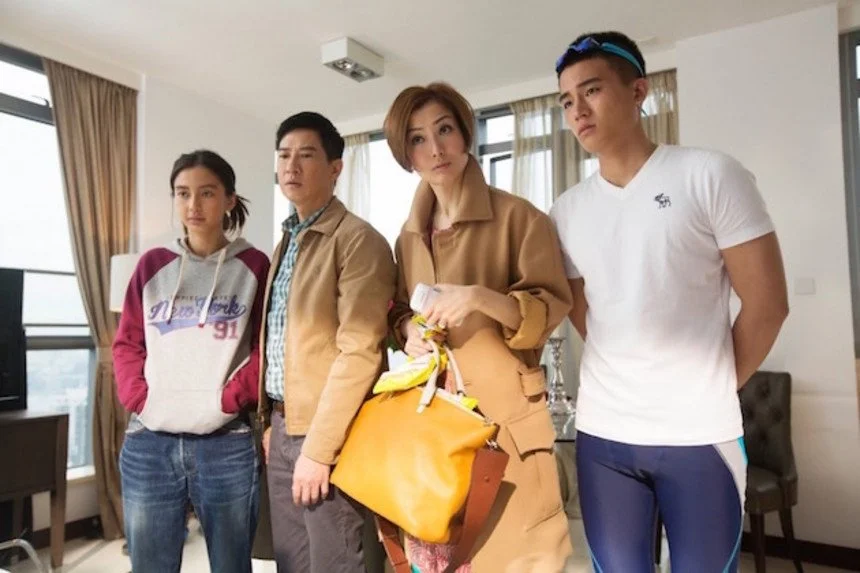
“Sometimes I come up with a concept and have to choose the medium for it,” she said all those years ago. Her most recent work, at the time, found its shape in the form of Vital Signs, Cheuk’s return to the director’s chair after a nine-year hiatus following Temporary Family (below, left). “My previous film was a romantic comedy, so this is a very different film. I think the changes in Hong Kong in recent years made me ask myself a lot of questions about what story I wanted to write.”
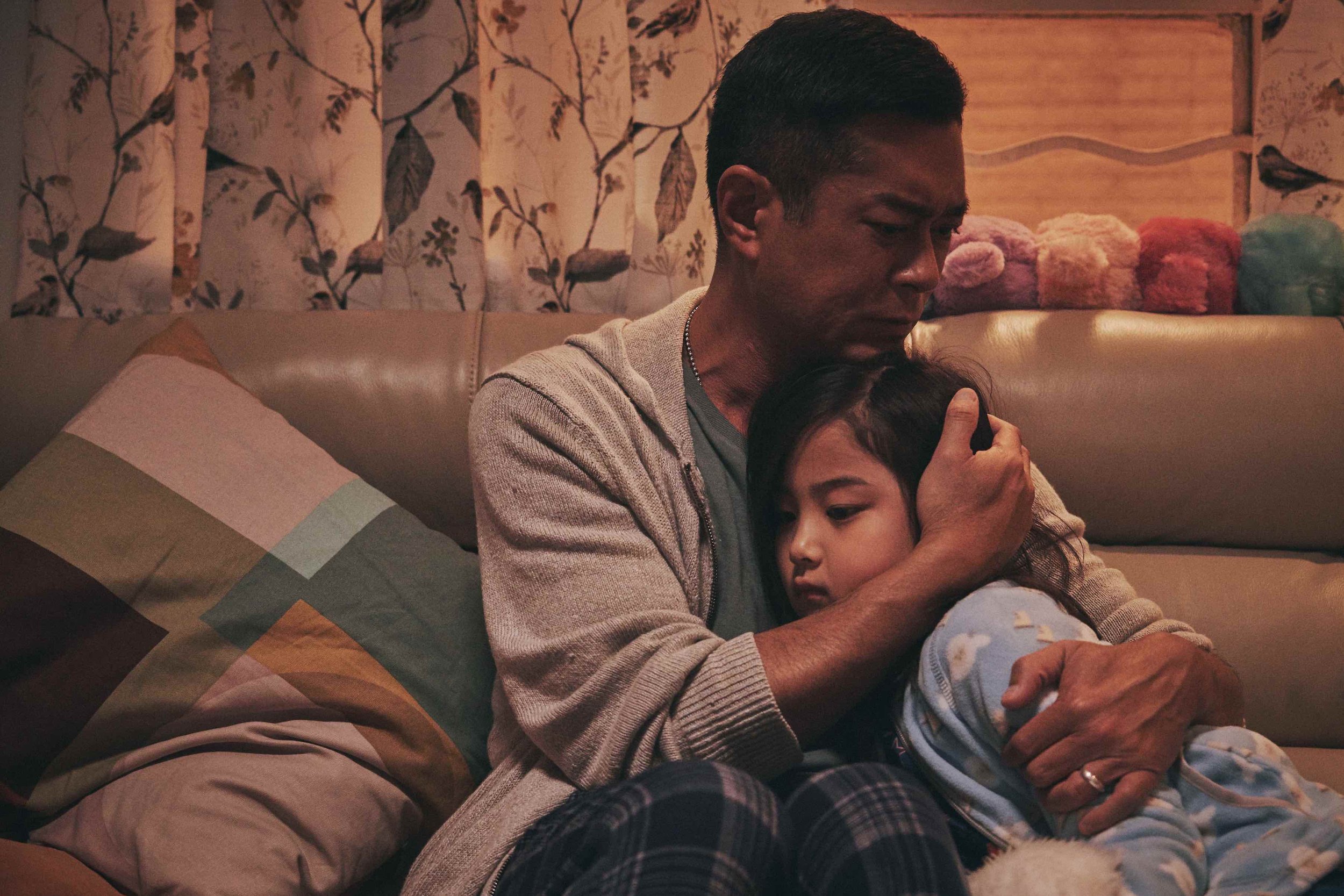
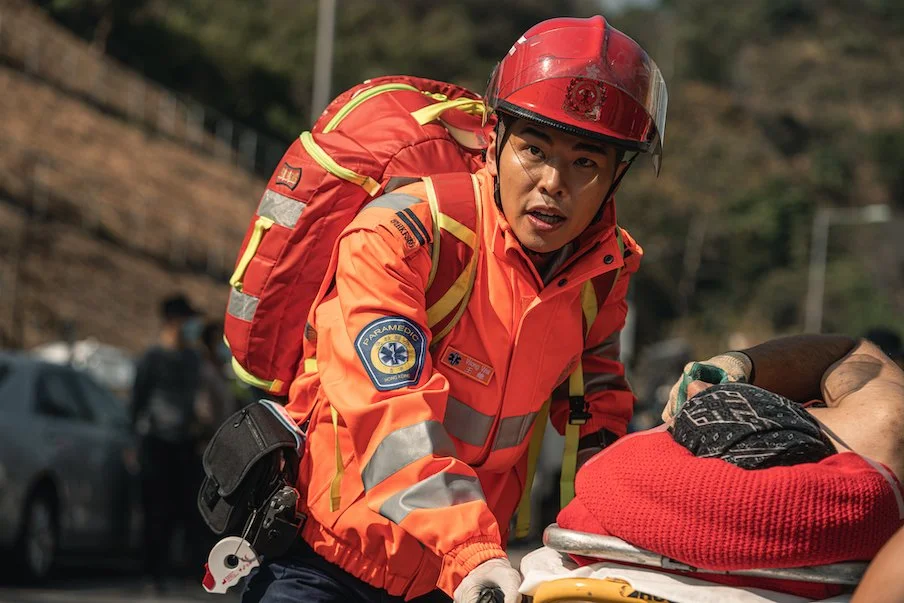
Vital Signs is a drama centred on the personal lives of two paramedics, played by Louis Koo Tin-lok and Yau. Despite its premise and its labelling by the FEFF as a fast-paced action drama, it’s not your typical Hong Kong action flick, at least in its original iteration. “I saw that there were extremely commercial elements in the story,” remarks Cheuk, who made sure she would not be forced by her producer to turn her screenplay into an action movie. Nonetheless, veteran director and co-writer Herman Yau Lai-to’s fingerprints are all over the climactic third-act crash.
It’s rather a social drama with a classic masculine dynamic between an older mentor, Ma (Koo), and the young hotshot, Wang Wei (Yau), who get paired in the same ambulance, face initial prejudices towards each other due to Ma’s unorthodoxy and Wang’s apparent ambition to climb the rank ladder quickly, only to learn to accept each other and respect their private struggles. Wang is soon to become a young father and Ma and his daughter are considering emigrating to Canada for what he believes are better opportunities. Ma’s tendency to not follow regulations has left him ageing, with a bad back and with no prospects for promotion.
“I like contradictions. When you consider leaving, you start to miss a place,” says Cheuk, adding, “While I was editing, I realised that this film was a love letter to Hong Kong.” Even in its tensest sequences Vital Signs is filled grace notes and images of urban SAR life, and the hectic lives of the paramedics serve as a parallel with Hong Kong itself. “Making movies is like what happens to the people in Vital Signs; you have to improvise a lot. In my eyes, Hong Kong is like this.”
The involvement of a massive figure like Koo in a relatively small production apparently was most unexpected. “I didn’t get him, he got my story,” Cheuk sums up. Curiously, co-star Yau chimes in with a story about an unusual encounter with Koo sometime prior to the involvement of both actors in the project. Younger generations know Yau as a YouTuber rather than an actor, and “The exposure from YouTube was really valuable to me,” he says. “[Koo] approached me; he wanted to meet me,” the actor says. “My generation doesn’t have many acting opportunities. In 2020 I looked at my future and realised that I maybe have 10 movies in me if I’m lucky before I turn 40.” He’s 35. “One of the most ironic things is that in Hong Kong, a YouTube short can reach a bigger audience than a movie,” Yau adds. Cheuk assured that her choice for Yau was, however, not dictated by his social media success but by skill; Yau’s turned in strong performances in his short career in No. 1 Chung Ying Street and the recent The Way We Talk as just two. Yau proves his talent in this dramatic role, but he also points out that, much like Cheuk, he moves between professional creative roles, and he too intends on directing someday.
Vital Signs, next to being a drama that works in its microcosmos, is most definitely a vehicle for its cast and crew to legitimise their professional worth. The film also features some of the industry’s most recognisable emerging and character actors, including Angela Yuen Lai-lam, Locker Lam Ka-hei, German Cheung Man-kit, Ng Wing-sze, Tony Wu Tsz-tung, Bowie Lam Bo-yi, Poon Chan-leung and Henick Chou Hon-ning (or at least it did). “When people bring up my work as a DJ or all my past experiences… sometimes I’m embarassed because it sounds like I’m a bit too prolific or not a serious director.” What Cheuk and Yau might have to say about Vital Signs looking back is anyone’s guess, but either way audiences will finally get their look when it opens in Hong Kong cinemas on May 1.