
A Big Swing
Kogonada’s schmaltzy, sentimental romantic drama is a lot of things but at least it’s not a liar.
A Big Bold Beautiful Journey
Director: Kogonada • Writer: Seth Reiss
Starring: Colin Farrell, Margot Robbie, Kevin Kline, Phoebe Waller-Bridge, Lily Rabe, Hamish Linklater
USA • 1hr 49mins
Opens Hong Kong September 18 • IIB
Grade: C
To its everlasting credit, A Big Bold Beautiful Journey spends zero time playing coy and pretending its something it’s not. Nope. Right from jump director Kogonada (government name Park Joong-eun) lets us know this is one of those movies. Our handsome hero, David (Colin Farrell) is heading to a family (?) wedding but when he gets to his car it’s got those giant tire locks on it. It’s been repoed (maybe) so he needs a ride. He looks up and sees a conveniently pasted flyer pointing him to The Car Rental Agency – yes, that’s its name – several blocks away and staffed by a pair of cutesy-cryptic clerks in a sparsely, Scandi-chic decorated warehouse offering one of two 1994 Saturns. They demand he take a mid-century modern cool GPS (that sounds like Jodie Turner-Smith) too, and off he goes to the wedding.
Now, we all know that in the real world, when you find your car unusable, you ring up the nearest global chain, hop a train or, fingers crossed find a cheap flight. But this is not reality, it’s romantic fantasy, and in this world David jumps through the ridiculous narrative hoops presented as if they were totally normal and hits the road to eternal happiness and self-actualisation. Kogonada is known for his video analyses of form, his contemplative sci-fi family drama After Yang and the architecture porn of Columbus. Writer Seth Reiss penned the wonderfully vicious The Menu, so the parts were all there for something novel; something non-fans declare, “Actually...” And admittedly ABBBJ goes for it in trying to get creative with the oldest story in the book: Boy Meets Girl blah blah blah. But the end result is both maudlin and twee, and that might be its only first.
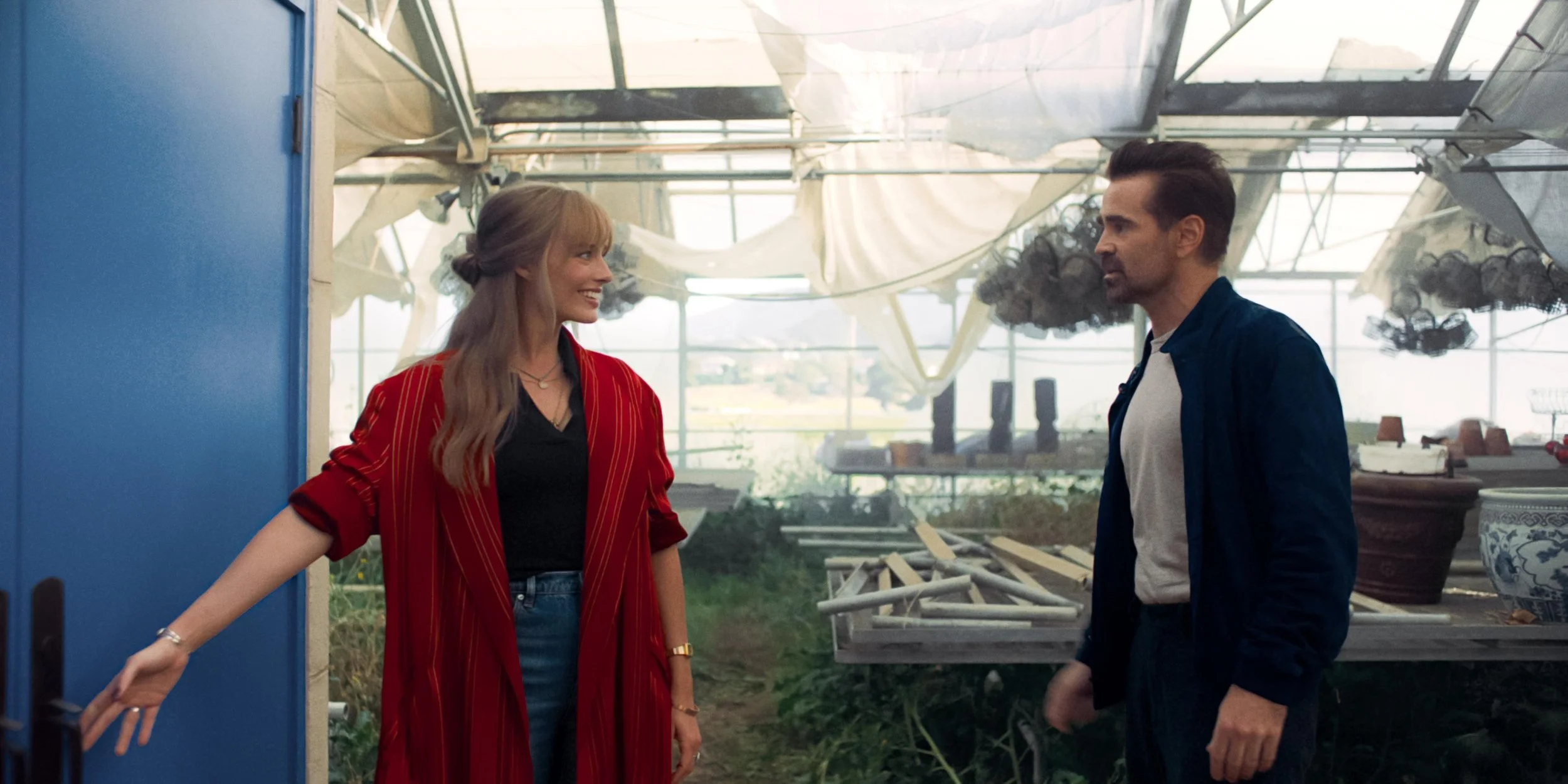
At the wedding he just had to get to David meets Sarah (Margot Robbie) and because this is a romance they launch into the kind of philosophically snarky, verbose and awkwardly personal conversation that only happens in romances and are immediately drawn to each other. But no! They can’t. She’s a maneater and he’s a sabotaging loner. Turns out she rented the same car from the same agency, so despite going their solo ways the GPS sends them on the titular trip through the complex and traumatic histories that still impact their relationships as adults that look like Farrell and Robbie. They visit a defining moment in high school for him, the death of a mother for her. Together they thumb through a copy of Pscyhology Today and parse the details that make them who they are and give them the courage (the struggle is real) to change their paths through life. Will these poor kids be able to make it work?
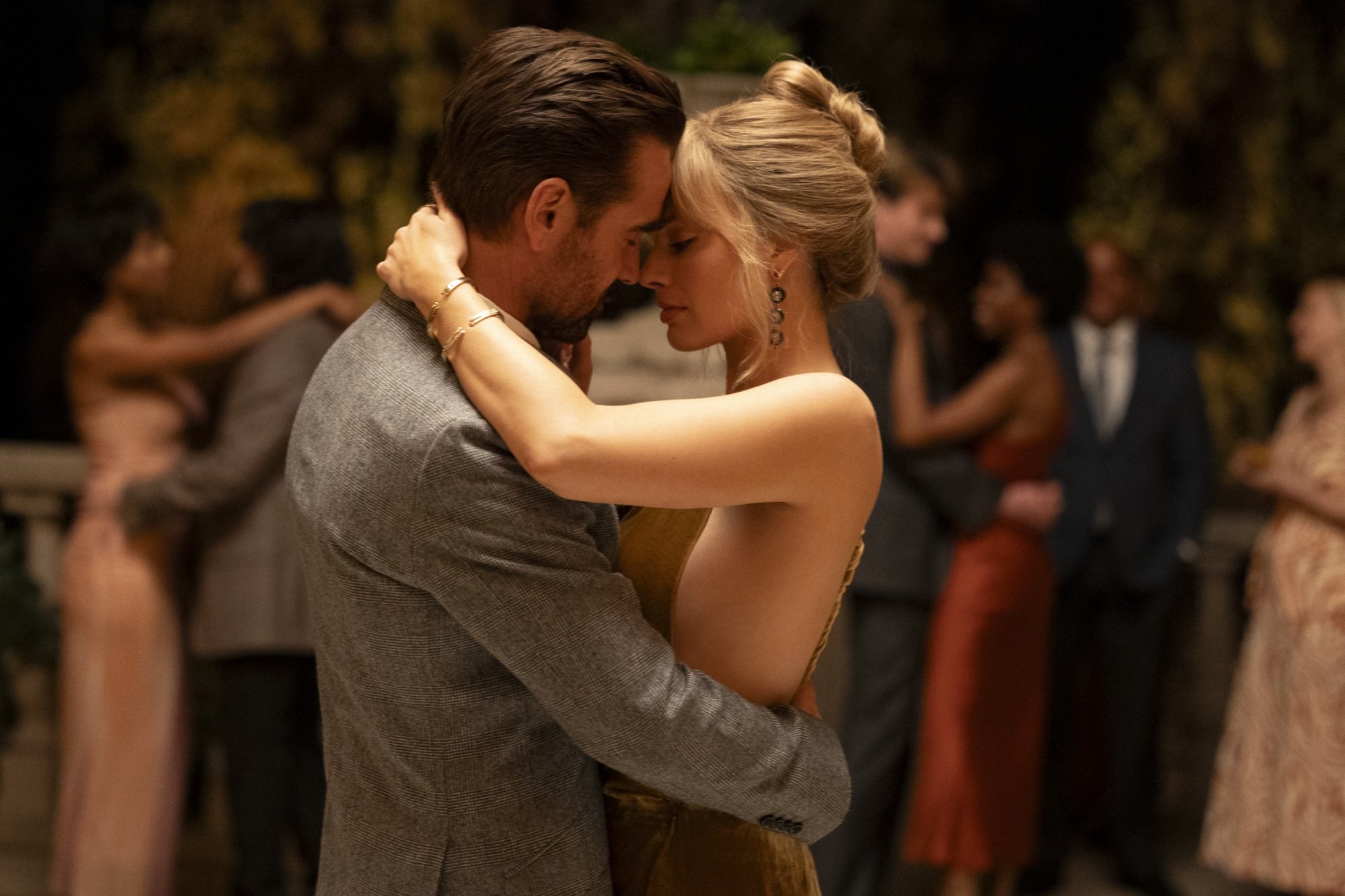

I’d be a liar myself to suggest there’s no audience for ABBBJ. There is. It’s colourful and gorgeously production designed in primary colours by Katie Byron, it’s wistful and romantic in the way that leans into the idea that if we just step out of our comfort zones and “be open”, as David’s dad advises, then Colin Farrell or Margot Robbie will turn up and commit to a lifetime of bold journeys with us. Gag. Not my tempo. I prefer gooey, murderous space creatures. But lots of people do enjoy indulging in that fantasy and Godspeed. Enjoy. The problem with ABBBJ as a film is that it’s aggressively film-y storytelling. You can see the screenplay here, working hard on every page to keep David and Sarah from that first kiss in order to bump the romantic tension. It works hard to be clever, like with Phoebe Waller-Bridge’s car rental agent and her German accent. Why? To make the howlingly unsubtle comment about performance and truth sound wise? No one talks like David and Sarah, even in rom-coms, and the Big Symbols are so on the nose they may as well be comedy. Farrell (who starred in After Yang, as did Turner-Smith) and Robbie are undeniably charming, and the bits that do land are thanks to them. It doesn’t lean into Kogonada’s intellectualism enough, nor does it fully embrace the Amélie-style whimsy that propels it. Suckers for a good romance deserve better.