
Breaking the Cycle
Hate to say it but the Hollywood machine is the winner in this contest.
All You Need is Kill
Director: Kenichiro Akimoto • Writer: Yuichiro Kido, based on the noveI by Hiroshi Sakurazaka
Starring [Japanese]: Ai Mikami, Natsuki Hanae, Kana Hanazawa
Japan • 1hr 22mins
Opens Hong Kong February 5 • IIA
Grade: B
Am I going to lose my Serious Critic Card if I say that Doug Liman’s Tom Cruise-starring Edge of Tomorrow is a better adaptation of Hiroshi Sakurazaka’s 2004 light novel All You Need Is Kill than Kenichiro Akimoto’s animated All You Need Is Kill is? Well I’m going to risk it – because it is. Sorry, not sorry.
Don’t get me wrong. Akimoto’s creatively drawn, at indie, erm, studio STUDIO4℃ (whose break-out was Tekkonkinkreet), which is known for its anti-Ghibli visuals and (for lack of a better word) experimentalism is quite the eye candy. It’s trippy in a way that demands a fat blunt and watching from the floor you’re laying on – and marches to the beat of its own drum, at least for the first half or so. It starts as a punchy portrait of a self-fulfilling loop of loneliness and sadly ends as a garden variety, world-saving romantic adventure. To make matters worse Edge of Tomorrow might be more faithful to the source material (I haven’t read the manga by Ryosuke Takeuchi and Takeshi Obata). But that’s neither here nor there; the operative part of an adaptation is “adapt.” No, the problem is that All You Need Is Kill is let down by forcing yet another mediocre dude into a picture that didn’t need him, ultimately making the brief 83 minutes feel like 183 and shooting itself in the foot.
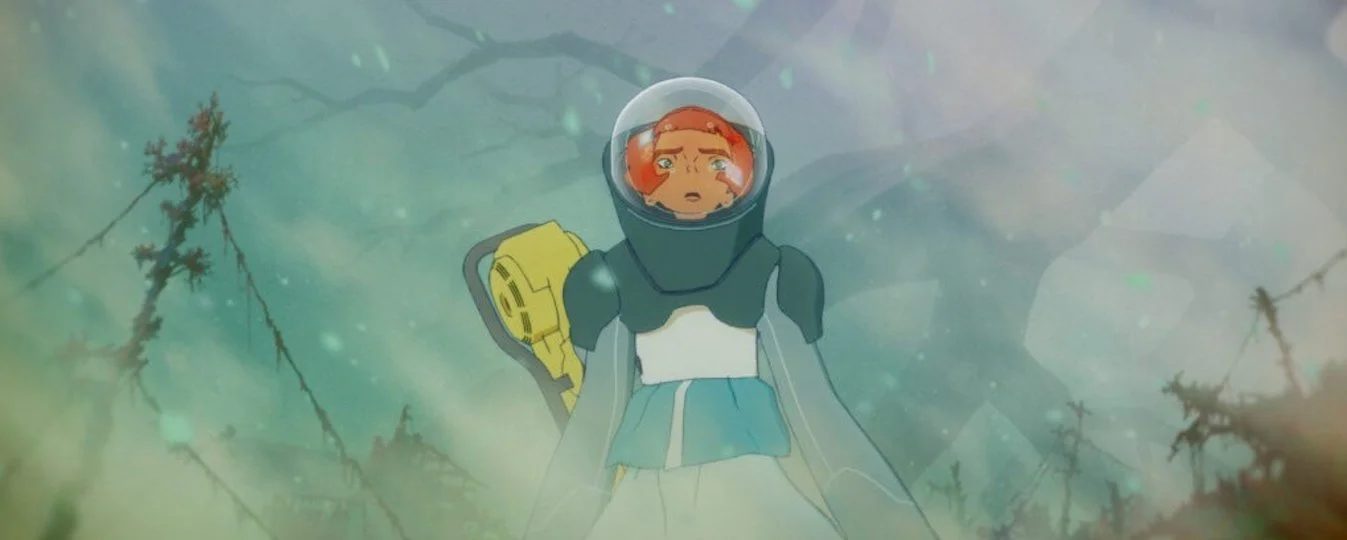
That’s not bong smoke
The vibrant, kaleidoscopic colours and lush backgrounds Akimoto deploys here are the polar opposite of Liman’s tech-heavy, ash and military metal near-monochrome, so when it starts with Yasuhiro Maeda’s pounding, ominous score and the bright arrival of the invading Darol on Earth, it’s hard not to be mesmerised immediately. The Darol, a tree-like alien creature, lands (plants?) in Japan, unleashing hell and drawing ordinary citizens into an existential fight. One of those is Rita (Ai Mikami, Kokuho), a sullen, solitary young woman with orange hair and a distaste for complete meals and small talk. She’s part of the crew that’s attempting to prune the branches of the mysterious Darol that’s been growing for a year. One day it suddenly sprouts flowers – spores? fruit? – blossoms fully and murders everyone it sees, including Rita. Then she wakes up the next day, at 7:03am and assumes she had a nightmare until the day repeats exactly as it did before. She does this 92 times before she meets Keiji (Natsuki Hanae, Demon Slayer: Kimetsu no Yaiba Infinity Castle), a classic 90-pound weakling with a genius mind for software engineering. He’s caught in the time loop too.
On the upside, screenwriter Yuichiro Kido has turned a sharper lens on Rita and Keiji’s interiority, and toned the military porn way, way down and have almost made something totally new. The cleaners aren’t decked out with Gundam levels of tech, and it makes for more sensitive and layered storytelling. I mean, c’mon. The aliens look like pretty flowers that make their transformation into giant, homicidal venus flytraps all the more shocking. That’s some sinister shit right there.
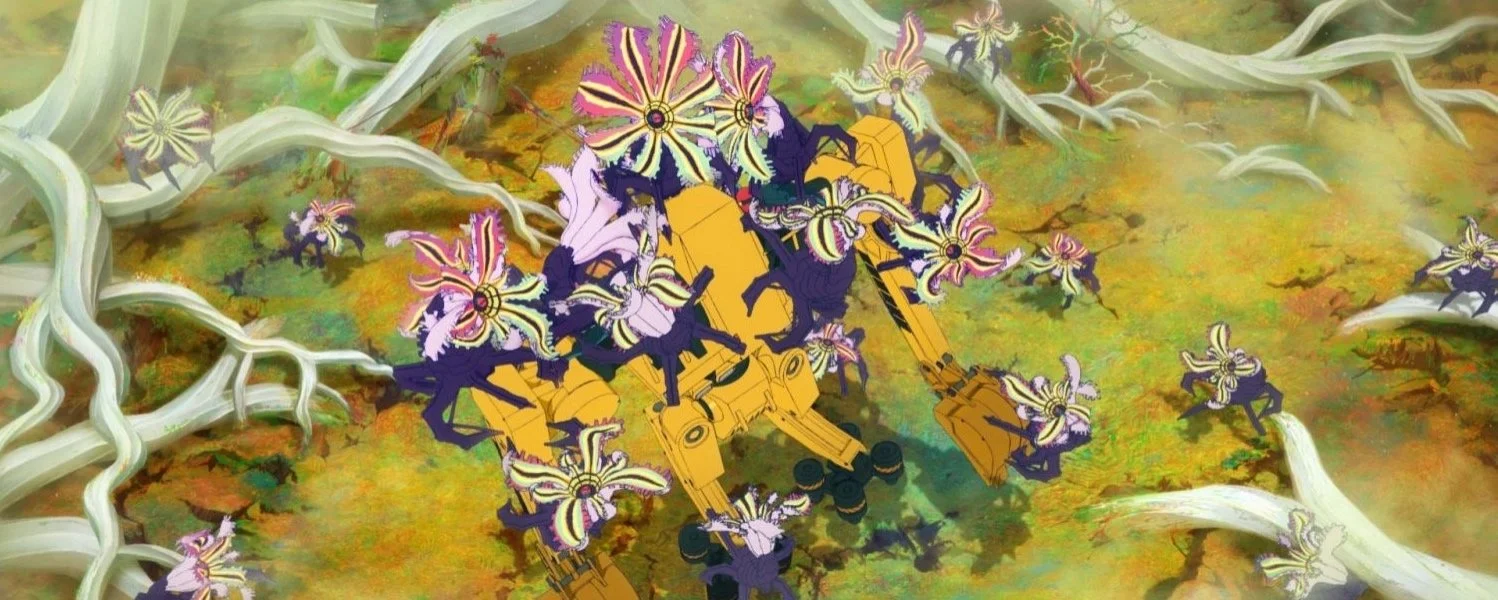
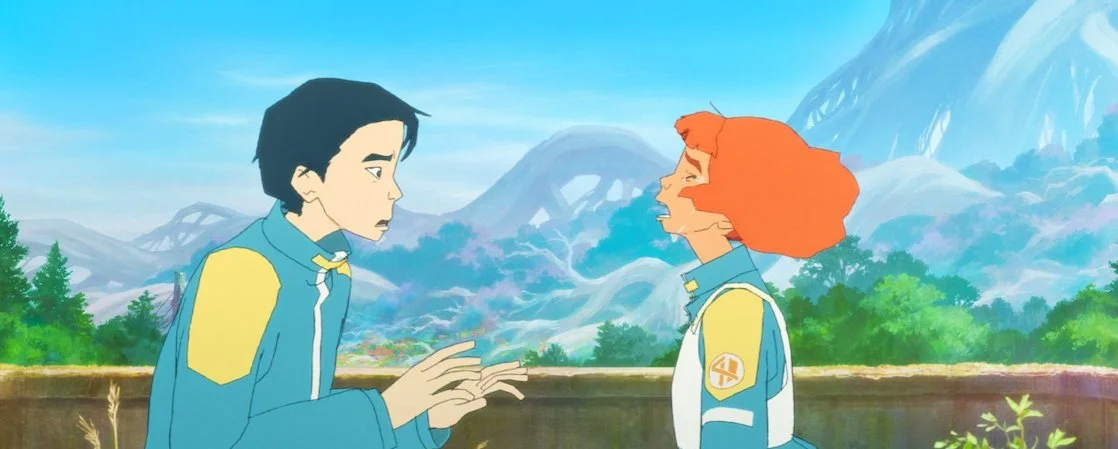
But on the downside… Keiji was the less interesting main character for Sakurazaka and in Liman’s version, because duh, and at about the midway point Akimoto and Kido let the focus drift almost entirely from Rita to Rita and Keiji when he comes into the picture. Short version: All You Need Is Kill, this one anyway, is more interesting without him. All versions of Rita have been the more compelling hero. Kido finally acts on that basic fact and then doesn’t follow all the way through. This version is more interesting as a metaphor for Rita being stuck in a personal loop of her own making stemming from a traumatic childhood that could have been fully drawn instead of a sketch had the script given her more time. Hmmm. Wonder where they could have found pages for that? Naturally, there’s a symmetrical backstory for Keiji that connects them to each other emotionally: he had a stellar career being bullied at school (of course) which has made him the ultra-shy wallflower his is now. But Keiji’s arc (and Keiji) feels forced, and introducing him slows the film to a crawl just as it should be barrelling towards its alien revelations and the solution to those courtesy of the revitalised Rita.
The film pulls itself from the mire late in the third act when Rita and Keiji meet up with Shasta (Kana Hanazawa, also a Demon Slayer vet), a scientist studying the Darol, and head off for their positively psychedelic final fight. Art directors Junji Okubo, Takanori Nakajima and Tomotaka Kubo swing for the fences, and for the most part hit homers, even if there is a bit of typcially 3D background murk. It’s a worthy enough addition to the various iterations of what is now IP and a pleasant distraction from the increasing homogeneity of Japanese anime.