
Key Word: ‘Treasure’
Rarely has a costume change or move to ‘stage left’ been fraught with such tension and drama.
Kokuho
Director: Lee Sang-il • Writer: Satoko Okudera, based on the book by Shuichi Yoshida
Starring: Ryo Yoshizawa, Ryusei Yokohama, Ken Watanabe, Shinobu Terajima, Mitsuki Takahata
Japan • 2hrs 55mins
Opens Hong Kong November 13 • IIA
Grade: A
The comparisons to Chen Kaige’s Farewell My Concubine will come fast and furious with Lee Sang-il’s Kokuho | 国宝. No duh, it’s about two lifelong friends and performers plying their trade in an enigmatic, classical art form that many, many, many people find utterly inscrutable. In Concubine’s case it was Chinese (Peking) opera. In Kokuho it’s kabuki. The friends grow apart and reunite again and again, through outside social and political forces threatening their craft and internal ones of distrust, professional jealousy and betrayal. Somehow, over the course of several decades, they maintain a unbreakable, if weird, bond and an understanding of each other’s consuming ambition no one else ever really could.
And that is where comparisons end. No shade to Chen – Concubine’s a great film – but there’s a melodramatic soapiness to Kokuho that keeps it from getting bogged down in grim history. And no shade to Lee, Kokuho’s soapiness does not a fucking thing to keep it from status as an engrossing, technical wonder that transcends its melodrama, partially demystifies its mystifying central craft and is never less than entertaining. It helps that Lee (Wandering) is working on his third Shuichi Yoshida adaptation after Rage and Villain (he knows this guy), and has a murderer’s row of techs to back him up: lush, vivid production design from Nao Shimoyama (Hirokazu Koreeda’s The Third Murder); gorgeous, ornate costumes by Kill Bill designer Kumiko Ogawa; evocative, immersive cinematography by Sofian El Fani (Blue Is the Warmest Color, Pachinko); and a propulsive, East/West, modern/traditional score by Marihiko Hara (Wandering). Lee and his crew have precision engineered Kokuho to whisk us off to mid-century Japan and the in-flux world of kabuki theatre and onnagata performance. The film is Japan’s nominee for best international feature at the Oscars next year. Again, no duh.
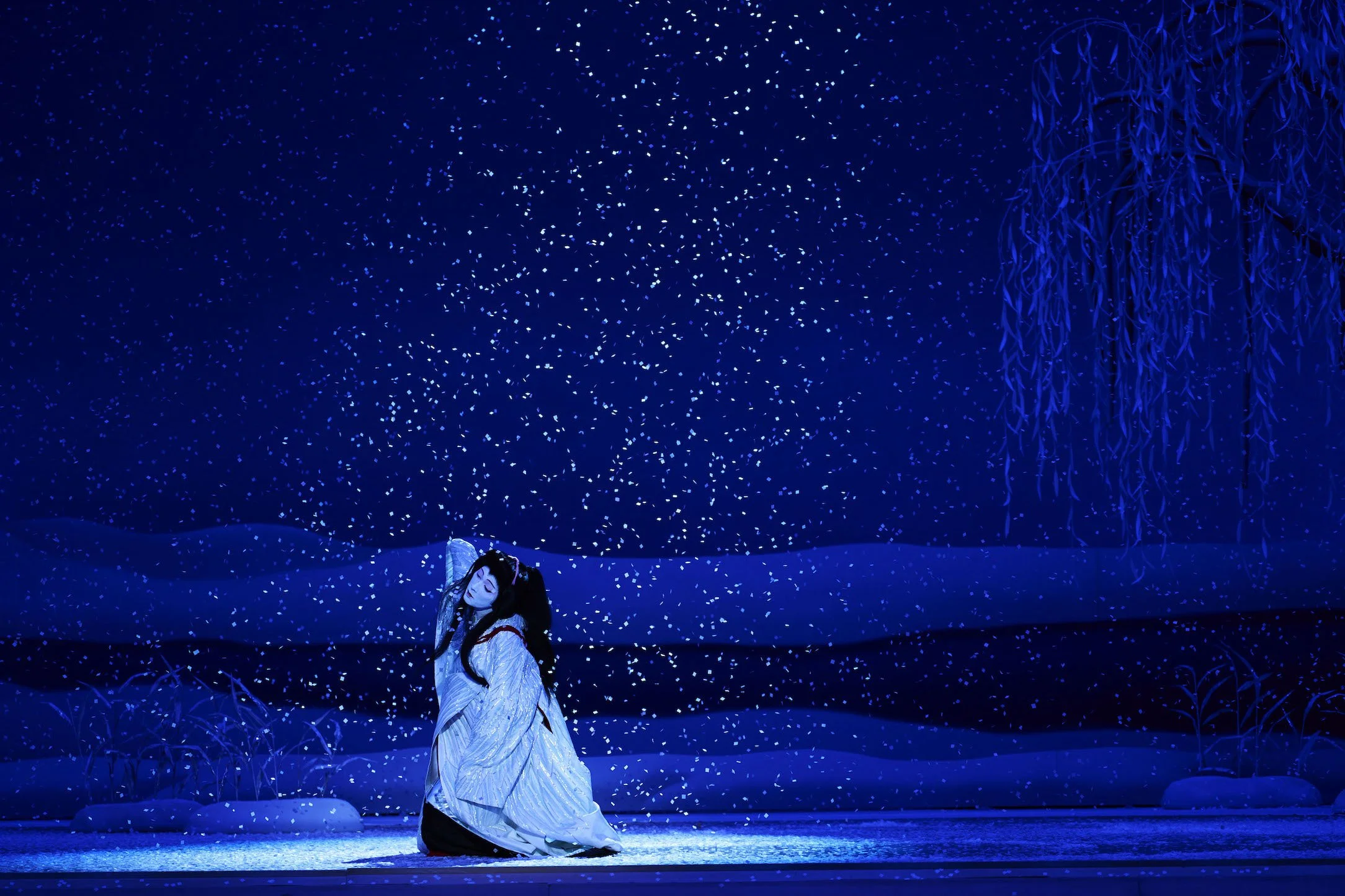
And with that it’s off to kabuki
It’s entirely understandable how Kokuho became Japan’s second biggest domestic grosser this year so far (but come on, it’s November, unlikely anything will catch it) behind Demon Slayer: Infinity Castle (I know, shocking) and the 13th highest earner ever – ahead of Avatar, The First Slam Dunk, Top Gun: Maverick and a pile of very popular animes. It should be noted that Lee is Korean-Japanese, and so for most of his life has been on the outside looking in. That insider’s distance – distant insider? – gives him just a critical enough eye to be able to effortlessly illuminate the rigid social hierarchy and slavery to bloodlines that kabuki perpetuates itself on, its inherent misogyny and its uneasy reliance on patronage – which we call corporate sponsors now, same thing. Lee and writer Satoko Okudera (Kiki’s Delivery Service) never club us over the head with the politics of kabuki, but it’s there for anyone who cares to look. By the same token, the local in Lee allows for a loving, almost reverent recreation of the kabuki scene from the 1960s to now, with El Fani’s camera jumping back and forth between the frantic, back-stage sweatiness and chalky make-up of showtime prep and the practised, hushed stillness of being on the stage. No shit, moving the train of a kimono has never been so tense or so fascinating as skill set. A clean wide shot of an auditorium never said so much about a artform’s place within popular culture.
In 1964 Nagasaki, budding kabuki singer Kikuo Tachibana (Ryo Yoshizawa, a revelation after Tokyo Revengers and Living in Two Worlds, and Soya Kurokawa as a kid) is orphaned when his yakuza boss dad (Masatoshi Nagase) is murdered at a holiday party. Fortunately, Hanai Hanjiro II (Ken Watanabe, practically perfect as usual) was at the party, and seeing Kikuo’s talent for himself, takes the unconventional step of adopting him and training him in Osaka. Kikuo and Hanjiro’s son and heir Shunsuke Ogaki (Ryusei Yokohama, a revelation after Unreachable, and Keitatsu Koshiyama as a kid) become BFFs, and grow into a renowned young duo. It becomes clear early on that Kikuo might be a generational talent, even if he lacks Shunsuke’s PR savvy. Of course, Shunsuke doesn’t need to work for his gig, but Kikuo’s dad was a gangster, so has to work twice as hard. When Hanjiro shocks everyone by all but naming Kikuo his successor, the shit hits the fan and the two turn from friends and artistic collaborators to dangerously driven rivals.
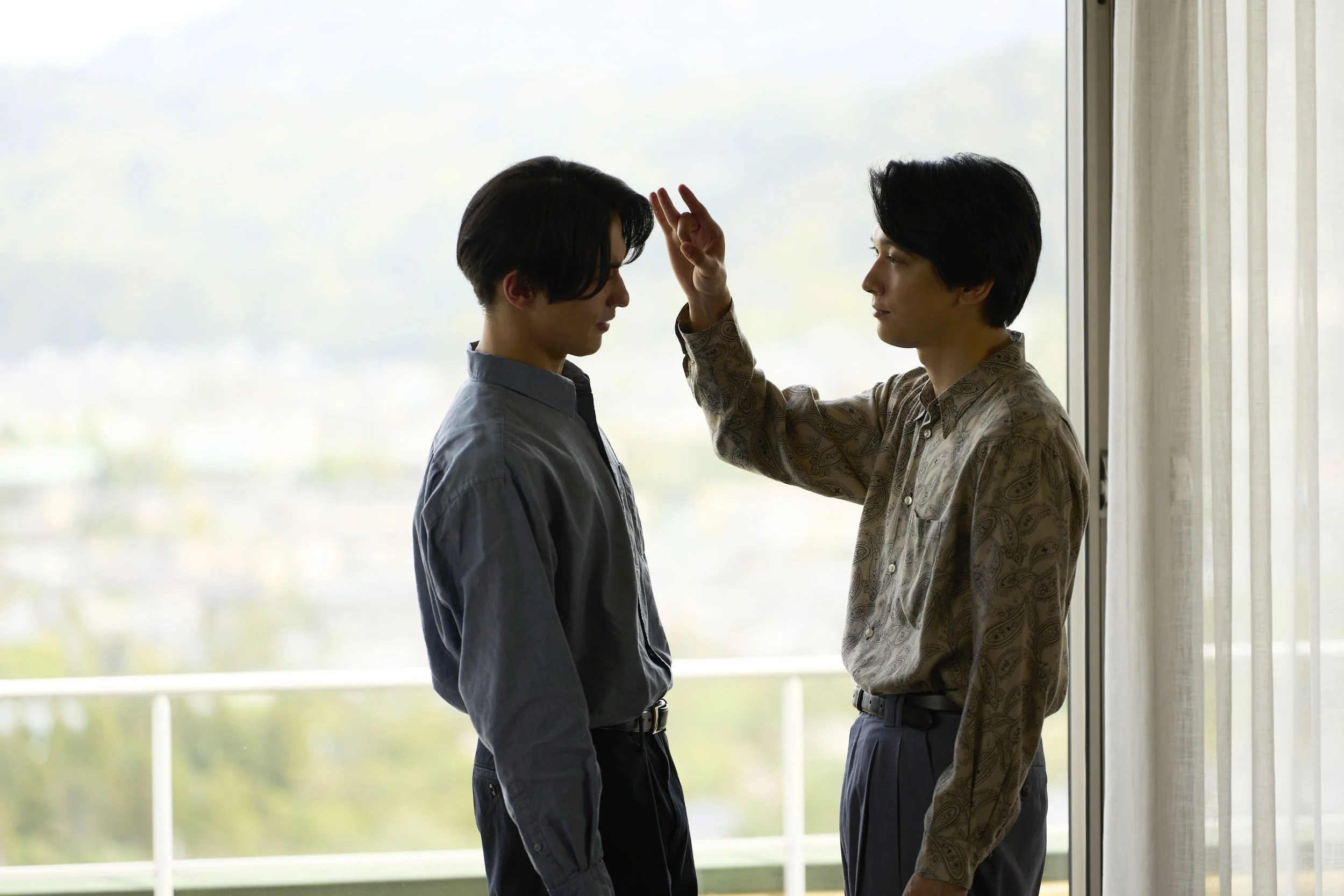
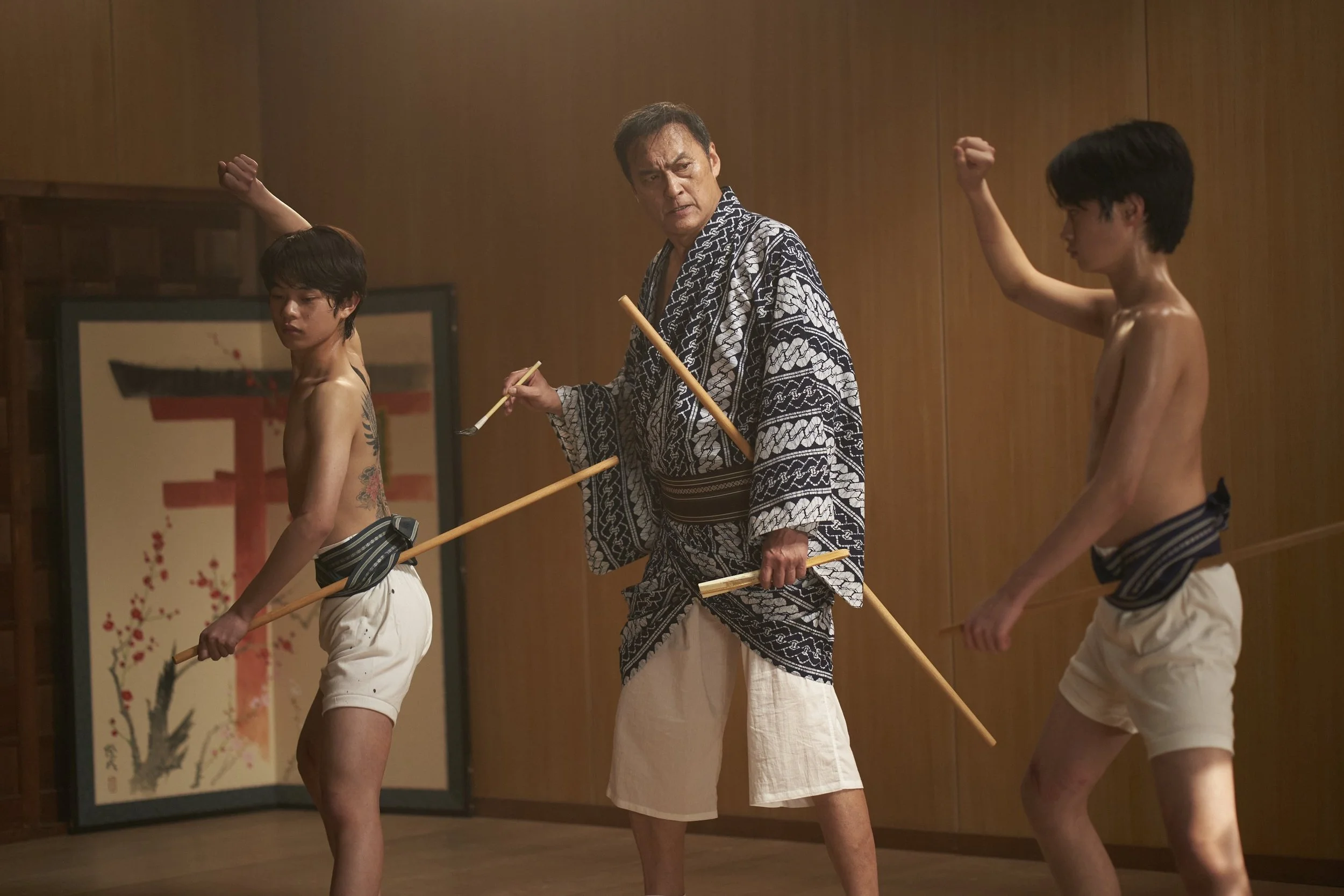
Kokuho is a commitment. It spans 50 years in Kikuo and Shunsuke’s lives, and three hours of your own, but there’s barely any fat on it. Every precise frame and composition means something, and almost every frame could be paused and hung on a wall, it’s so sumptuous. Layer upon layer of text and subtext is complemented by plenty of chest heaving and pearl clutching drama; Harue (Mitsuki Takahata), Akiko (Nana Mori) and geisha Fujikoma (Ai Mikami) are the women who get zero consideration from either Kikuo or Shusuke (so much so that in a bit of self-fulfilling prophecy Lee and Okudera barely flesh out their characters), and who are often the source of tabloid gossip. The only woman to leave an impression is Sachiko (Shinobu Terajima), the Hanai matriarch who’s suspicious of Kikuo from jump. There’s an abandoned child, a race to rock bottom, terminal illness, shady patrons, abuse and backstabbing in an epic story culiminating in Yoshizawa’s ripper of a performance in Kikuo’s centrepiece show, cementing him as a ningen kokuho: a living national treasure. Hara’s score weaves together kabuki rhythms and Western orchestral sounds that create a triumphant, bittersweet soundscape that’s best felt in Dolby. One of 2025’s best.