
Misery, A Love Story
Without Xin Zhilei tearing it up this is an unmitigated pile-on for the sake of piling on.
The Sun Rises On Us All
Director: Cai Shangjun • Writers: Cai Shangjun, Han Nianjin
Starring: Xin Zhilei, Zhang Songwen, Feng Shaofeng
China • 2hrs 11mins
Opens Hong Kong November 6 • IIB
Grade: B-
At one point in Cai Shangjun’s The Sun Rises On Us All | 日掛中天, reunited lovers (this is a movie that uses words like “lovers”) Meiyun (Xin Zhilei, A Writer’s Odyssey II, Blossoms Shanghai) and Baoshu (Zhang Songwen, Dust to Dust) get caught in an elevator mishap while looking at a new flat. Meiyun has resigned herself to making Baoshu comfortable as he fights a serious illness after getting out of prison for a five-year bit he did for her. They’re near the third floor, but Baoshu can only wedge the door open long enough for Meiyun to crawl out. The door slowly closes between their faces in close-up, separating them again, she in lift lobby and able to go about her business; he trapped within the dark confines of the lift itself. Oh, the humanity! I need a fainting couch.
That’s the kind of on-the-nose melodramatic imagery Cai (The Red Awn) dishes out in his discount Ingmar Bergman fourth feature The Sun Rises, imagery we’re supposed to think is deep, and that’s supposed to drive home the great tragedy of this couple’s relationship. Like it did in Cai’s People Mountain People Sea, the narrative self-destructs in the third act after a rambling and diffuse, if basically compelling character study about a woman’s crushing guilt and co-dependent sense of karmic justice. The film mostly wallows in squalor, and the only thing that keeps it from descending into unbearable miserablism is Xin’s entirely deserving best actress-winning performance (at Venice).
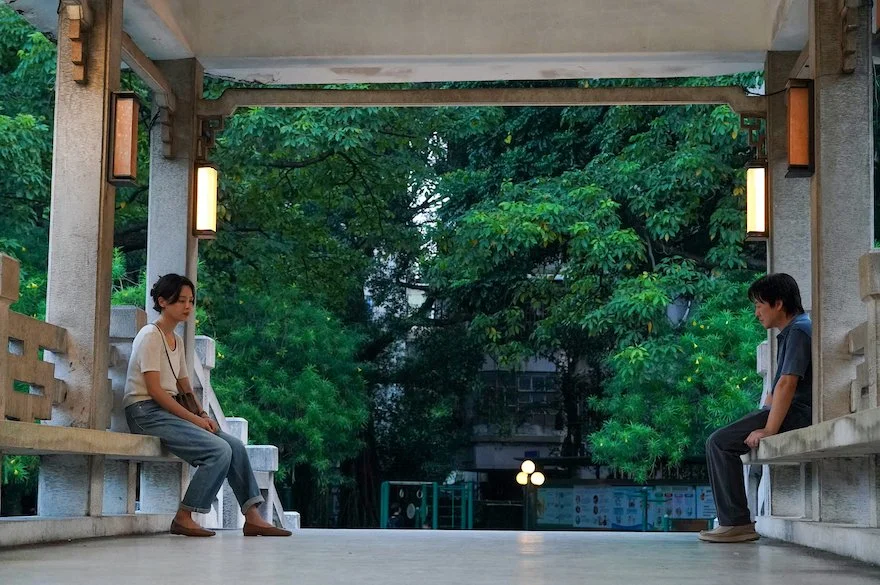
Get it? They’re distanced from each other
Xin plays Meiyun close to the chest, as a woman close to buckling under the stress and strain of a marginal, social-media driven women’s fashion business; the cautious optimism of a pregnancy she never thought she’d be able to have; and the false hope of a real relationship with her full-of-shit married boyfriend and baby daddy, Qifeng (Feng Shaofeng, Creation of the Gods I: Kingdom of Storms and II: Demon Force). Meiyun is having an ultrasound one day when she runs into Baoshu at the same hospital; he’s having stomach cancer treatment. Once partners – sorry, lovers – they haven’t seen each other in something like six years. Turns out he took the fall for a fatal traffic accident that was actually Meiyun’s fault and did five years in the clink for her. She stopped visiting after his first year inside. He’s pissed to say the least and she’s been living with a rager of a guilty conscience ever since. Initially Baoshu wants nothing to do with Meiyun – not her money, her charity, her medical help, nothing. But after she tracks him down living in a crappy boarding house he figures what the hell. He’ll take from her what he can. She’s willing to jump through hoops as a way to atone, at least at first. What unfolds is a vicious circular dance of rancor, blame and frustration in their eternally connected searches for redemption and release.
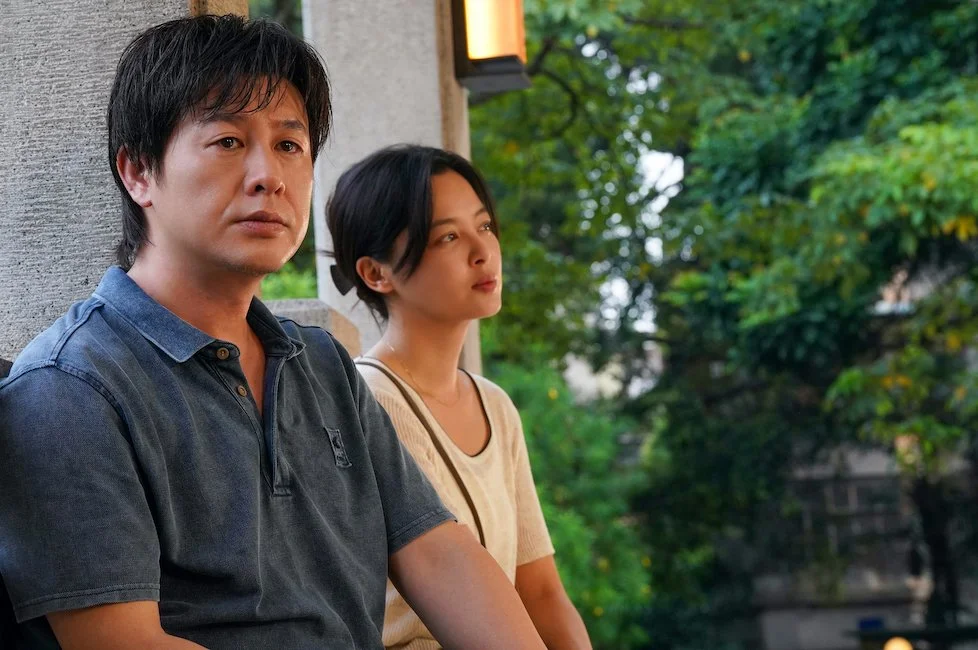
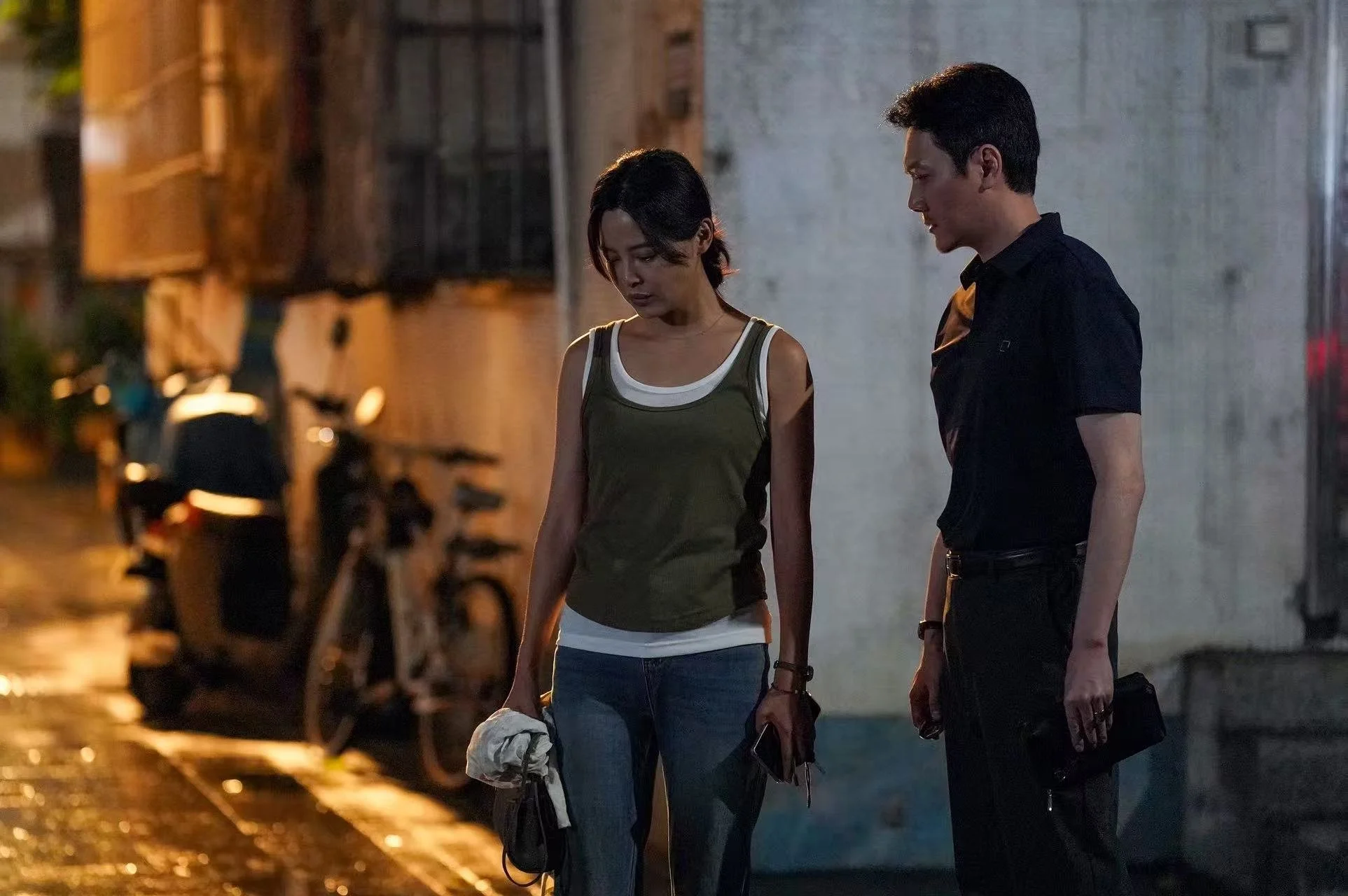
And Cai would have us sit through this push-pull of resentment, guilt and the need for accountablilty for over two hours, the last stretch of which turns into a histrionic soap opera that very nearly undoes all of Xin’s hard work to that point. As an exploration of modern womanhood in Guangzhou, The Sun Rises On Us All (how Hemingway of you, Mr Cai) is mostly good, thanks to Xin’s ability to turn the faux-charm on at a moment’s notice for her livestream sales, to manifest a simmering pain that’s always on the verge of exploding, and to telegraph a bone deep knowledge that Qifeng is a waste of her energy and pox on her dignity, but an awareness of a futile hope that he’s not. The skimmed over C-plot, the grim urban realist drama nestled on the ugly side of Guangzhou and its cut-throat, occasionally shoddy garment trade, is a movie in itself, whereas B-plot revolving around a series of mysterious text messages Qifeng’s been getting, threatening to expose what the anonymous sender knows – that Meiyun is a side piece – could be excised entirely in favour of a more focused portrait of Meiyun that gets to its final, gratuitous kick in her teeth faster; oh, you bet Cai and co-writer Han Nianjin indulge in some casual rape (Cai’s done this before) earlier in the story. It’s not something that tells us anything about Meiyun and Baoshu’s dynamic, or about her working-class status in modern China, or about the shocking anonymity of the world (the closing shot is better at that). It just tells us about Cai’s penchant for narrative hyperbole.