
‘Another World’ is an animated film made in Hong Kong, not a Hong Kong animation. Make sense?
Another World
Director: Tommy Ng • Writer: Polly Yeung, based on the book by Naka Saijo
Starring: Chung Suet-ying, Christy Choi, Will Or, Kay Tse, Yeung Nga-man, Louis Cheung
Hong Kong • 1hr 51mins
Opens Hong Kong October 29 • IIA
Grade: B+
Look, I don’t want to be the one person in Hong Kong to dunk on animator Tommy Ng Kai-chung’s feature debut but let’s be honest for a hot minute. His and writer-producer Polly Yeung Po-man’s adaptaton of Japanese fantasy author Naka Saijo’s Sennenki (or Millennium Ghost) is an accomplishment, no doubt about that. Hong Kong isn’t exactly renowned for a legacy of animated cinema, so when one comes around it’s fair to sit up and take note. But the trouble with Another World | 世外 – which was the first film from Hong Kong to land its ass at the Annecy International Animation Film Festival since My Life as McDull in 2003 – is that it feels more like imitation than adaptation. Just this month Park Chan-wook made an American novel feel entirely Korean in No Other Choice. Vishal Bhardwaj relocated Shakespeare to the Indian underworld three times (Maqbool, Omkara, Haider, see them all). And for Hongkongers, two words: The Departed. Sadly, aside from being spoken in Cantonese (which will probably be dubbed over in overseas releases) nothing about Another World feels particualry Hongkongish, whatever that means. It looks like Miyazaki-lite
None of that makes it a bad film by any stretch. Quite the contrary. Another World is a gorgeously drawn, violent, thematically and narratively complex wide screen meditation on right, wrong and the fundamentals of good versus evil – the seed of which is in us all and blossoms when we allow it to. It’s an afterlife fantasy pivoting on reincarnation, karma and choosing to be better no matter how hard that may be, a sentiment that resonates in every corner of the globe right now. Ng should be commended for having the balls to say what we’re all thinking, and to say it with such artistic panache and, yup, optimism.
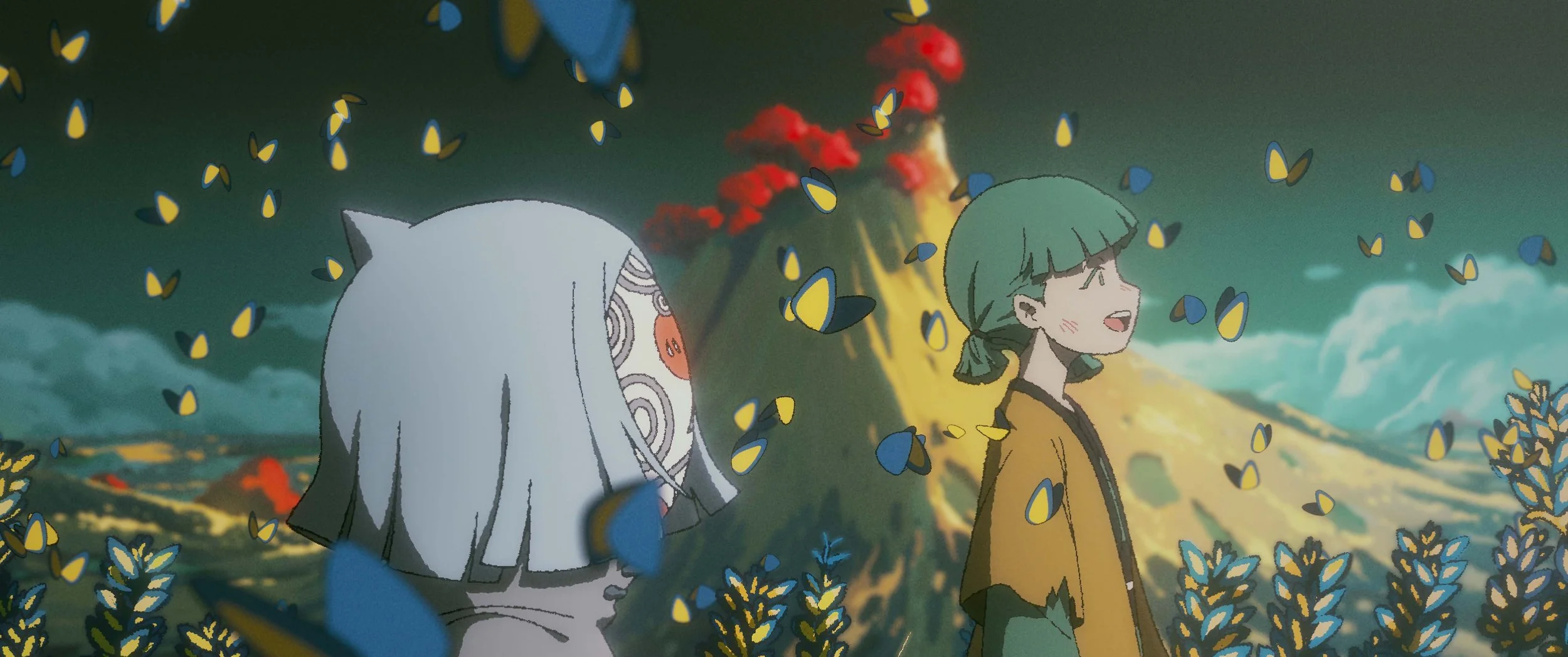
Nope, not Miyazaki
Another World begins with spirit guide Gudo (Chung Suet-ying, The Lyricist Wannabe) leading Yuri (Christy Choi Hiu-tung) to the next life while simultaneously fighting her seed of evil. Yuri is seriously pissed at something, and her festering rage is threatening to let her seed blossom into full-blown monstrosity. Because of this, the Goddess Mira (Kay Tse On-kei, Band Four) pretty much dares Gudo to get Yuri under control or face the consequences, and sends the two of them on a thousand-year underworld trek to keep Yuri on the side of good.
While on this tour, Gudo (which reads as Siu Gwai/Little Ghost in the subtitles) becomes fascinated with human emotions and wants to absorb as much as possible about them, and to understand these fragile creatures better. Among the souls Gudo and Yuri encounter are Goran (Yeung Nga-man), the princess and heir of Flower City, who turns into a tyrant after the death of her father and the treason of one of of his generals; Keung (Will Or Wai-lam, Good Game, The Chronicles of Libidoists), a farmer from a starving community that’s forced to give up much of its harvest to the ruling class and the army; and a pair of exploited sisters and workers in an industrial revolution-era factory. Escorting the duo as protection detail is Dark Knight (Louis Cheung Kai-chung). He slays monsters that have grown from seeds. Shit gets seriously dark.
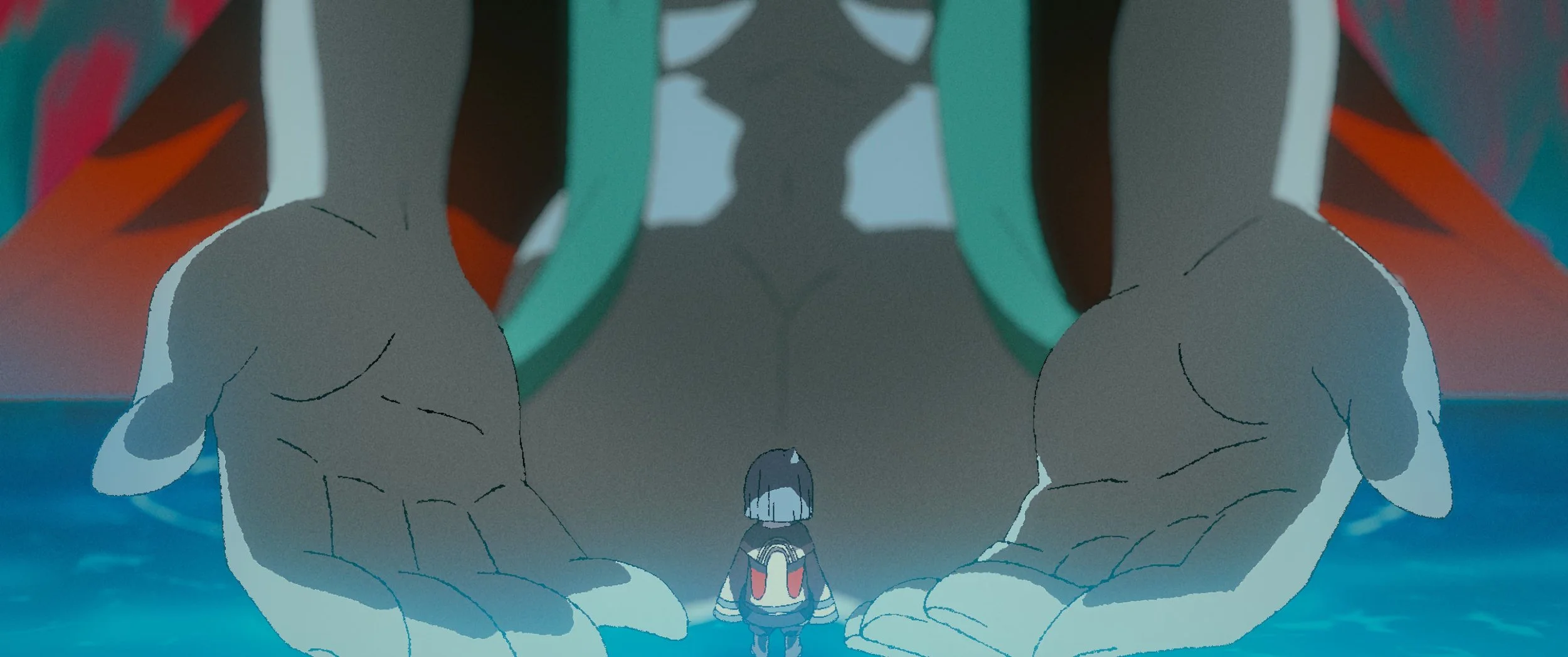
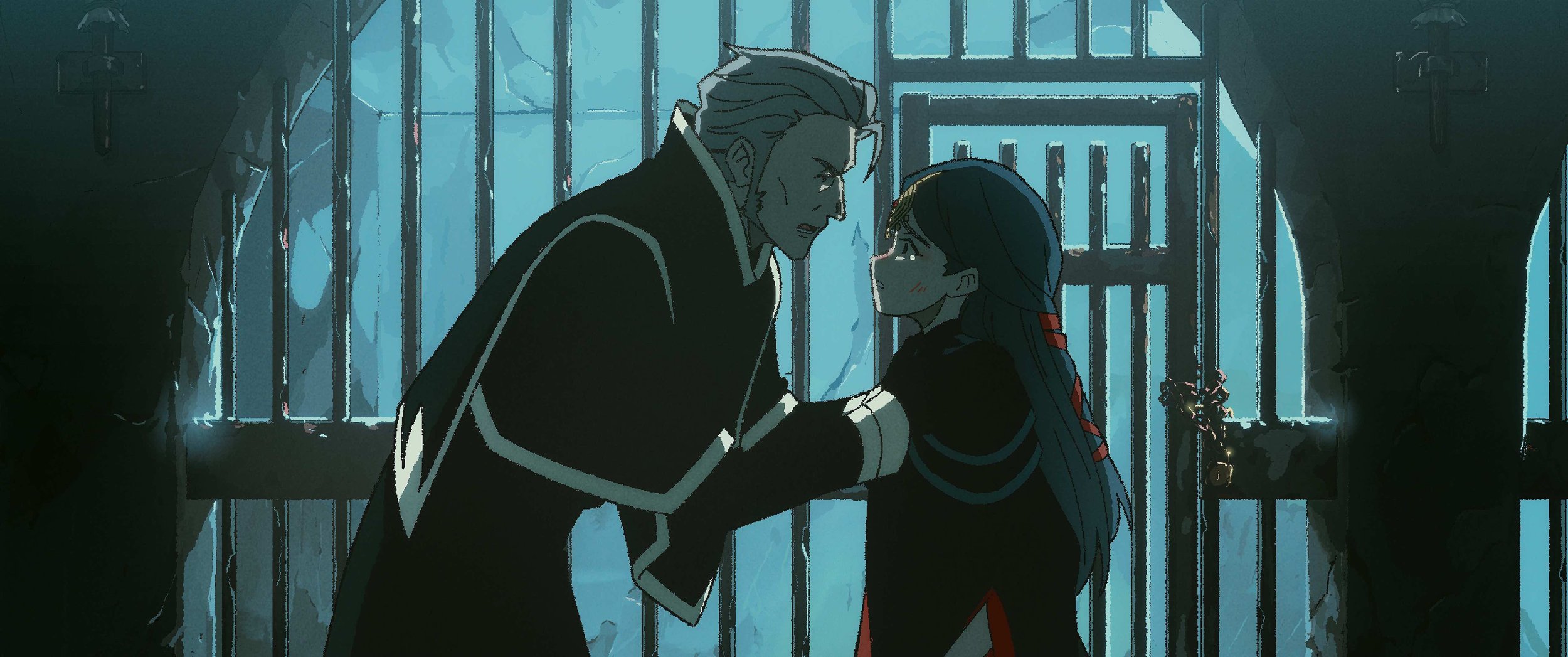
Admittedly the influence of animation giants like Hayao Miyazaki (the big one here), Ralph Bakshi, Te Wei, Tex Avery and yes, Walt Disney is always going to be felt; it’s the way art works. But Another World was an opportunity to play with creating a new Hong Kong aesthetic, the way the action maestros of the 1980s and ’90s did, by exploiting the city’s personality and urban landscape to write a new visual language. Animation is even more able to go there, and Yeung clearly had a firm grasp on the material. Though steeped in Buddhism and Eastern philosophy, Naka’s book is also rooted in universal concepts of grief, guilt, redemption, and how we react, respond, take the high road or don’t when shit hits the fan. None of that, truly the meat of the movie, had to be sacrificed in order to make the film more Ng’s own. The distinctly anime silhouettes, visual motifs and even locations feel copied – really, really well – rather than interpreted, despite a glorious colour palette and frequently surreal tone. It’s dense, quite brilliantly structured (the less you know about the story details the better) and, again, easy on the eyes, and Ng clearly has talent and in a perfect world he gets another kick at the can. But in the end Another World feels like the filmmaking equivalent of an iPhone: Designed in California, assembled in China. It’s a film made in Hong Kong, not a Hong Kong film.