
Shinobu Yaguchi jumps from boys’ synchro to possessed toys in his first foray into horror. It’s just as goofy.
Dollhouse
Director: Shinobu Yaguchi • Writer: Shinobu Yaguchi
Starring: Masami Nagasawa, Koji Seto, Jun Fubuki, Tetsushi Tanaka
Japan • 1hr 50mins
Opens Hong Kong September 25 • IIA
Grade: B
Shinobu Yaguchi’s Dollhouse | ドールハウス begins with a one-two punch of “How could you be so dumb” and an “Oh god, what a nightmare.” In an respectable, middle-class Tokyo suburb, proper Japanese housewife Yoshie (Masami Nagasawa, Shin Kamen Rider) is taking her turn with the neighbourhood kids on a play date at her house. Among the kids, of course, is her five-year-old daugther Mei. Yoshie runs to the store for snacks while the kids are playing hide-and-seek, returning to find Mei is missing. The cops are summoned. The missing child alert goes out. Then a few hours later Yoshie finds Mei at home. It’s not good. For the next little while she is consumed by sorrow and guilt.
Yaguchi is a comedy guy, best know for the feel-good, underdog sports film Waterboys, about a boys’ synchronised swim team, and Swing Girls, exactly the same thing except about a girls’ brass band. He makes warm, fuzzy blankets and inoffensive, inspiring tales of rising above and finding one’s voice. In other words, parental anxiety and crippling fears of catastrophic failure married to Japanese folklore and religion in a creepy doll metaphor are a little outside Yaguchi’s normal comfort zone. Dollhouse is ridiculous and funny in its way, but it also strangely works as a meditation on grief and forgiveness. Whodathunk?
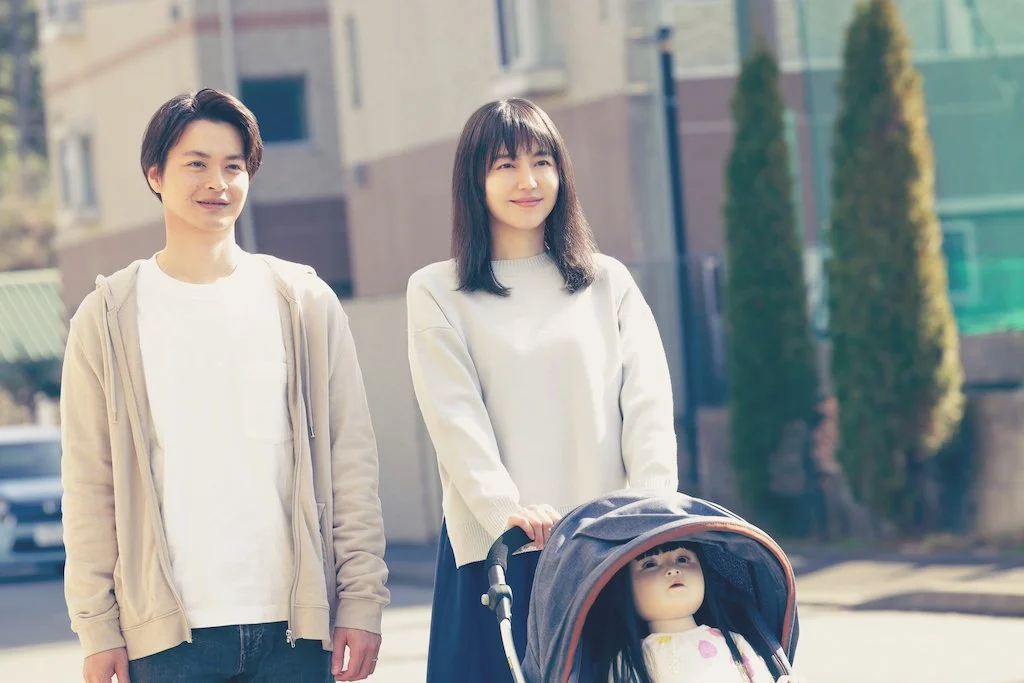
Next level creepy doll
Following the death of Mei, Yoshie falls into a depression that she shakes herself out of (because, yeah, depression, get over it?) when she buys an antique doll in a market one afternoon – a doll that’s a ringer for Mei. Her husband Tadahiko (Koji Seto) deals with his grief by diving into his nursing work, but a therapist tells him Yoshie’s fixation on the doll as an avatar for her dead child is fine. It’s a way for her to work through her pain. Sure enough it helps her get back to a semblance of her own sense of normal so by the time she finds herself pregnant again Yoshie’s ready to accept Mei’s death and move on. That means dumping the doll in the back of a closet.
To this point Dollhouse is a curious and frequently sensitive portrait of coping with loss, and Yaguchi and Nagasawa play it low-key, never saying Yoshie thinks she was an idiot for leaving the kids, but suggesting she fears it just the same. There’s something bizarrely soothing about Yoshie’s adoption of the doll as a surrogate and something darkly hilarious about Tadahiko’s reaction to this process; Seto is a great straight man. And yes, Dollhouse is often funny.
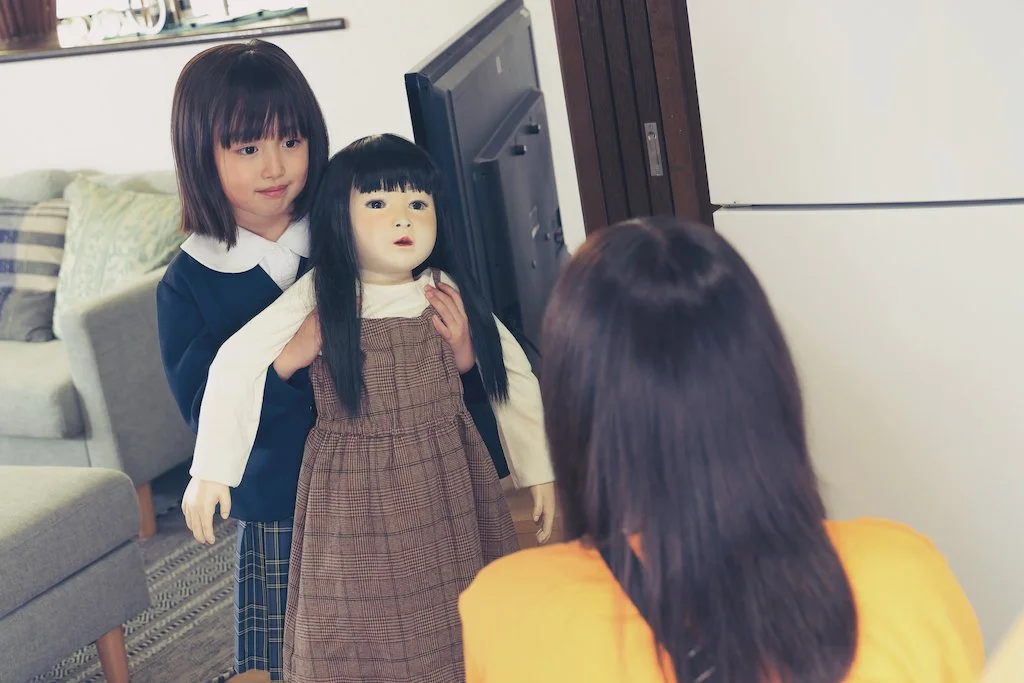
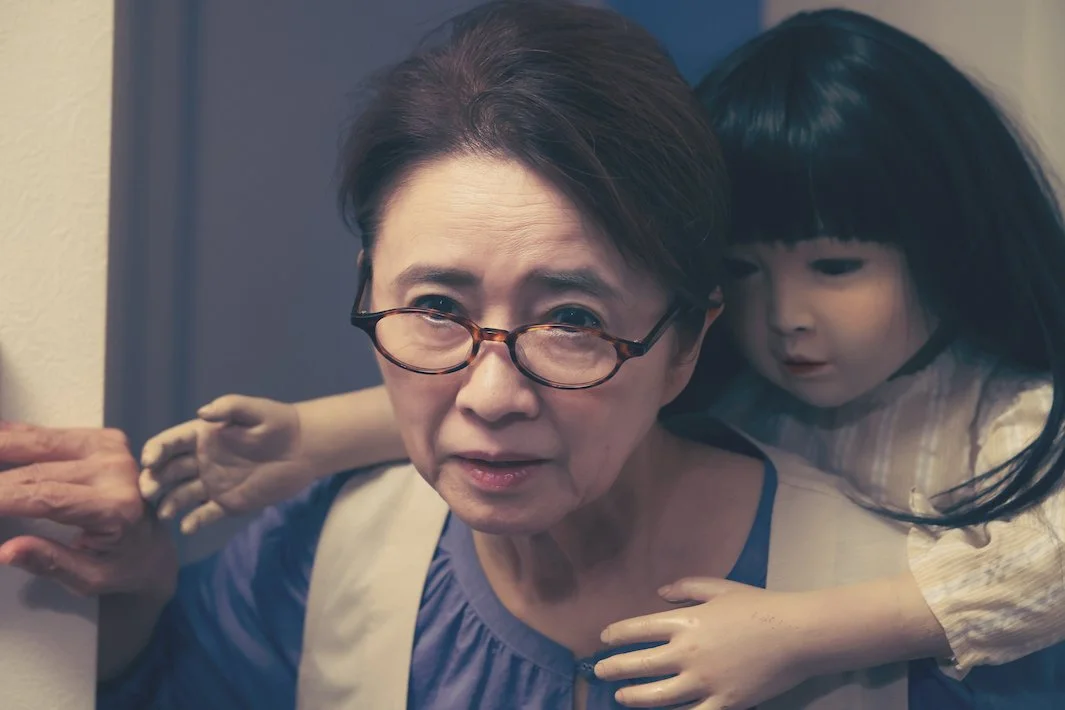
But then there’s the other element of the movie, the more horror-inflected part of it rooted in actual Japanese traditions of property disposal, significantly of dolls. This is a thing in Japan, Buddhist and Shinto ningyo kuyo, funeral rites that Yaguchi taps for his sentient toy. This doll is haunted by a tragic history that starts fucking with Yoshie, Tadahiko and their second daughter, Mai’s (Aoi Ikemura) karma, after Mai finds it in the closet and is told – by the doll – its name is Aya. They become BFFs. Uh oh. It threatens Mai’s grandmother Toshiko (Jun Fubuki), it threatens a detective, Yamamoto (Ken Yasuda) and keeps coming back to Yoshie’s house no matter how hard she tries to ditch it. Eventually haunted doll expert Kanda (Tetsushi Tanaka), who knows a good bit about Aya’s original maker and his sad story, is summoned. Then Dollhouse does the usual haunted object thing.
This is not like M3GAN, whose doll was powered by AI, and it’s not Annabelle or Chucky, which were just possessed. There’s a deeper spiritual story attached to Aya that allows Yaguchi to dispense with animatronics or distrasticing CGI. Knowing Aya has some kind of soul makes every shot of the doll just laying on the ground or on a garbage heap that much more stressful. You know she’s going to magically throw down somehow; a night with grandma is white-knuckle tense. There’s a sustained rising tension in the last act that would have paid off fabulously had Yaguchi chosen one ending and stuck with it, again proving the Achilles heel for too many films lately is knowing when to wrap it up.