
Chloé Zhao is insufferable.
hamnet
Director: Chloé Zhao • Writers: Chloé Zhao, Maggie O’Farrell, based on the book by O’Farrell
Starring: Jessie Buckley, Paul Mescal, Emily Watson, Joe Alwyn, Jacobi Jupe, Noah Jupe
UK / USA • 2hrs 5mins
Opens Hong Kong March 12 • IIA
Grade: C+
It would appear I’m in the minority on Hamnet. There’s not much to the film, it’s a fairly conventional family drama; a story about a couple coming to grips with the death of a child and how each processes their grief. One of the couple is an artist, and so channels their pain through creativity. The end. Yup, it’s an old story that’s been done again and again. That’s not the problem with Hamnet.
The problem with Hamnet is that it feels calculated to tick off festival circuit boxes and get critics to toss around words like “devastating” and “shattering” and “essential” and “profound.” And they have. Sure, any movie about someone’s child dying is going to be sad, and anyone who finds Hamnet to be any one of those things is obviously not wrong. I’ve said it before: I’m not going to tell anyone they’re wrong for liking something. I’m not as enamoured with Hamnet because I find Chloé Zhao to be among the the most performative directors currently working. Not unambitious. Not inept. She’s clearly well trained and well educated – at NYU’s Tisch School of the Arts, by Spike Lee no less. But her films also bear the distinct whiff of art by process of elimination. Zhao’s work – from this, to her Oscar-winning Nomadland, to the failed Marvel experiment that was Eternals – feels like she took stock of the cinema landscape and chose a niche to occupy, settling on slow burning meditations on mythic places and systems and grief – with mainstream cred. By a woman. Of colour. It irks me to say it but her body of work feels precision engineered to be awards contenders so she can show up on Cannes red carpet with messy hair because she’s “such an artist.” She actually says things like “the female gaze” when talking about her work. Lee’s films feel like they come from somewhere. Hirokazu Kore-eda’s films like they come from somewhere. Oliver Chan, Claire Denis and Bong Joon-ho’s films feel like they come from somewhere. Zhao’s just don’t resonate for me because they don’t feel genuine. They’re impeccably mounted, but they’re hollow.
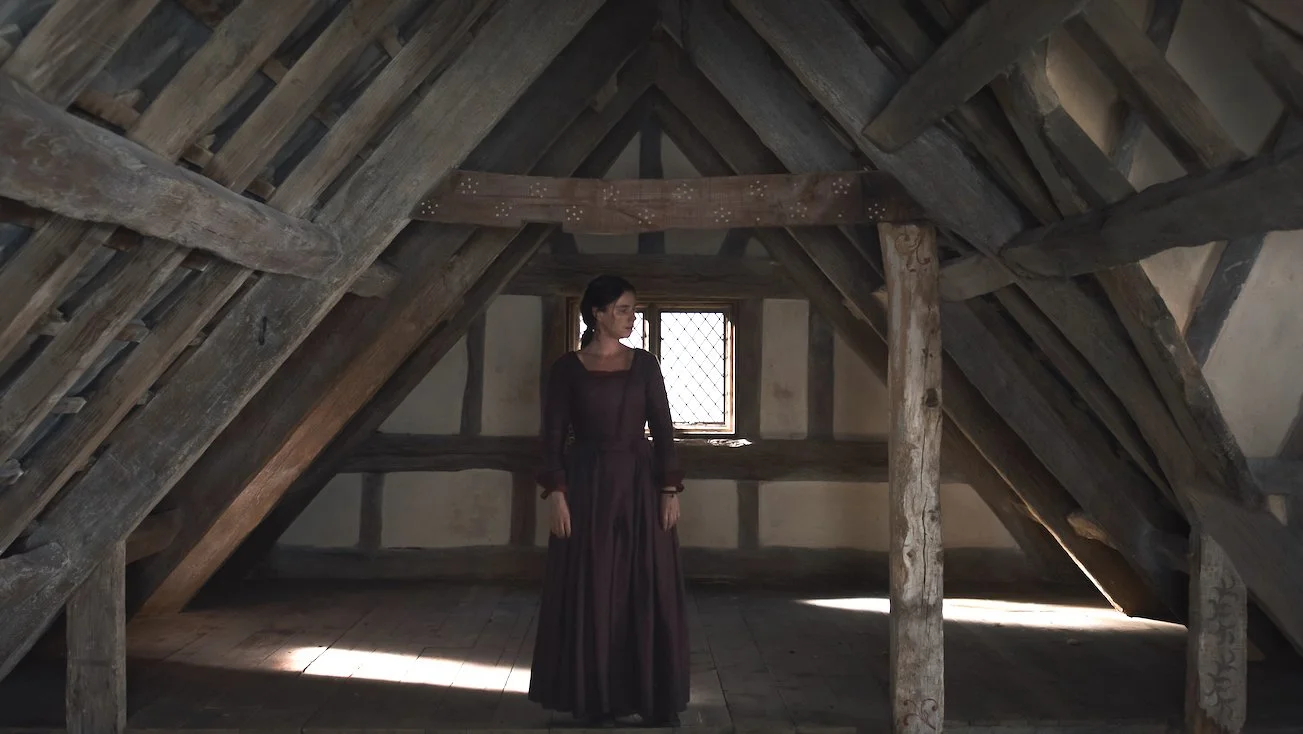
Elizabethan Eternals
Based on the novel by Maggie O’Farrell, Hamnet is mostly about Agnes, played by Jessie Buckley, who was just as OTT in The Bride! as she is in this Oscar nominated turn (hers to lose this year) despite playing to the back of the theatre for most of the runtime; she was more fun in the new film. Agnes is married to a writer called William Shakespeare (dude never amounted to anything). His mother Mary (Emily Watson) thinks Agnes is a witch or something, because she’s always communing with nature (a Zhao trademark) and fiddling with herbs, her brother Bartholomew (Joe Alwyn) is more supportive, William’s father John, a leatherworker (David Wilmot) doesn’t give a shit about anything other than his shop, and he really doesn’t understand this writing thing, and her stepmother Joan (Justine Mitchell) is a passive-aggresssive bitch. It’s a family soap. Regardless of what static Agnes and William get from all sides, they get married and promptly start having children. The first is the daughter Agnes squeezes out in the woods beside her favourite tree, Susanna (Bodhi Rae Breathnach), the next are twins Hamnet and Judith (Jacobi Jupe and Olivia Lynes). William finally becomes an Elizabethan pop culture success, but tragedy strikes when twins catch a touch of the bubonic plague, and Hamnet dies.
The Shakespeare marriage comes under strain, Agnes has no interest in moving to Stratford but goes anyway, the couple drifts apart. Then Bill writes Hamlet, Agnes sees the tribute to their dead son and realises William was in pain too. There’s a moment that looks like the cover of a Pearl Jam CD (you know I’m right) and the Shakespeares seem headed towards healing.
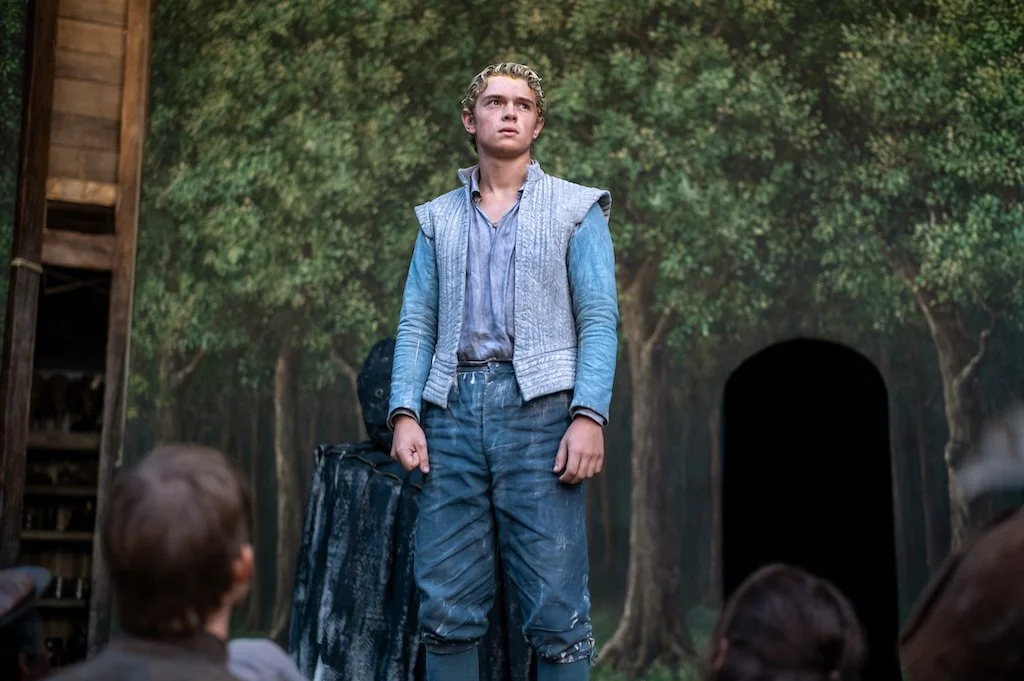
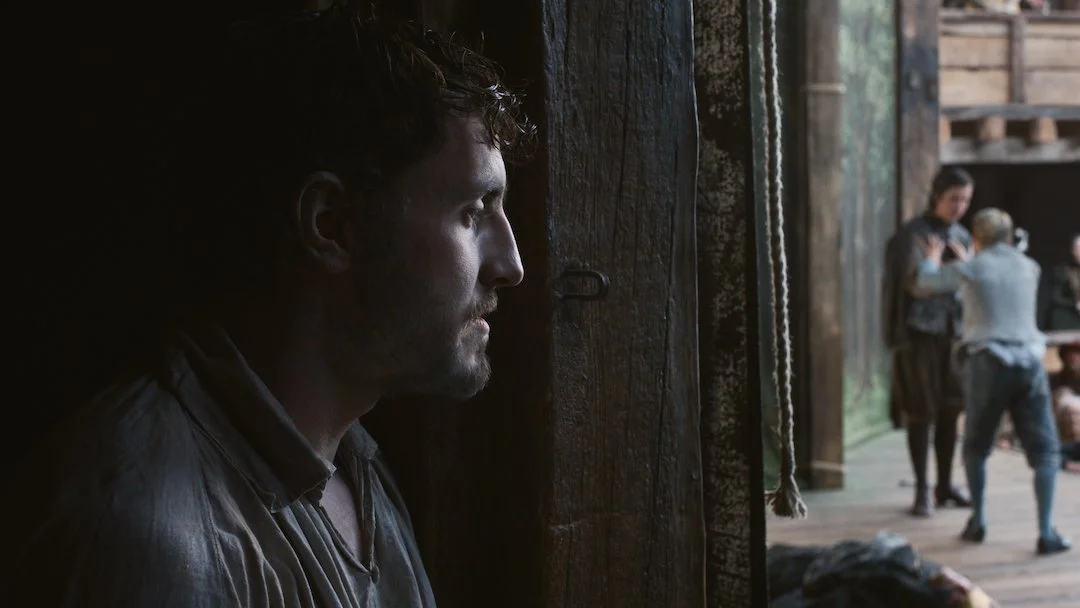
Hamnet is simply a family soap in the same way Nomadland was simply about a prickly, obsolete counter-culturalist who doesn’t know when to pack it in, both films papering over their basic storytelling with ostensibly heavy themes about death and the death of the American experiment respectively. Zhao leans hard into DOP Łukasz Żal’s (Paweł Pawlikowski’s Cold War) naturalistic phototography, designed to create a sense of average, everyday Elizabethan life in drab greys that constrast with Agnes’s more vibrant inner life visualised in the verdant forest and her blood red dress. Agnes and William’s romance chronicled in hand held close-ups, soft focus stillness signalling deep emotional connection with a sun flare for good meaure and jittery editing Godard would be proud of. She did this in Eternals too (with Ben Davis), and now looking back it’s easy to see how Zhao’s style clanged with Marvel because it was two north magnets; two clearly delineated formulas that fought each other rather than clicking. Mescal Mescals it up as the quietly suffering William and almost vanishes beneath Buckley’s extremely long shadow, and all the spaces in between their big moments are dotted with Easter egg tricks Zhao may have picked up from Marvel. Hamnet could easily support a Spot the Shakespeare Reference drinking game with its “To be or not to be” musings and throwaway “sweet prince” phrasing. But it is sad, and it is (mostly) well acted, and it is expertly produced. And if you’re in the mood for a good cry, it is indeed a no-brainer.