
Los Javis have delivered a whole heap o’ movie and a love-it-or-leave-it affair.
La Bola Negra
Directors: Jo • Writers: Javier Ambrossi, Javier Calvo, Alberto Conejero, based on the play by Federico García Lorca and La piedra oscura Conejero
Starring: Guitarricadelafuente, Carlos González, Rafael Rodríguez Rapún, Milo Quifes, Penélope Cruz
Spain • 2hrs 39mins
Opens Hong Kong November 5 • IIB
Grade: A-
Los Javis’ – filmmaking partners Javier Ambrossi and Javier Calvo – La bola negra (The Black Ball in some quarters) is a mammoth, bombastic piece of cinema that is most certainly going to land on 2026’s Loved It-Hated It pile. For the uninitiated, the film was inspired by an unfinished play by famed Spanish anti-Franco gay poet and playwright Federico García Lorca, who was murdered by nationalists during the Spanish Civil War. Only four pages of La bola negra are known to exist because García Lorca was shot before he finished it, but it’s also notable for being his only overtly gay work. Four paltry pages didn’t stop Ambrossi and Calvo from spinning a sprawling, ambitious, gorgeous melodrama from what remains, and the result is an intimate epic (if that’s a thing) weaving together three narratives set in 1932 Granada, at the height of the Civil War in 1937 and Madrid of 2017, about LGBTQ+ erasure, queer identity and history that has zero fucks to give about your whining over “the gay.”
La bola negra earned los Javis a directing award at Cannes and the Audience Award at Toronto, allegedly an Oscar indicator, so as Spain’s official entry for Oscar consideration it’s likely to make the short list. One part daring formal experiment and one part old fashioned melodrama set to a rich and evocative score (it’s easy to see why early rumours pegged it as a musical) it’s one of those movies that will grab you immediately, pull you under its sway and keep you there – or lose you as soon as the first swinging dick appears. Does its reach occasionally exceed its grasp? Sure. Does it give in to hyper-emotionalism? It’s a melodrama, of course it does. Is it frequently in danger of collapsing under its own weight and unwieldy scale? Yes, but that’s what happens when you take a big swing. And because we’re staring down the barrel of another Marvel cookie-cutter winter, bring on the big, imperfect swing.
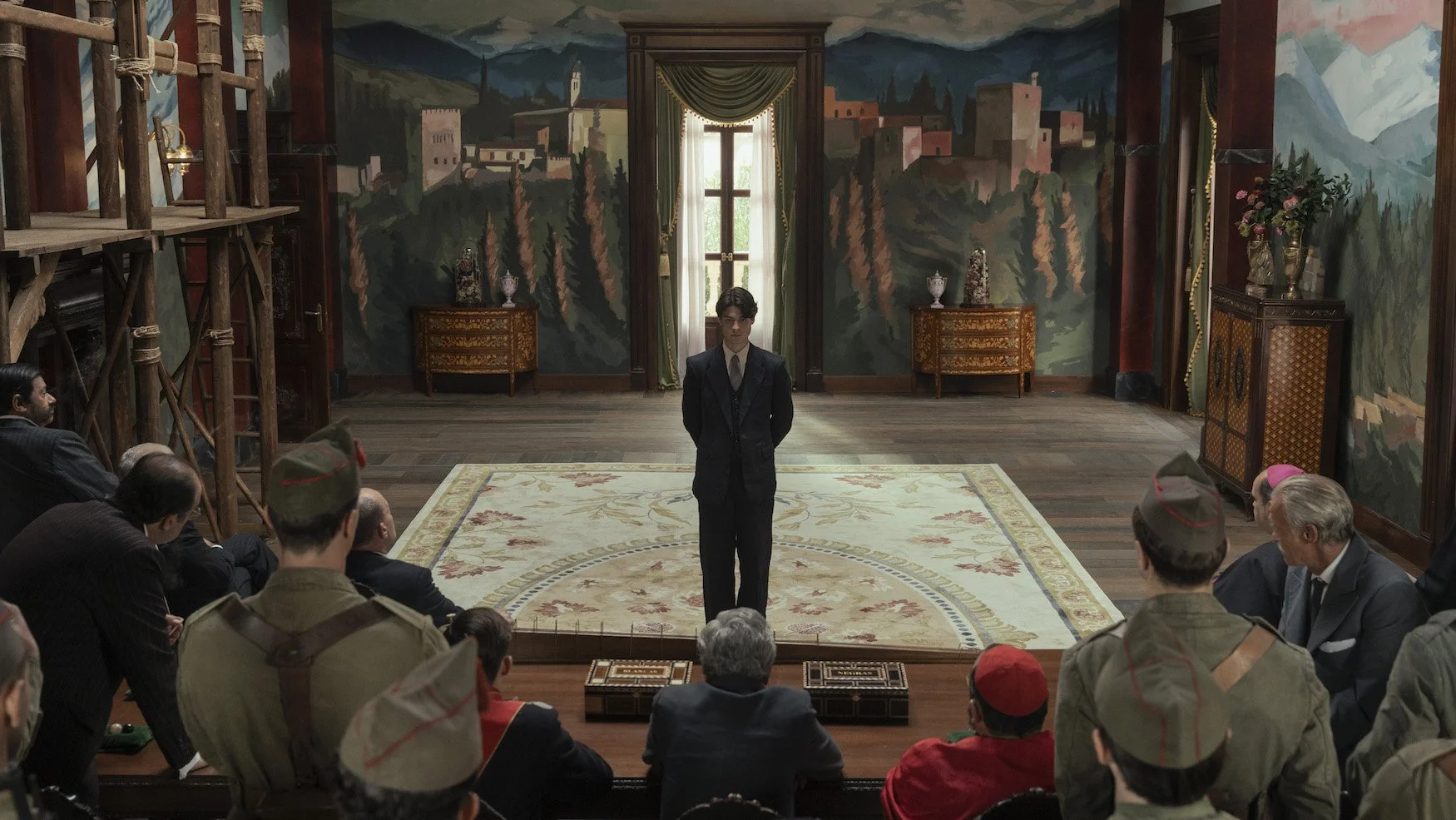
Who would reject that guy?
Like I said, La bola negra is a lot of movie. We start in 1937, in the middle of the Civil War between Spain’s Republicans and its nationalist rebels. Trumpeter Sebastián (Barcelona-based singer Guitarricadelafuente) is performing in his village square awaiting the arrival of Italian allies, which goes all wrong, forcing him on the run after his village is wiped out. He joins the Nationalist forces so as not to be executed and winds up as guard ordered to gather information from wounded Republican soldier Rafael Rodríguez Rapún (Miguel Bernardeau), a footballer turned actor in García Lorca’s La Barraca theatre, as well as his lover. Rafael tells Sebastián about the unfinished manuscript, and pleads with him to retrieve it somehow.
Cutting in between the war story are closeted rich kid Carlos’s (Milo Quifes) attempts to earn membership in a Granada casino in 1932, mostly to please his exacting father. The vote is by black and white ball, he’s rejected and is all but told it’s because he’s gay. Though his mother would prefer he take off for the relatively progressive haven of Madrid, he sticks around and is in the casino again when a coup erupts and an angry mob storms it. The final chapter is about historian, playwright and queer music researcher Alberto (Carlos González, the stealth stand-out) and his perpetually angry, crass mother Teresa (Lola Dueñas, a close second), who butt heads when he learns his grandfather, an old fascist according to Teresa, has died, and left him an inheritance. It’s 2017 and he travels from Madrid to a small town in northern Spain to collect it. His inheritance turns out to be the handwritten remainder of García Lorca’s La bola negra, which Alberto confirms with García Lorca scholar Isabelle Durand (Glenn Close!). From there, los Javis move back and forth through time, weaving a larger, more sweeping story together. It’s a doozy.
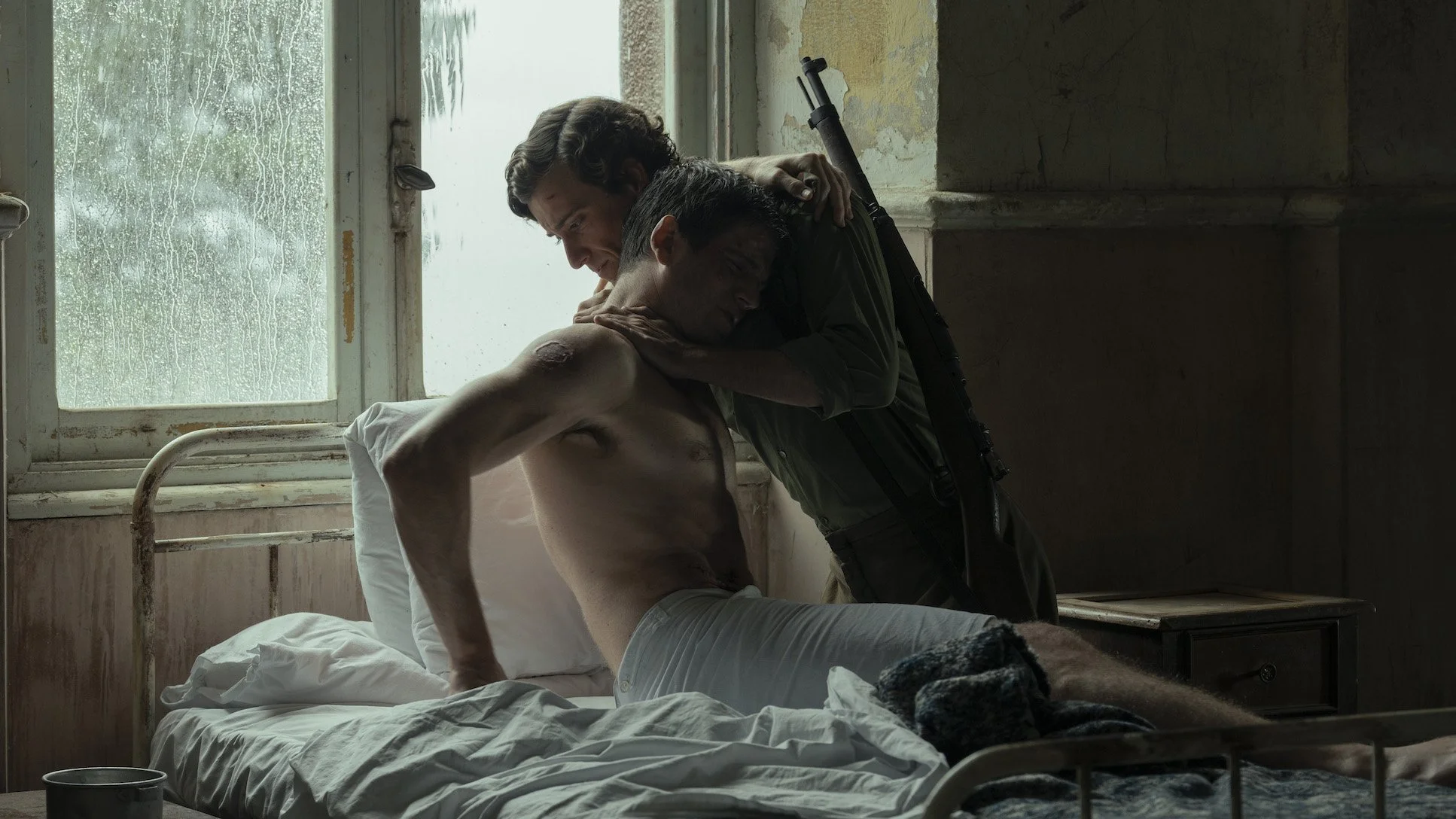
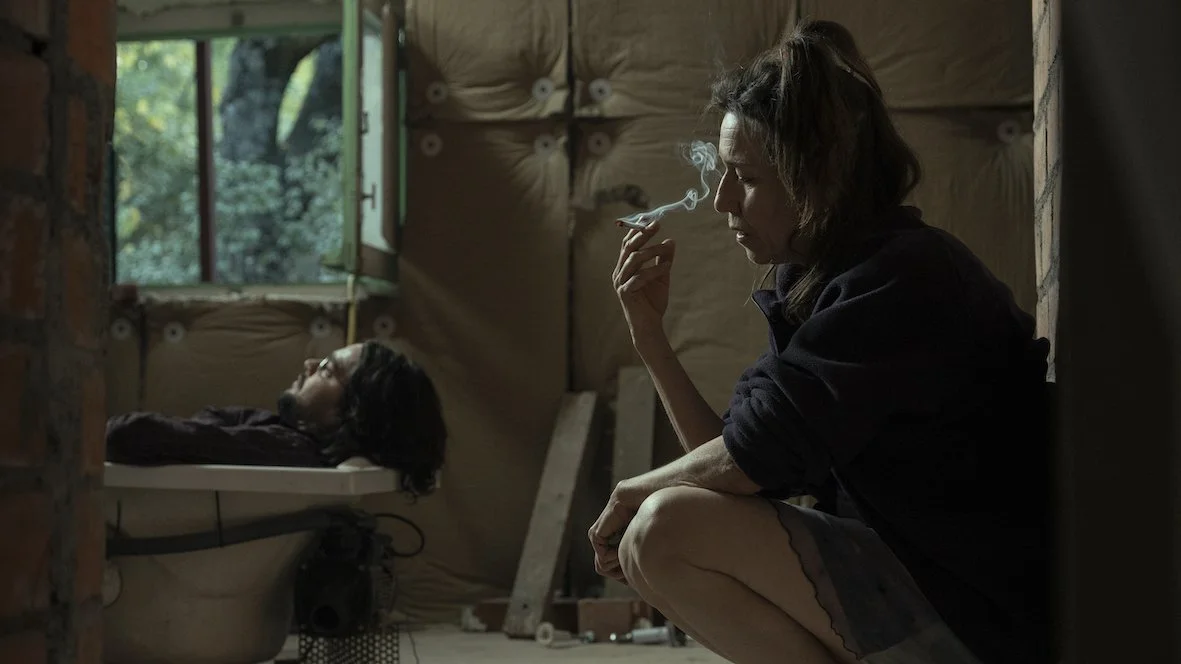
Every perfectly composed shot of Carlos wending his way through Granada’s streets, of Alberto trying to make a connection with his icy mother, of Sebastián tending Rafael’s wounds, every impeccably placed lock of luscious hair, every smoky mid-century salon, bush bath and dank prison cell is a segment of a larger, intergenerational pastiche that is also a testimony to the ongoing presence and impact of queer people in and on Spain, and by extension the rest of the world. The three stories are visually distinct – the ornate decadence of the interwar years, the dusty sepia of wartime, the crisp digital of the 2000s as captured by DOP Gris Jordana – but inextricably connect queer culture and identity through time and, in some ways, space. It’s a magic trick that los Javis are able to keep the stories as clean as they are.
But it’s the little details that complete the pictures that Guitarricadelafuente, González and Quifes quite effortlessly move through in a trio of compellingly watchable performances. Sebastián’s discovery of self and slow realisation of who he is probably makes for the strongest segment, and Guitarricadelafuente’s passages with Bernardeau are loaded with heightened bittersweet tragedy – but his schooling at the feet of wartime cabaret star Nené Romero (Penélope Cruz, duh, perfection) have a buoyancy and joy that keeps La bola negra from slipping into misery. The film is off the rails and formally defiant, but it’s also grandiose and traditional, an experience as much as a movie to watch that Ambrossi and Calvo would probably admit you give yourself over to – or you don’t. Above all it’s super gay in tone, sensibility and content, and has no interest in pretending to be anything else.