
Finding a Voice
Nepali director Min Bahadur Bham’s second film in a decade is a feminist road trip drama without a road.
Shambhala
Director: Min Bahadur Bham • Writers: Min Bahadur Bham, Abinash Bikram Shah
Starring: Thinley Lhamo, Sonam Topden, Tenzin Dalha, Karma Wangyal Gurung, Loten Namling
Nepal / France / Norway / Hong Kong / Turkey / Taiwan / USA / Qatar • 2hrs 30mins
Opens Hong Kong July 17 • IIB
Grade: B
In a nutshell, Shambhala | ༄༅ཤམ་བྷ་ལ། tells the rambling, meditative story of Pema (Thinley Lhamo), a young Nepalese woman about to get married. Fussing around with her parents in her polyandrous Himalyan village she’s getting ready for those nuptials, which her mother distinctly advises she never allow her identity to be subsumed to. Her father remarks that she’ll be a great wife precisely because she’s not afraid to go her own way sometimes. Everyone’s happy, including her new husbands and brothers: Tashi (Tenzin Dalha), a dashing trader; Karma (Sonam Topden), a devout Buddhist training to enter a monastery; and teenaged Dawa (Karma Wangyal Gurung), for whom Pema feels less wifely and more maternal. All is well until Dawa starts falling behind at school and Pema privately turns to his teacher Ram (Karma Shakya) for help, Tashi vanishes during his weeks-long trek to Lhasa and Pema later turns up pregnant. The neighbours start shit-talking her, so Pema decides she’s going to head out to find Tashi and defend herself. She loads up her trusty steed, stops at the temple to pick up Karma for support and begins her mission. Along the way Karma and Pema start to form a real bond, one that neither expected would have a chance to form, but the relationship is cut short when Karma’s monastery Rinpoche (Loten Namling) suddenly dies, and he leaves her to finish the search for Tashi alone.
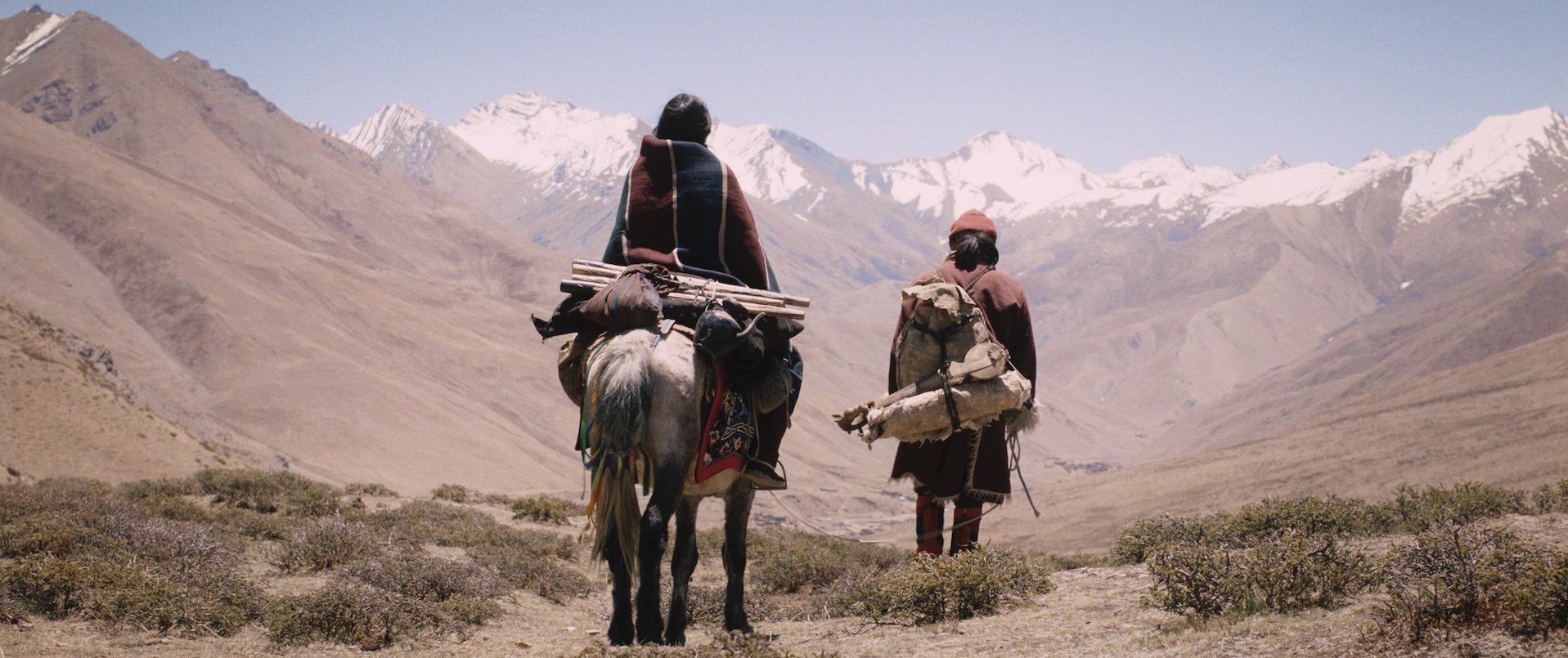
Shambhala is one of those familiar road trip dramas about a woman who sets off with one goal in mind and ends the journey achieving something else altogether, usually healing of some kind, a more secure sense of self or a new-found confidence in exercising her own agency. Think Jean-Marc Vallée’s Wild, or John Curran’s Tracks, or Ryuichi Hiroki’s Vibrator (why are all these films by men?). What sets director Min Bahadur Bham’s (sigh) film apart is the simple fact that, besides some cash tossed into the mix by the string of “co-producers” in the list up there, it’s a rare film about Nepalese people told by Nepalese people. Despite a history dating to 5000 BC, Nepal’s representations of itself in cinema seen beyond its borders are few and far between. Most of us “know” Nepal on screen through Indian (Nishikant Kamat’s awesomely titled Rocky Handsome), Chinese or Hong Kong cinema (Ching Siu-tung’s Witch from Nepal), international co-productions designed to explain the country to non-Nepalese (Bernardo Bertolucci’s Little Buddha, Jennifer Peedom’s doc Sherpa) or adventures about the perils of climbing Everest (um…Baltasar Kormákur’s Everest).
Following up his 2015 Venice award winner The Black Hen, about two friends from opposite ends of the social spectrum navigating the Maoist insurgency to find a missing chicken (it’s way more thoughtful than that sounds), Bham rolls over similar self-determining territory in Shambhala. To call this meditative and deliberate is an understatement, and for many, many people out there it’s going to be a navel-gazing slog that goes nowhere and says nothing. Fair, but the long takes and immersion in village minutiae is a slow burning examination of tradition and identity as they clash with – and complement – modern life.
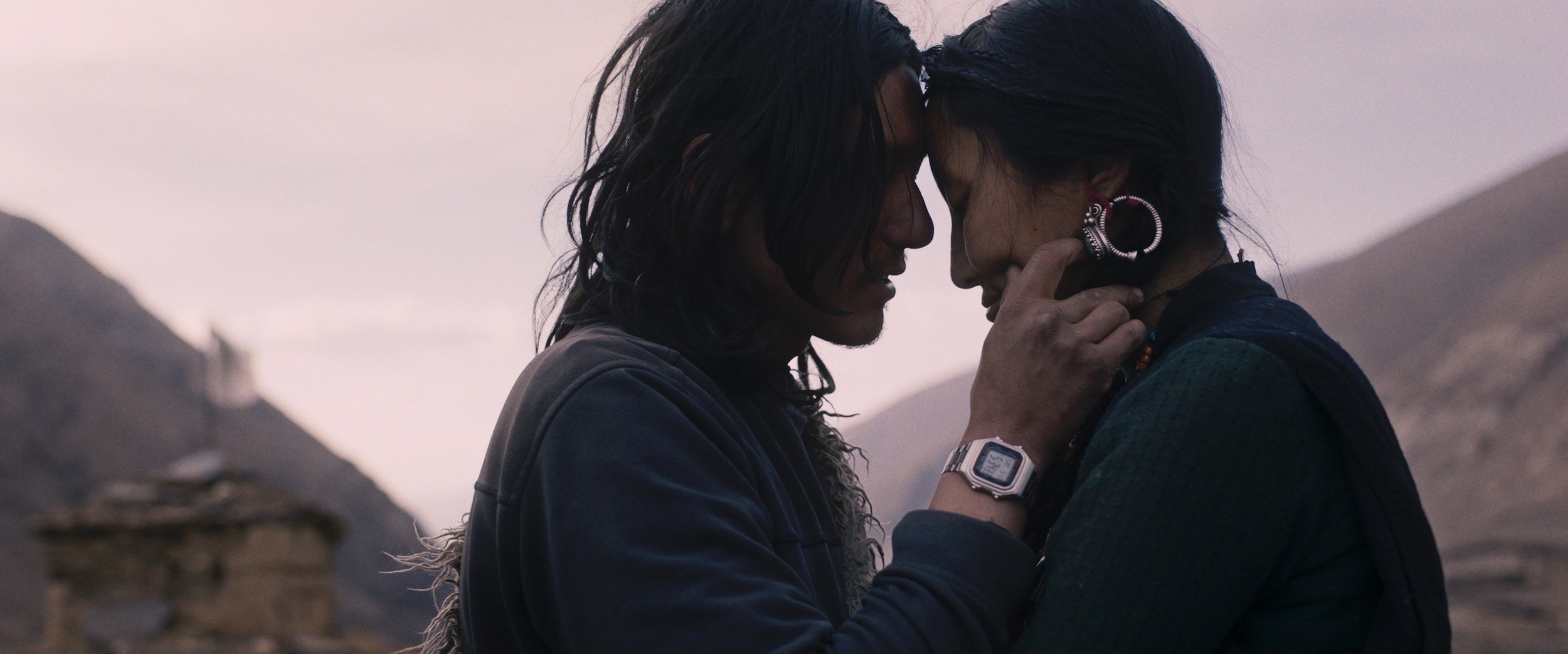

Sure, slow burning occasionally tips over into too leisurely, but Bham and his star Lhamo load every frame with little details that tell a complete story without holding our hands or telling us explcitly what’s going on. Lhamo is low-key luminous and expressive in how she realises Pema slowly but steadily carving out an independent place for herself by living, by challenging performative rituals and reinterpreting the spiritural and cultural symbols that surround her. For the truly fidgety there’s an accessible dramatic arc that drives the narrative, one in which the husband Pema thought she wanted turns out to be the one she vibes with least. It’s a bittersweet, recognisable irony that is only part of Pema’s personal reckoning. Of course, Bham is blessed with being able to distract us when the film waffles or wanders a little too much by one of the world’s most jaw-dropping natural soundstages. Shooting on location in the goddamned Himalayas, cinematographer Aziz Zhambakiyiv’s widescreen images effortlessly create a sense of place without fetishising it. Shambhala isn’t for everyone, but if you’re tired of men in tights (there’s plenty coming, we’re barely midway through summer) it’s a rewarding, introspective portrait of self-empowerment and a fresh, welcome POV.