
Dear, Dear, Dear
Credit to indie director Lan Hongchun for doing his thing, debit to him for making it weird.
Dear You
Director: Lan Hongchun • Writers: Lan Hongchun, Zheng Xuanxuan, Yang Leng, Zhu Liyun
Starring: Li Sitong, Wang Yantong, Wu Shaoqing, Zheng Runqi
China • 1hr 58mins
Opens Hong Kong June 18 • IIA
Grade: B-
The latest entry in the Summer 2026 Fuck Your Expensive Franchise We’re Seeing This Other Thing Our Friends Told Us About sweepstakes (after Dhurandhar: The Revenge, The Sheep Detectives, Backrooms, the forthcoming Obsession) is Lan Hongchun’s Dear You | 給阿嬤的情書, the US$2 million Teochew-language family drama that’s so far hoovered up US$260 million almost purely on word-of-mouth marketing. Dear You is precisely the kind of authentic, (sort of) DIY, specifically voiced dramedy audiences are increasingly turning their attention to – ahead of glitzy, CGI-heavy IP films with budgets larger than the economic output of many sovereign nations (GDP of Nauru in 2024: US$187 million. Fast X budget: US$375 million). Big producers everywhere (we like to pick on Hollywood but all film industries are guilty of losing their backbone these days) continue to take the wrong lessons from surprise hits, and continue to pour oodles of resources into same-same films that didn’t work the first time, and won’t work now. We also like to pick on audiences, but give most of them an alternative and they’ll try it. And that’s exactly the breach Dear You has stepped into.
So it pains me to dunk on a filmmaker who did things his way (bravo) and was rewarded for sticking to his vision. Actually that doesn’t pain me at all. What pains me is the fact that he put so much energy into a rote family demi-tragedy that loses its mojo once you sit and think about what really happened. Dear You is the heart-warming (?) tale of a Thai-Chinese inn owner, Zia Lamgi (Li Sitong), who carries on a half-century long charade with a Shantou woman, Sogriu (Wang Xiaohui), pretending to be the dead love of her life. Lamgi supports Sogriu emotionally and financially for decades, even as Sogriu washes her hands of the man believing him to have another wife. Lamgi sets aside her own ambitions to do so, only ever having her own family by accident because maintaining this dude’s fiction is paramount. Okay… WTF?
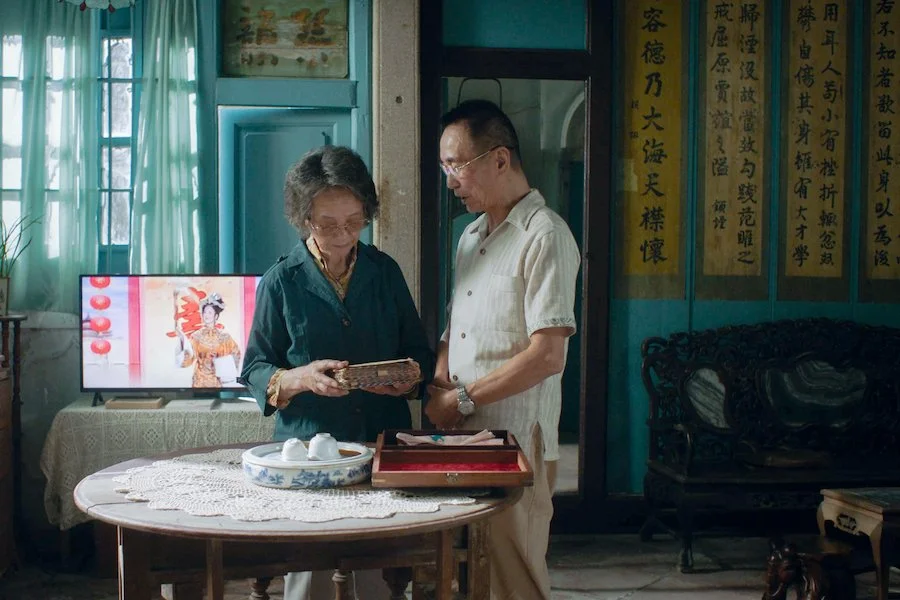
Time to make mail cool again
Lan may seem a newcomer to most of us, and even to audiences in China beyond his Shantou hometown, but Dear You is his third, extremely well-received family drama rooted in Teochew culture and customs; it’s just the first to catch fire with non-local audiences. The challenge will be how it fares with audiences who think that pathological lying and gaslighting someone into thinking they’re talking to their spouse for 50 years is sociopathic rather than kind and selfless, and who find a woman abandoning her personal agency in favour of propping up some random man’s myth is “charming” and generous. Family ahead of all else is one thing. Dear You’s spin on that is quite another.
Of course there’s a celebration of tribal (racist) connection here too, and a thick vein of always, always, always remembering and perpetuating where you came from winding its way through the story, much of which is culled from historical documents: qiaopi remittances – letters and money – overseas Chinese labourers sent back to family starting in the 18th century. The real letters provide archaeological context for life in diaspora communities, and are in themselves fascinating artefacts. Here, Lan uses them as the foundation for melodrama set in Bangkok’s Chinatown of the 1950s, where illiterate working class Shantou draft dodger Den Bhagseng (Wang Yantong) drives a rickshaw, pinches his pennies and sends whatever he can back to the wife Sogriu and their three kids, with romantic notes written by transcriber turned teacher Deg Gang (Chen Qinqin). In the present day, her grandson Hiou-ui (Lan regular Zheng Runqi) is in huge debt, and decides the best way to make some quick cash is to track down the long-lost Den and claim his share of the rumoured family fortune. He deserves to get paid as a rightful heir, no matter that Den took a mistress, Lamgi, and had a second family. But wait, that’s just the beginning. Turns out Den died in 1960 – even though he kept writing to Sogriu until 1978. She cut him out of her life after his last missive was a photo of Den, Lamgi and their brood. Asshole!
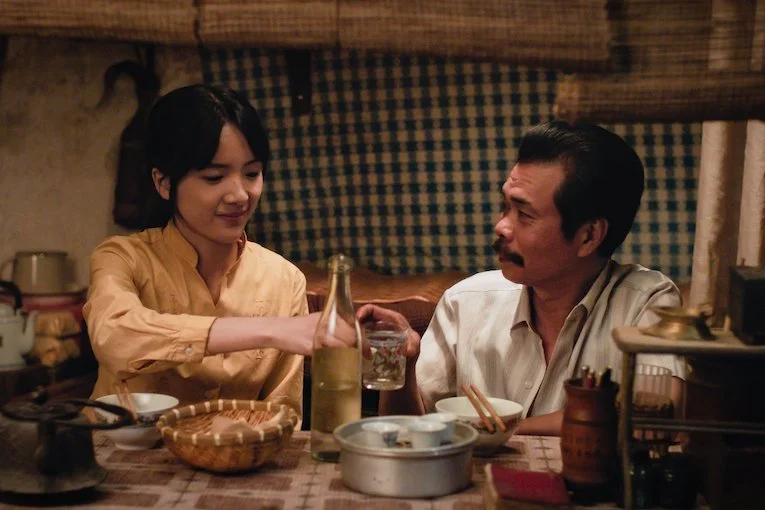
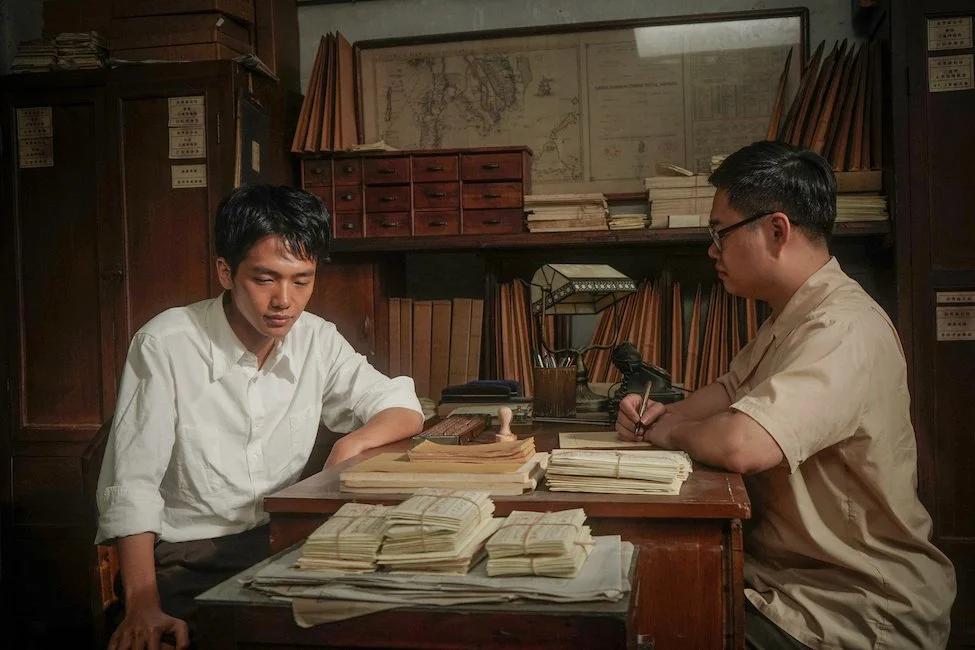
But wait! There’s still more to the story, one that octogenarian Sogriu (Wu Shaoqing) finally gets closure on thanks to Hiou-ui’s poking around BKK. Your feelings on the summit meeting between Sogriu and the elderly Lamgi (Thai actor Usha Seamkhum, How To Make Millions Before Grandma Dies) will hinge on how you feel about the meat of the story, the protracted flashback (within flashback, within flashback) segments, and how willing you are to let a lot of abject nonsense slide. Lan’s feel-good history relies on the idea of communities coming together, of Teochew having other Teochew’s backs in times of need, and it’s a facile and overly-rosy interpretation. Everyone’s an angel – only Indians are villains, with the Thai police a close second – and everyone’s a pillar of virtue. Above all Den’s position in the collective memory is so invaluable that we’re supposed to accept Lamgi, initially presented as an independent, DGAF young woman with a clear sense of self, effectively allowing herself to be subsumed by Den’s legacy.
Despite the psychoses inherent in the state-approved story, it’s easy to see why you might hand wave that crap away and just sink into the sweet, syrupy, fantastical space- and time-spanning romance, revel in its simpler analogue vibe and bask in the lost art of letter writing. The non-professional cast (almost all digital stars in the Shantou area) is appealing and naturalistic, and Lan finds plenty of gentle humour in between the Big Moments; Lamgi’s father’s persistent suitor is legit funny, and her grown son throws an incredibly satisfying amount of shade at Hiou-ui when he gets snippy about money. But everyone learns the value of community and family, and doing what’s right for those and your country by the time all is said and done. Dear You may be a sleeper hit but it’s also exactly the movie you expect it to be.