
Name Game
Hong Kong Documentarian Mary STephen digs into the family closet to find out why she has a white lady’s name.
Palimpsest: The Story of a Name
Director: Mary Stephen • Writer: Mary Stephen
Featuring: Mary Stephen, Henry Stephen, Hilda Stephen
France / Hong Kong • 1hr 48mins
Opens Hong Kong June 18 • IIA
Grade: A
For anyone who’s ever had to put on their “white voice”, act hetero or repeat the same damn answer to “But where are you really from / what’s your real name?” editor (Septet: The Story of Hong Kong, Dot 2 Dot, Éric Rohmer’s regular cutter) and director (Shades of Silk) Mary Stephen’s Palimpsest: The Story of a Name is going to ring really, really loudly. True those hostilities towards someone’s very being are wildly distinct but they come from the same place: the need to edit the self, to fictionalise the self, to better fit into the wider, Eurocentric world. For all our so-called enlightenment and the dreaded “wokeness” – AKA common courtesy and basic respect – the Eurocentric types are constantly whining about, a lot of us still run smack into an identity minefield when it comes to things as minor as making a hotel reservation or meeting an online colleague IRL. “Oh, I thought you were [fill in the blank.]” Stephen, a Chinese woman born in Hong Kong to Chinese parents who grew up in Canada and later moved to France, has surprised her fair share of hotel managers and co-workers. Yes, she’s Chinese. No, she’s not married to a white guy. Yes that’s her “real” name.
This lifelong wrestling match over her identity certainly hasn’t put a crimp in her creative career but one day Stephen’s curiosity got the better of her. How, where and why did her father Chan Tik-fong and his wife Hilda Yik of Hong Kong become Henry and Hilda Stephen of Montreal?
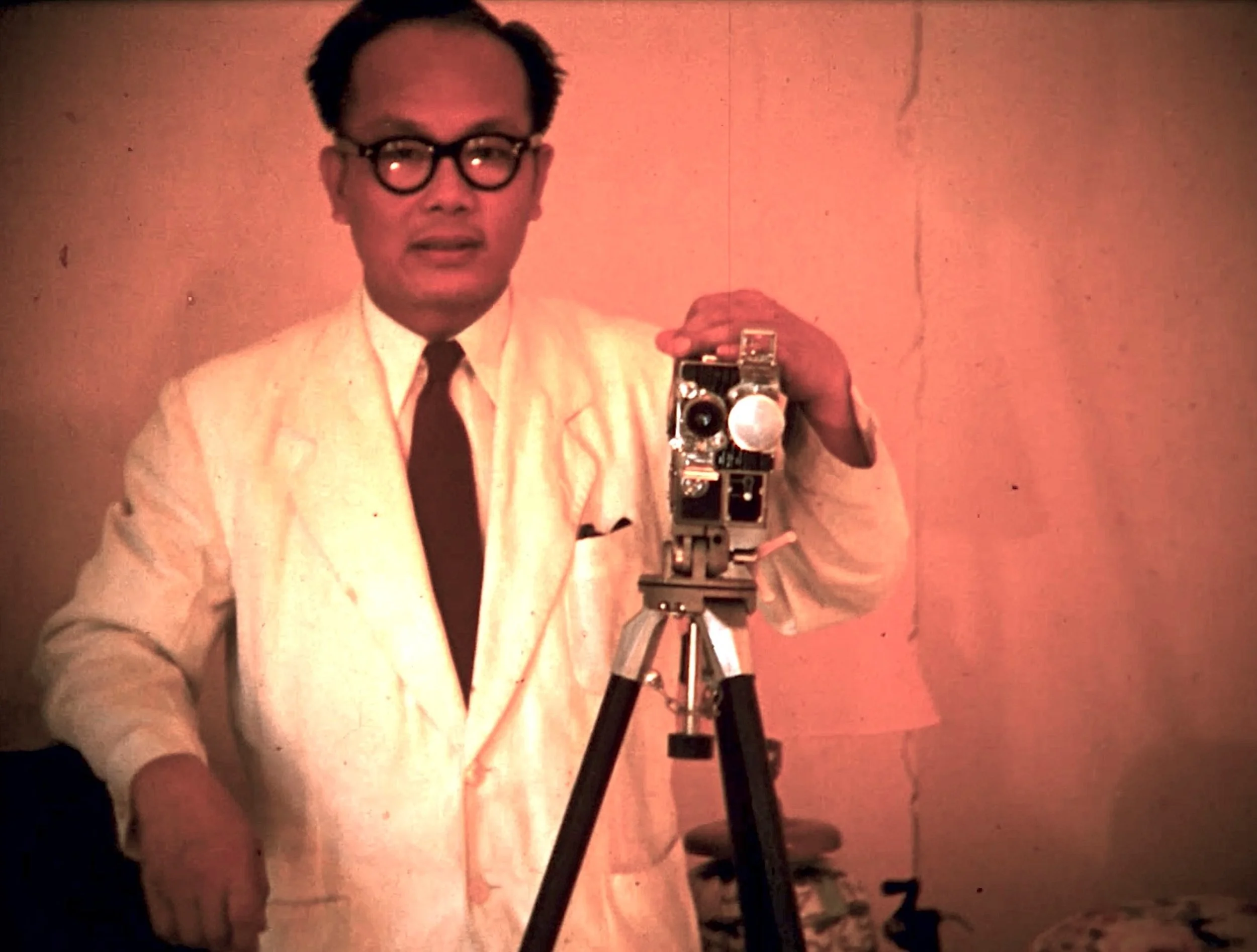
International man of mystery
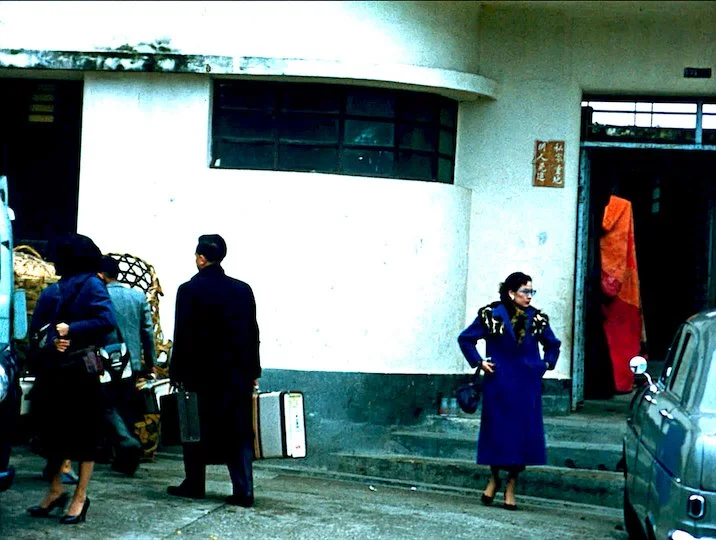
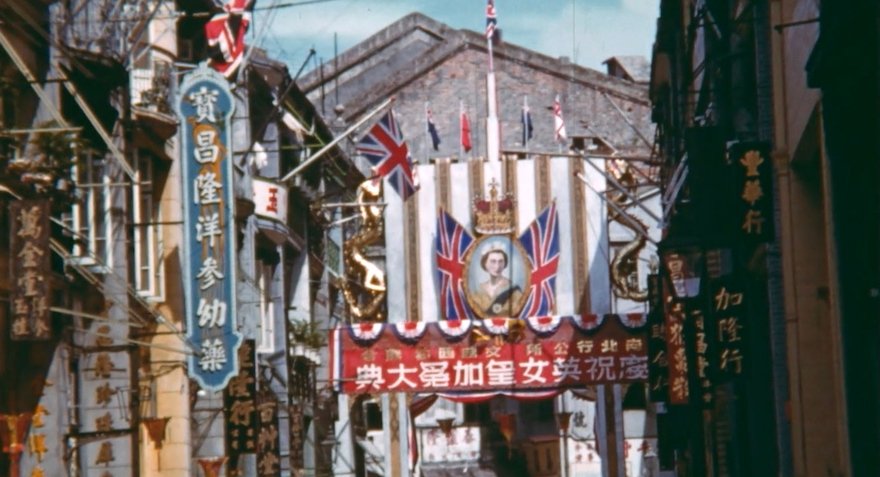
That’s the central mystery of Palimpsest, an intimate and personal exploration into Stephen’s family spanning well over 50 years and at least five countries in the shadow of major milestones from the Chinese civil war to the growth of Hong Kong as a modern, British-governed Asian gateway. Stephen pulls from an archive comprised of 8- and 16mm home movies – Henry fancied himself an amateur, perhaps pro, filmmaker and had a knack for storytelling – recordings, letters, journals and photographs to piece together his story, his fiction, and in doing so unearth her own. The film rolls in scads of left field elements that go a long way to contextualising why Fong-jai would reinvent himself as Henry: time in the Australian outback, the mid-20th century dominance of British royalty as the benchmark for modern living, clashing Anglo and Franco spaces in Canada and, notably, the dual spectres of Brit poet Julian Bell and his auntie Virginia Woolf. As a start.
Of course, the fact that QEII was on the money in many of Henry’s homes along the way says a great deal about the legacy of colonialism that lingers to this day, and of the dominating expectations the world had of… everyone. Henry’s persona is cobbled together from a series of half-truths and what some might call white lies, but whose combined impact trickled all the way to his grandchildren. He’s neither right nor wrong, and Stephen never judges his actions. She simply combs through them all to build a patchwork portrait of an identity that is specific to both Henry and Stephen herself, but which was born from an impulse to find space within the frame of the bigger picture that is universal.
Hard as it may be to fathom, but the name on a birth certificate is the foundation for one of the most engaging, challenging and reflective docs to come down the pipe in a while, and just in time too. At a time when many people, places and things around the world are seeking to reclaim identities buried by colonial erasure and push back on exonyms – it’s Uluru, not Ayer’s Rock, Beijing, not Peking, Türkiye not Turkey, and it’s Thandiwe, not Thandie Newton – Stephen’s examination of how they got there to begin with is a silent but timely subtext running through Palimpsest.
Stephen is an editor by trade, and it shows in the final product. Despite being a doc, or maybe because of it, Palimpsest is constructed almost like an edge-of-your-seat thriller, complete with enigmas, sociological honesty, shocking reveals and anti-climactic truths. For all his…flaws? It’s hard not to like Henry; he’s a character by all accounts and Stephen has a much fun with him as she has questions about him. None of that comes at the expense of her mother, Hilda, a more shadowy presence that Stephen excavates from beneath all of Henry’s, for lack of a better word, drama. Stephen gives her mother a long-silenced voice, adding another layer to the family legend. And I’m not trying to be cagey here; unravelling the mystery of Henry’s personal fiction along with Stephen (kind of) is a huge part of Palimpsest’s charm and the source of its thought-provoking power, and brings new meaning to the phrase, “What’s in a name?” A lot. There’s a lot in it.