
Boxed In
Ironically, it seems like Kore-eda is running on autopilot for his AI movie.
Sheep in the Box
Director: Hirokazu Kore-eda • Writer: Hirokazu Kore-eda
Starring: Haruka Ayase, Daigo Yamamoto, Rimu Kuwaki
Japan • 2hrs 6mins
Opens Hong Kong June 18 • I
Grade: C
Stop me if you’ve heard this already, but Hirokazu Kore-eda has reached the stage of his career where everything is a masterpiece, everything premieres at Cannes and everything is thoughtful and emotionally honest in a way few other filmmakers are. It’s rarified air to be sure, and there are only a few other directors up there with him. Martin Scorsese, Wong Kar-wai, Park Chan-wook, maybe Ken Loach. Apichatpong Weerasethakul at a push. Not even Steven Spielberg gets an auto-pass, and really no one should. That’s not to say Kore-eda hasn’t earned his sparkling reputation, or that he isn’t aiming high, with some deep thoughts in Sheep in the Box | 箱の中の羊 – which naturally premiered in competition at Cannes. But in pulling triple duty (he’s also writer and editor of course) he always aims high. It’s just that it may be time to step outside his comfort zone. His films simply aren’t the “must sees” they once were. Broker and Monster were messy AF, and Our Little Sister was simply an oestrogen-ised version of Like Father, Like Son. He’s on rinse-and-repeat mode, only hitting something as truly wondrous as his breakout Nobody Knows with Shoplifters in 2018. Shit’s kinda getting old.
And it’s highly likely Sheep in the Box was supposed to precisely that step out of the comfort zone, a dive into AI and its place in our world just as the technology is expanding and facing a backlash; the UK just banned kids under 16 from social media, and under-18s from AI romance bots. This after the Aussies passed similar restrictions and Norway, Italy, the Netherlands, Malaysia and India set age minimums – probably with more to come. Kore-eda’s on book, but he barely touches the subject, at least not coherently, and the muddle is all wrapped in the same soft imagery and minor key emotionalism related to broken and found families that continues to define his work.
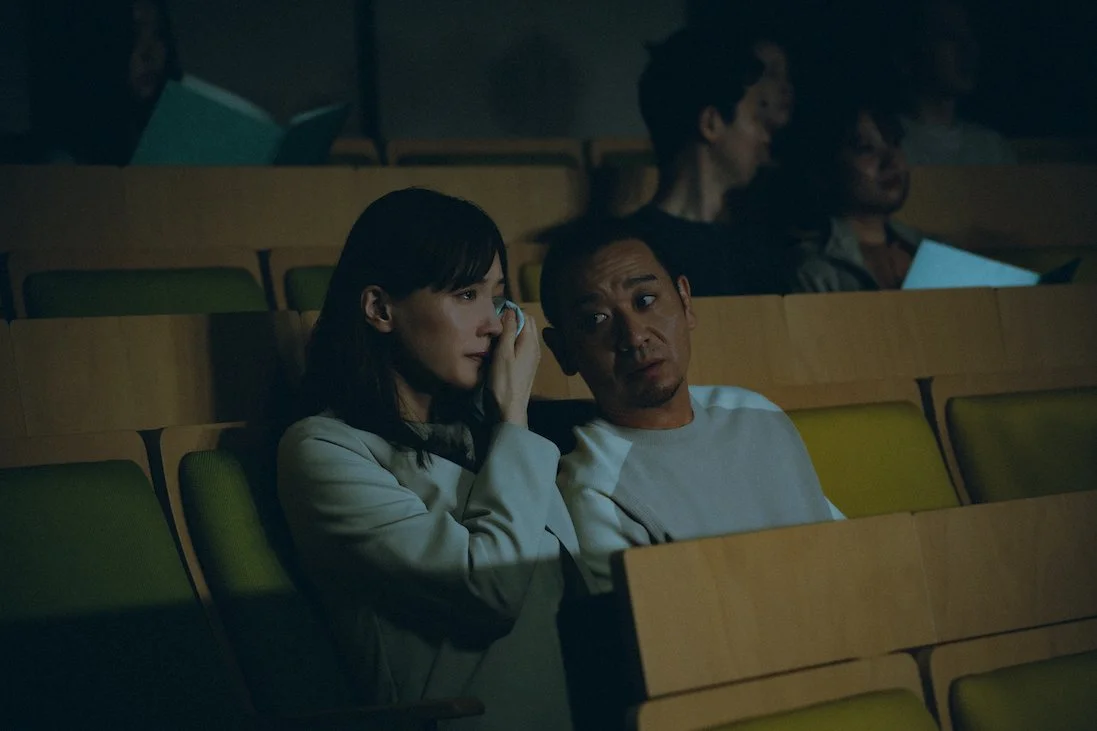
His expression says it all
If we’re honest for a hot minute can we just point out Kore-eda basically did this story already, in Air Doll way back in pre-AI 2009? Sure the central faux-person was a sex doll (Bae Doona in a French maid’s uniform), but the underlying ideas about humanity and authenticity and how we relate to each other were the same. And if we’re really going to go there, Kogonada and Benjamin Cleary each explored these idea better, with more focus and more succinctly, in After Yang and Swan Song respectively.
Kore-eda introduces us to the family at the centre of Sheep with his typically graceful, show-don’t-tell strokes. Otone Komoto (Haruka Ayase, fine in a wide-eyed needy way) is an architect, still working with hand-made 3D models some time in the near future. You can tell it’s the future because everyone wears monochrome, boxy clothes with unconventional seams and Otone gets her model materials by drone delivery. Also fighting the future is her husband Kensuke (Daigo Yamamoto), who appears to be a carpenter who builds real furniture out of real wood, by hand. The couple lives in an ultra-modern, geometric house, accessorised with photographs of the two with a young boy. Seeing as women still exist in movies purely in relation to their motherhood status, clearly the boy is dead. After Otone gets an invitation to try robotics company REbirth’s creepily lifelike recreation of the Komotos dead son, essentially a griefbot, they deliver Kakeru V2.0 (Rimu Kuwaki), whose conversation initially is limited to “Mama, I’m home.” Otone welcomes him with open arms, Kensuke not so much.
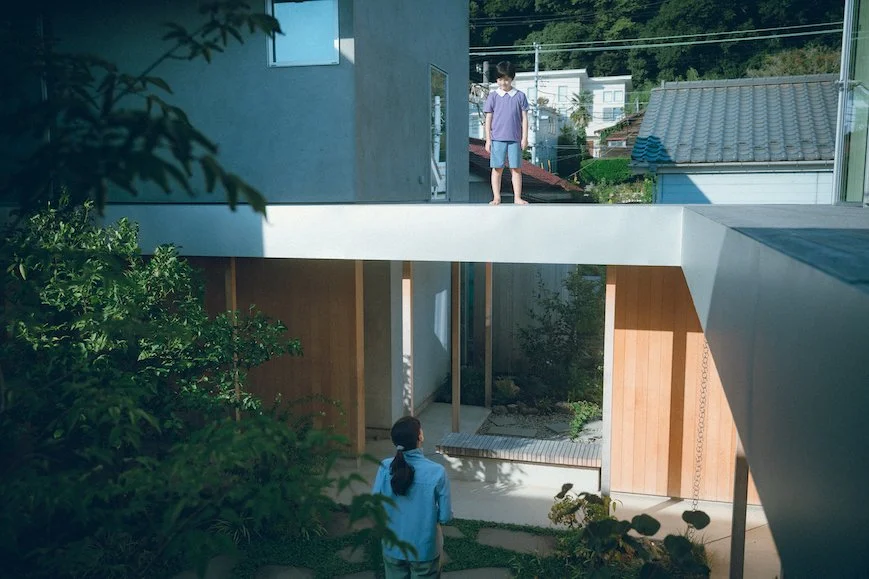
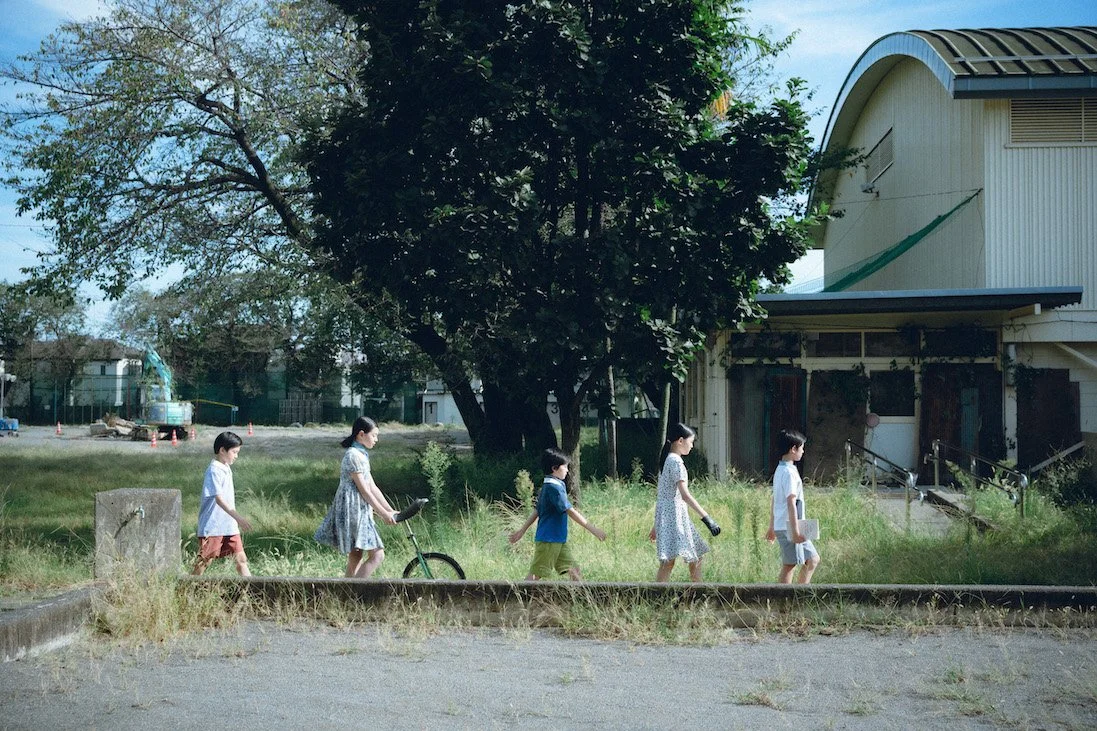
There’s roughly four distinct films tucked inside Sheep in the Box all fighting for attention, none getting the time or care needed to gain any real traction. Primarily it’s a drama about a couple still dealing with loss years after the fact, and who AI helps navigate the still choppy waters of grief. Otone and Kensuke remain trapped in cycles of blaming each other and self-loathing that the Data Scraped Kakeru helps them recognise and reconcile with. Then there’s a story about the integration of a tech purpose-built to replicate missing pieces of real life into real life. Otone’s blind acceptance butts up against Kensuke’s early cracks referring to “Kakeru” as a Roomba, but that’s the limit to Kore-eda’s examination of the sudden reappearance of a dead child and how everyone around Otone and Kensuke react to him. A thread about how he does or doesn’t freak out other kids is never pulled beyond a playground incident and a visit from some easygoing cousins, and we never get to dive deeper into the selfish aspect of Otone and Kensuke’s decision. When Otone’s mother (Kimiko Yo) first sees him she faints, but very quickly settles into unimpressed and vocally dismissive. For a second it looks like she’ll add some spark to the proceedings but nothing comes of her resistance. “Kakeru” flirts with demonstrating how the machines can do shit better than we can when he gets Kensuke’s woodworking apprentice shafted from a job, but we never see any other consequences of what many believe – right or wrong – is an existential threat. And the only kids “Kakeru” interacts with are other REbirth bots, some abandoned with the subtlety of a cudgel, trying to form a forest community and break from human control. Is this when Skynet takes over? What happens when it rains, because Kore-eda goes to great pains to make sure we know “Kakeru” can’t get in the bath with dad (among other design flaws). Kore-eda’s bread and butter, his greatest strength, is in capturing the minutiae and nuance of family dynamics, so starting with a grieving couple makes all the sense in the world for him artistically. But bottom line is Sheep in the Box is bizarrely unaffecting and strangely half-cooked for a Kore-eda film. He’s not far enough from that comfort zone just yet.