
Girls Being Girls
Tracy Choi reunites with her alter-egos Fish Liew and jennifer Yu in a totally not autobiographical drama.
GirlFRiends
Director: Tracy Choi • Writers: Tracy Choi, Sebrina Zheng, Lou Shiu-wa
Starring: Fish Liew, Elizabeth Tang, Jennifer Yu, Han Ning, Natalie Hsu
Hong Kong / Macau • 1hr 40mins
Opens Hong Kong March 5 • IIB
Grade: B+
I can hear it already. “Is that the lesbian movie?” As if the be-all end-all of Tracy Choi Ian-sin’s Girlfriends | 女孩不平凡 is Fish Liew Chi-yu and Jennifer Yu Heung-ying making out. Maybe I’m being paranoid in my belief that’s what the reductive chatter is going to lead with, but blame years of Internet reactionism – and the years of actual chatter IRL before that. And fret not, I’m throwing myself on that pile. Put this out of your mind because Girlfriends is about much more than that. It’s an astutely observed and layered drama about growing up and getting on with it, navigating life as part of the LGBTQ+ community in places like Hong Kong and Macau, the agony of filmmaking, dealing with traditional parents, the high cost of housing, being in a healthy relationship and finding the courage to commit to one when it presents itself. But sure. It’s the “lesbian movie”.
For the unintiated, Macau-born Choi has been making movies about women on the margins for almost her entire career, coming out swinging with Sisterhood in 2016, in which Liew and Yu (in some of their earliest screen appearances) starred as sex workers in Macau who are never allowed or never get the chance to act on a deeper relationship. Choi produced and ADed on fellow Macau director Emily Chan Nga-lei’s underrated Madalena, starring Chrissy Chau Sau-na as a struggling Mainland migrant in Macau, and the messier Lonely Eighteen chronicled two working class girls becoming women in show business. Girlfriends slots in thematically with all of those, though it’s Choi’s most assured film and has a breakout performance by Elizabeth Tang Tao.

The hardest working actor in Hong Kong
Girlfriends is told in what is essentially three chapters, broken up into brisk, efficient chunks and told in a linear reverse chronology. It starts with partners, girlfriends, Lok (Liew) and Bei Bei (Yu) at home, puttering around their Hong Kong flat and getting ready for the day. Bei Bei is an aspiring actor who runs a crafts stall when she’s not auditioning. Lok, at 34 years old, is a filmmaker being subjected to the indignities of courting investors for her next film. While Choi admits parts of Lok are her with a twist, the filmmaker part is 100% true. After another non-rejection rejection and tips from a mid-level money man with no sense of art, and work as a film history instructor in which her students aren’t fucking with film and anything in black and white, she’s ambushed by Bei Bei with future-planning. For them both. It involves marriages of convenience and a flat in Macau, Lok’s hometown (cheaper). It’s the proverbial straw for Lok, but it also gets her reflecting on her life. Chapter two pivots on her move to Taipei for university and her life there until 22 (played by Tang) when her then-girlfriend Qing (Taiwanese actor Han Ning) ambushes her by telling her she’s accepted a job in Macau so they can continue living together, in their sadly toxic relationship. In the final chapter Lok is a 17-year-old high school student (now Natalie Hsu En-yi) coming to terms with her budding sexuality when she starts crushing on a funky older student, Faye (Elilz Lao Yi-lin).
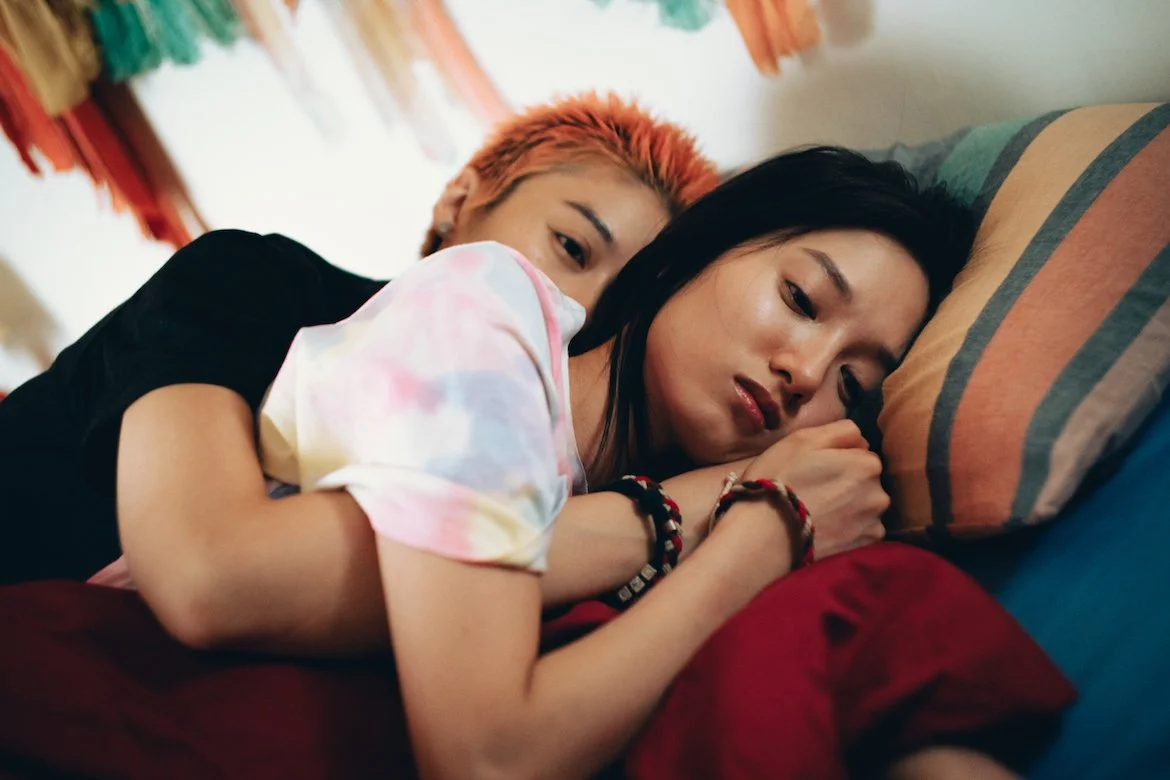
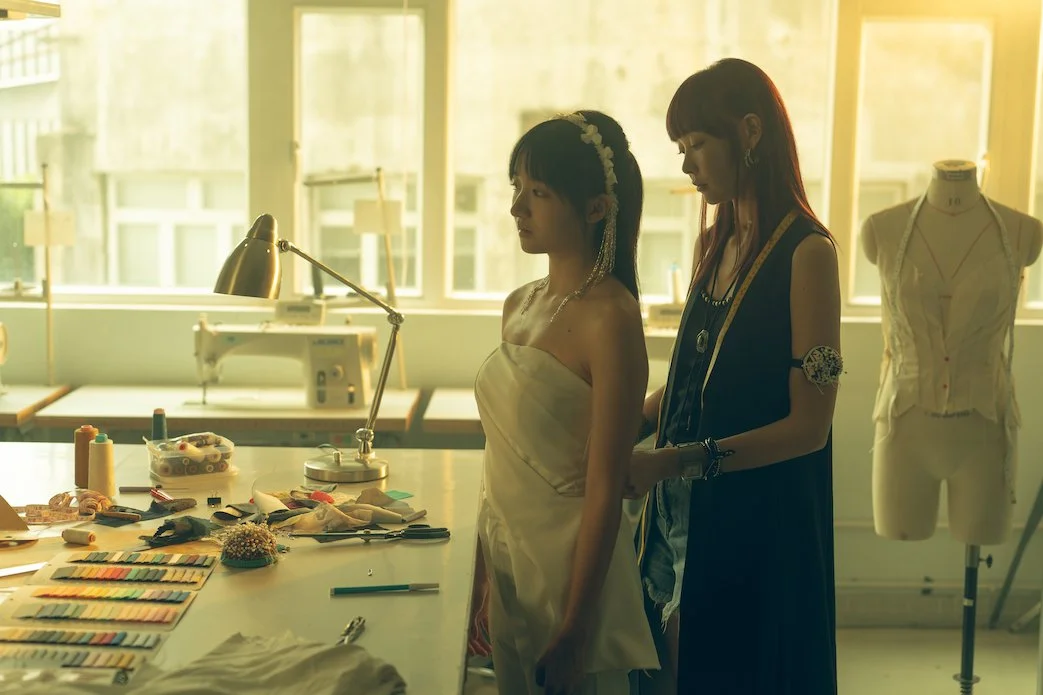
It’s all shot in evocative, shifting visual tones by DOP Simmy Cheong Sin-mei; the discovery of youth in Macau is almost halcyon, the mad exploration of Taipei is all bold colours – including her hair – and the grind of reality in Hong Kong is pointedly conventional. The pictures are complemented by an observant screenplay by Choi and Lou Shiu-wa (True Love For Once in My Life) and Sebrina Zheng Yu-kwun. A home crowded with holiday visitors is a nice physical representation of youngest Lok’s still roiling identity. When Lok’s parents come to visit in Taipei, Lok has to decide what she’s going to tell them, so at dinner grabs Qing’s hand. Her mother and father simply pretend they don’t see the gesture rather than acknowledge the relationship. Like many Macanese (and Hong Kong) parents, they have no problem with Qing but would just prefer to ignore reality.
Girlfriends is made up of a hundred little moments that contribute to a recognisable portrait of emotional stagnation, and Liew’s creepy superpower to telegraph a lot through stillness makes Lok’s catharsis all the more satisfying. But it’s really about Lok at 22, and Tang as the brash, sexy, callous, curious, know-it-all, fired-up (god the early-20s are a mess) version was justifiably nominated for supporting actress at November’s Golden Horse Awards. She also earned two Hong Kong Film Awards (supporting actress and newcomer). It’s too bad those are tarnished by a year with an incomplete roster of eligible films – and where Sons of the Neon Night is up for 12 prizes. Twelve.