
Roads to Perdition
At least Óliver Laxe’s Societal collapse has a bangin’ soundtrack.
Sirāt
Director: Óliver Laxe • Writers: Santiago Fillol, Sergi López, Óliver Laxe
Starring: Sergi López, Bruno Núñez Arjona, Richard Bellamy, Stefania Gadda
Spain • 1hr 55mins
Opens Hong Kong April 23 • IIB
Grade: B
I bitch and piss and moan daily in these pages about a lack of originality in cinemas, but I’m also quick (I hope) to point a giant finger towards anything that’s at least giving it a try. A film’s worth should be measured – if at all – by more than box office and by how well it hits its targets; it’s why Breathless, Speed and Happy Together are equally good. I don’t need a movie to be “good”, I don’t even need to like it. I don’t know about you but I’d rather watch a filmmaker make an effort and miss than vomit up the same crap every month – looking at you Disney, which made several billion dollars on a bland, uniform look and then decided boosting stock price was more important than the artists that made you those billions.
Which is why it pains me so to say that Óliver Laxe’s Cannes Jury Prize-winning, BAFTA and Oscar-nominated, six Goya-winner Sirāt is… solid. By now you’ve likely heard the story pivots on father and son Luis and Esteban (Sergi López and Bruno Núñez Arjona) rave-hopping through the Moroccan Sahara looking for their missing daughter and sister, Mar. Mar was last seen and/or heard from at one of these travelling raves, yet no one can say they saw her. Luis is getting desperate when a veteran, hardcore raver, Stef (Stefania Gadda) offers to help him out. Just so happens, gas is pricy out in the nowhere and Luis has money. Laxe’s last film was Fire Will Come, a similarly beautiful meditation on grief, loss, hopelessness and chosen community, and in Sirāt – roughly “path” in Arabic – he doubles down on the trials he subjects his characters to – as well as anyone with the fortitude to watch to the end.
Not Dune
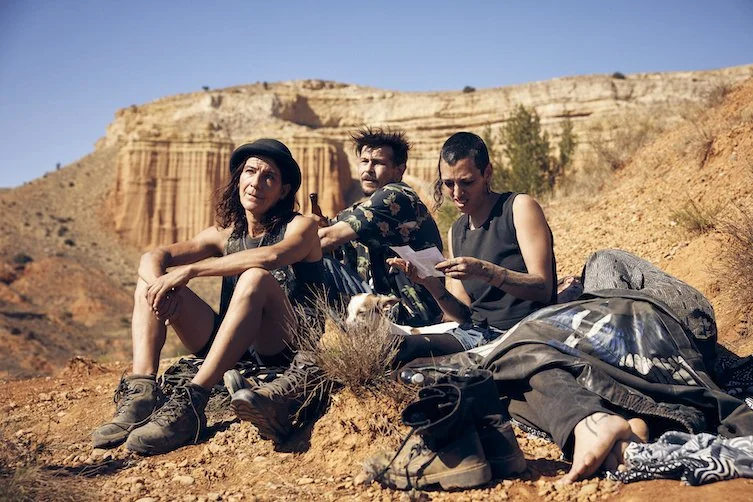
But Sirāt is an ambitious work of big ideas and grand gestures that’s sometimes a little more on the nose than it needs to be, and it’s also the kind of exercise in pure cinema that nerds talk about with bated breath, with good reason. This is an absolute marvel of visual and aural storytelling, and a huge shout-out must go to cinematographer Mauro Herce, who makes the desert as mesmerising as it is perilous, sound designers Amanda Villavieja, Laia Casanova and Yasmina Praderas, who exploit ambient sound to give the landscape a literal voice, and composer Kangding Ray (government name, David Letellier), who puts it all to an evocative techno score. Combined they create a living, immersive space that cinemas can drop you into in a way the TV can’t. I don’t care how big your TV is or how much you paid for your speakers: not the same.
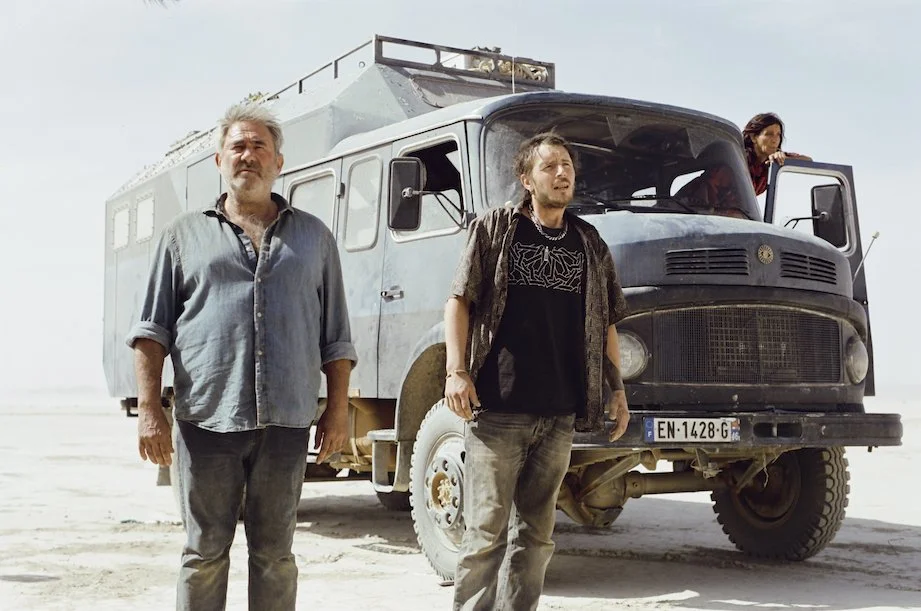
In between sensual set pieces Laxe builds a woozy road trip for the end of the world, with Stef and her selected family of nihilists and amputees – including fatherly Bigui (Richard Bellamy) and the ramshackle siblings Josh (Joshua Liam Henderson), Tonin (Tonin Janvier) and Jade (Jade Oukid) – criss-crossing the desert looking for one more party, listening to the dulcet tones of the news on the truck radios about escalating geopolitical hostilities and rapidly depleting resources. Hahahahahaha, who’dathunk? The riders in the caravan are, in many ways, riding out the collapse of civilisation and fuck it. They’re going to have a good one.
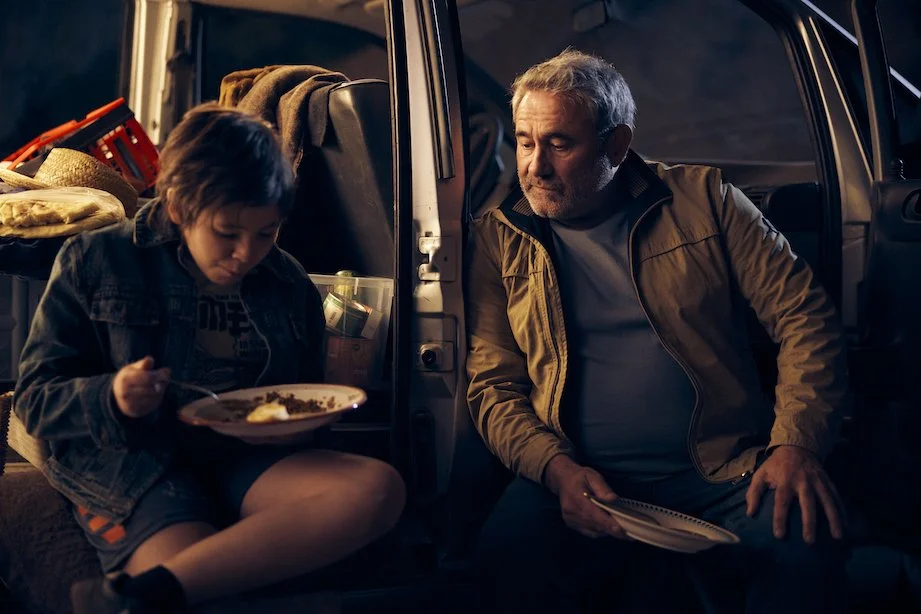
Sirāt is, in a word, punishing. Laxe is Spanish, but he was born in France, and so the existential angst is there, simmmering just under the surface of most of his films. It bubbles over here, with one gutting catastrophe after another hitting Luis and Stef as they make their way out of the suddenly unwelcome desert. Up until a second act shocker Sirāt ambles along against its visual metaphor for how small each of us is individually, and the performances universally hint at personal catharses of a type the high profile Burning Man no longer offers. Stef’s nomadic family is giving up with world, but they’re doing so on their terms, and it’s kind of nice. But Laxe and his regular co-writers Santiago Fillol and Sergi López pile on so much in the closing frames it muddies the waters – or kicks up a sandstorm – and turns into an endurance test that leaches a lot of Sirāt’s grace from it before our exhausted eyes. That said, it is a formal if not thematic experiment that works far more often than it doesn’t, and it’s hard not to get drawn into the gentle, welcoming rhythms the jerry-rigged family lives by and vibe with their apocalyptic apathy. Especially now. Overwhelming at points, underwhelming at others, Sirāt is never less than committed to its aims, even when it sprials into a bit of nonsense. For that: Kudos.