
Newly Crowned
Legend goes a long, long way.
The King’s Warden
Director: Jang Hang-jun • Writers: Jang Hang-jun, Hwang Seong-gu
Starring: Yoo Hae-jin, Park Ji-hoon, Yoo Ji-tae, Jeon Mi-do
South Korea • 1hr 57mins
Opens Hong Kong May 14 • IIA
Grade: B
Jang Hang-jun’s The King’s Warden | 왕과 사는 남자 begins with the kind of palace intrigue and historically rooted court fuckery that makes for positively Shakespearean drama. And to be sure, Koreans often describe the drama surrounding the overthrow, banishment and, finally, execution of 15th century Joseon Dynasty King Danjong as Shakespearean. They’re not wrong. So when The King’s Warden begins with the rightful king, Yi Hong-wi, being forced off the throne by his uncle Suyang, and told – shadily AF I might add – by some kind of royal advisor to exile himself to small town Korea he reluctantly goes. Jang shoots all this with swift, clean shots in dark, hushed rooms where the only sound is the rustle of robes, setting the film up to be kind of heightened, cloak-and-dagger period melodrama that, when it clicks, Korean cinema does so well.
To now, director Jang has shown a flair for the distinctly middling. Last year or so he dropped the forgettable crime thriller The Killers, and the year before a classic underdog sports dramedy Rebound in 2023. His filmography has been littered with heaps of unremarkable diversions since his early-Korean Wave breakout in 2002 with, erm, Break Out. I don’t remember this movie. So it’s with great… un-surprise that Jang sticks to his playbook with the unremarkable The King’s Warden. Not that this mediocrity has prevented the film from becoming Korea’s highest-ever grossing local film and it’s second highest by admissions (behind The Admiral: Roaring Currents, which it should topple in 3…2…). Clearly the king here is The King.
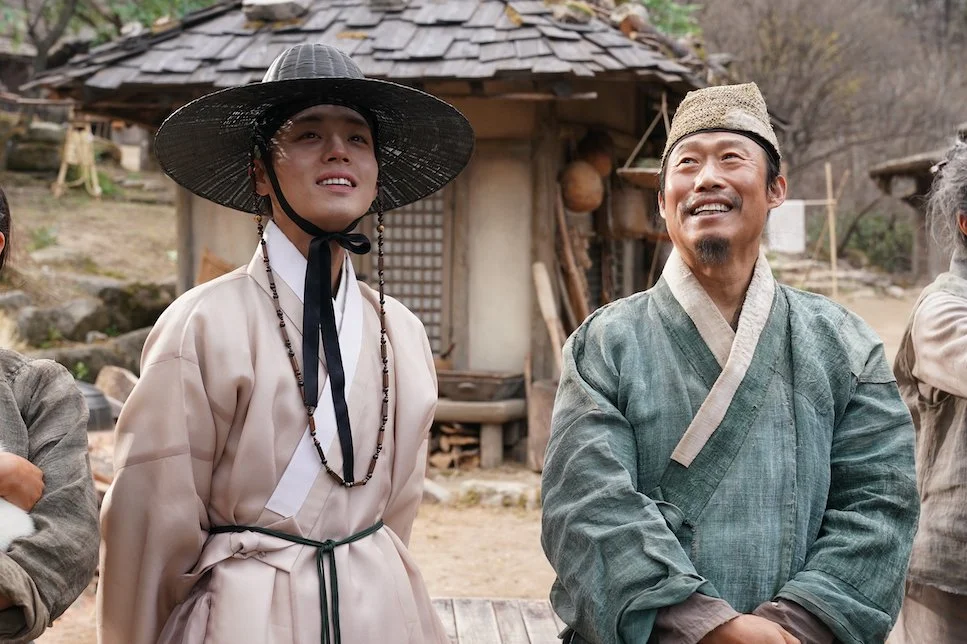
Never underestimate an Idol
After the opening salvo of backstabbing and usurping, the film gets down to business. We meet Eom Heung-do (Yoo Hae-jin, Confidential Assignment 2: International, Exhuma), a village chieftan and bit of a bumbler (it’s Yoo, so of course he’s a bit bumbly) in far off northeast Cheongnyeongpo, a valley in what’s now Gangwon Province. It’s 1457 and Eom is having trouble feeding his people, which he hopes to remedy by following a neighbouring village’s example: Lure a rich, exiled noble to the village and reap the rewards of taking care of that guy. When capitol big shot and obviously corrupt Han Myeong-hoe (Yoo Ji-tae, 70 credits and he’s eternally the kidnapper in Park Chan-wook’s Oldboy) shows up and decides this village is as good as any, he sends Lord Nosan, AKA the rightful Joseon King Danjong, AKA Yi Hong-wi (child actor and Wanna One boybander Park Ji-hoon) and his de facto nanny Mae-hwa (Jeon Mi-do) to stay there. At first, Heung-do, of course, has no idea his ward is the deposed king.
This kind of state meddling is all degrees of serious, but invariably Heung-do can’t keep his mouth shut about Nosan’s privilege and who does he think he is and so on, and the turned-up-to-11 comedy and shouting starts. Jang has coaxed this sort of overly-mannered, playing to the back row mugging from his actors before, and Yoo has proven adept at hamming it up, so the biggest chunk of the outsized Act II pivots on rice jokes, mistaken identity, mistaken suicide attempts, silly flattery etc, etc. Does it clang a bit? Sure, but The King’s Warden is also an idealised interpretation of a key stretch in beloved historical figure’s life – and without the highjinks the tragedy doesn’t land. Or so the thinking goes. News flash: That’s not true. More time put into Nosan’s character, beliefs and politics (rather than Park’s flawless skin) and how Heung-do impacted him and the tragedy of it all would still be crystal clear.
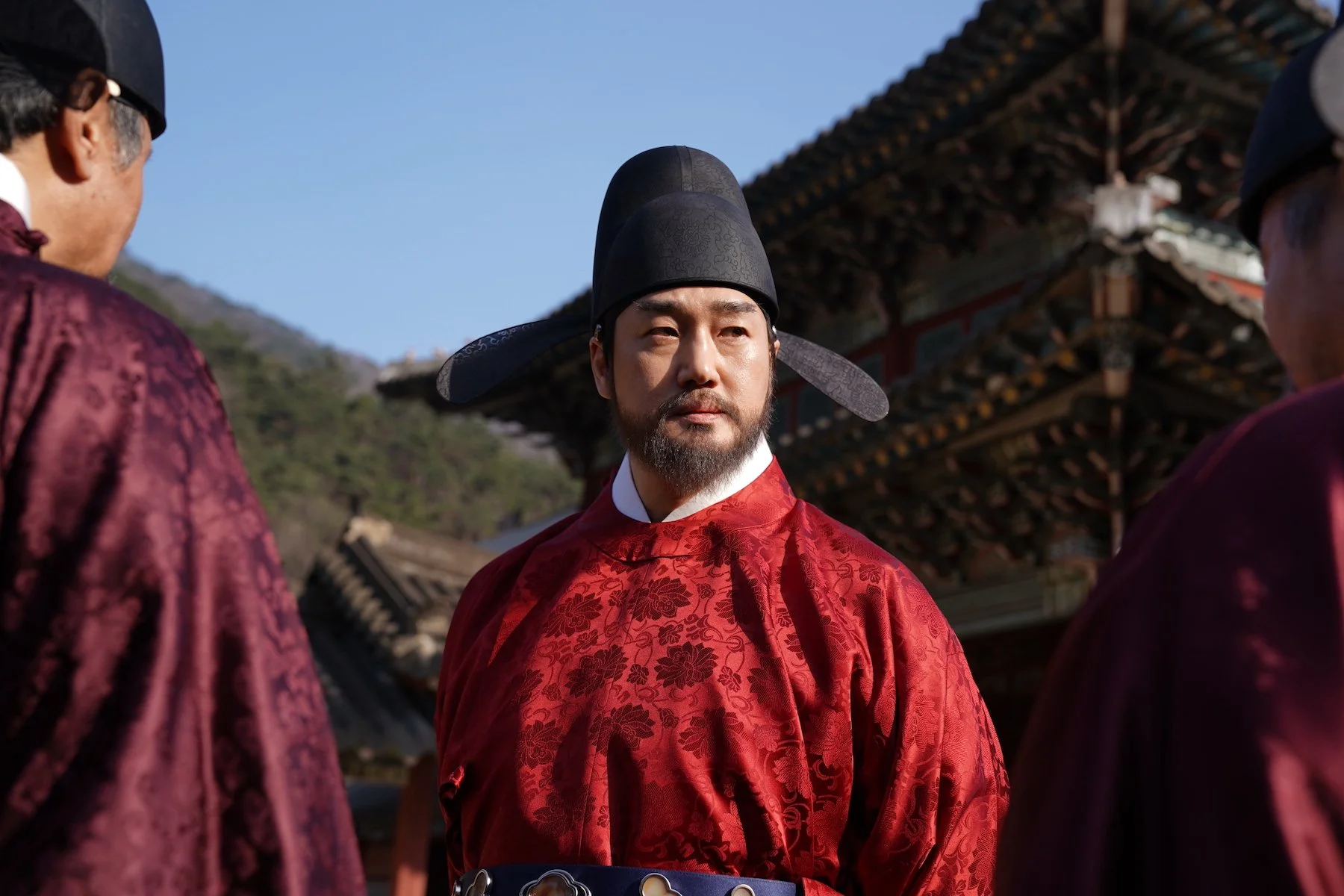
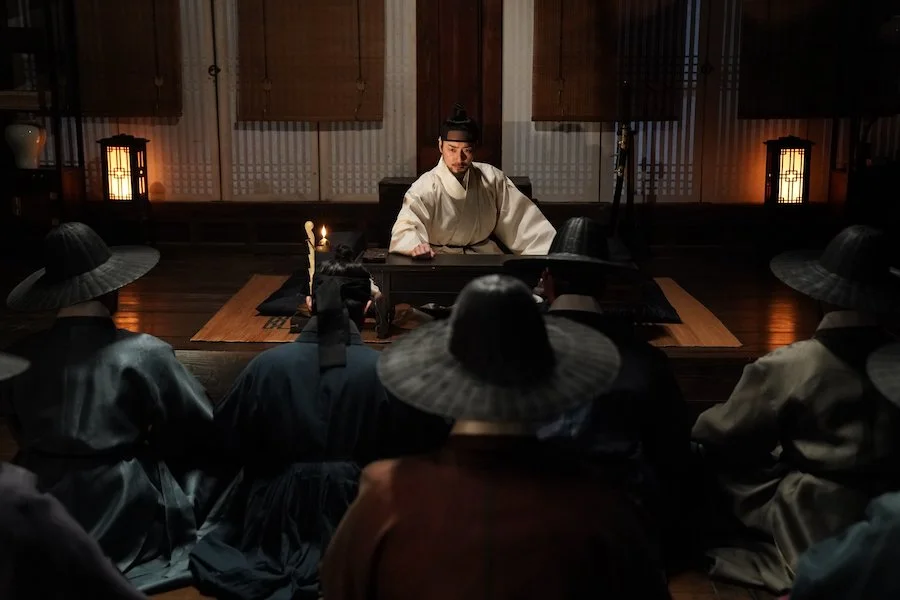
But like many OTT period dramas the structure of the story demands lightness take a dark and violent turn. While Heung-do is gaining Nosan’s trust, his son Tae-san (Kim Min) is also winning him over with his humility, smarts and an unfortunate inablity to exploit those smarts because of a lack of equal opportunity. The villagers, their stories and their generosity reignite the spark of righteousness that was almost dead in Nosan, inspiring him to make contact with rebel royal Keum-song (Lee Joon-hyuk), also forced into exile by Han, and conspire to retake the throne, threatening to commit treason in doing so. Then it all goes to hell.
Replace village chief with modern governor or mayor, and Nosan with any radical, anti-billionaire populist and hang those allegorical archetypes on the framework of an ultra-familiar, real life folk hero that’s been part of the collective memory since the dawn of time and you’re going to have a hit on your hands. Especially when it’s production quality is spit shined and your stars are the almost as popular Yoo (two of them) and an Idol (that’s a noun now). Hey, Jang read the room. The trouble comes when the film is just okay. Or fine. Or average. Or, sadly, unremarkable. Skipping the details of Danjong’s marriage at 14, the years he actually spent on a rocky throne, as well as the years in exile (months here) and the debate over his death isn’t even a problem; if you’re looking for history lessons in the movies I don’t know what to tell you other than hit the library. The problem is frittering away the opportunity to fully exploit the juiciness and resonance of Korea’s own Lear-ish tragedy in lieu of creating “content” (with the passion of a thousand fiery suns I hate that word) that’s Netflix ready. Danjong deserves better.