
Sex and the Single Girl
Author-turned-filmmaker Tam Wai-ching barrells towards auteurship with her sophomore film.
Someone LIke Me
Director: Tam Wai-ching • Writer: Tam Wai-ching
Starring: Fish Liew, Carlos Chan, Alice Lau
Hong Kong • 1hr 54mins
Opens Hong Kong November 27 • III
Grade: B
It should really come as no surprise that writer-director Tam Wai-ching’s complex drama-romance (?) Someone Like Me | 像我這樣的愛情 got slammed with a Cat III rating. There is nothing ratings boards hate more than female pleasure. Rape as a useless plot point? Have at it. Context-free graphic violence? Go nuts. But if a woman is getting her jollies, at her choice, for shits and giggles we just can’t abide that. The MPAA in the US had an entire documentary dedicated to its pinched butthole on the subject (This Film is Not Yet Rated, find it).
So Tam’s decision to begin Someone Like Me with a quiet, intimate sequence in which Mui (Fish Liew Chi-yu, Pavane for an Infant) explores the good times to be found in her own body it’s a brave choice. Doubly so when you consider that the subject of the film, Mui, is a mostly happy, largely independent woman that’s lived with cerebral palsy her entire life. Lived well, mind you – shocking, I know – with a tight circle of friends and a robust career as an artist. Semi-verbal with the use of one hand, Mui as a character has what we call a life, and at the beginning of the story, some of that life is being dictated for her, against her will. This is one of those movies that holds up a critical mirror to our attitudes about how much autonomy we truly want to grant people who are disabled and women, and as sophomore filmmaker Tam sees it, we’re about as uptight as those ratings boards. Unfortunately that Cat III is going to shrink the film’s audience, but then again, it may not be the under-18s that need to chill.
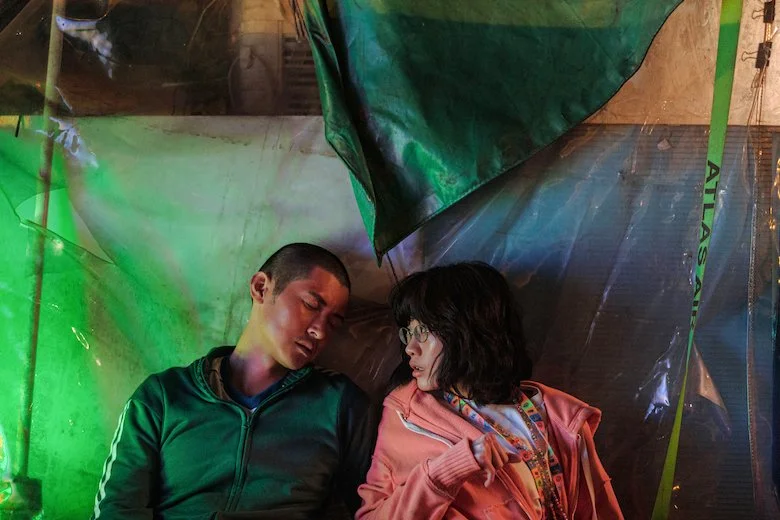
Yes, someone like her
Tam’s first film was the Carina Lau Ka-ling-starring In Your Dreams, an equally thorny story about a student that becomes romantically obsessed with his substitute teacher. Someone Like Me is a leaps and bounds level directorial progression over that film, and Tam’s voice is even clearer this time around. Tam certainly knows how to tell a story; she cut her movie teeth co-writing glossy, big budget films like Benny Chan’s The White Storm and Dante Lam’s Operation Mekong, not exactly nuanced character studies, but possessed of aggressive forward momentum. Someone Like Me is efficient and thought-provoking, but it also gives in to its mainstream temptations late in the game. It’s not enough to dull its edge or lose the plot, but it’s a curious turn.
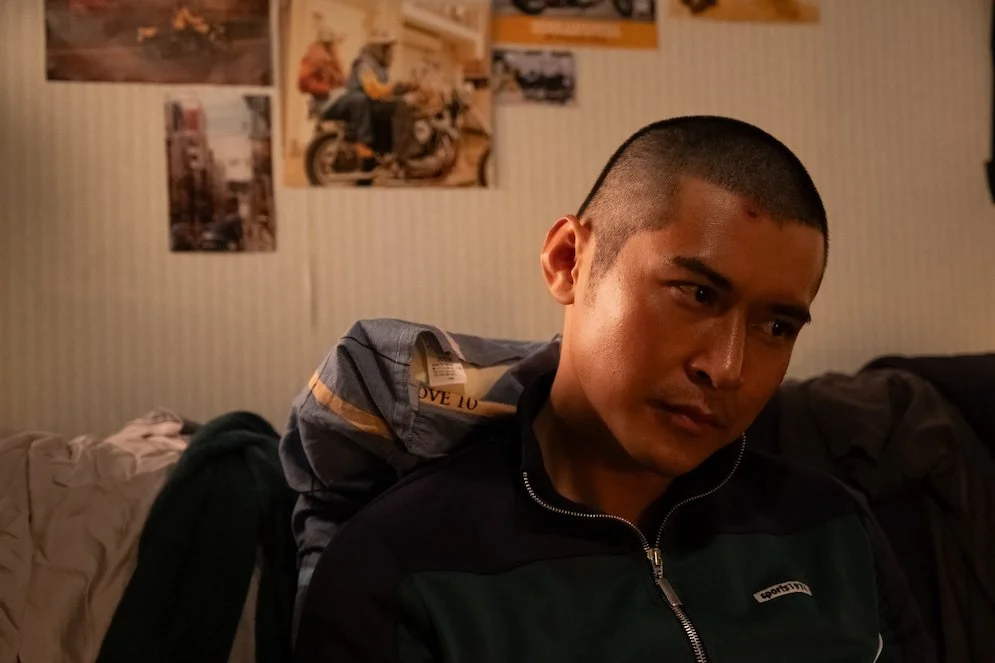
After watching Mui practise her drawing skills and hanging out with fellow palsy posse Sun and Joe, and of course masturbating, it turns out her curiosity is a last ditch effort to feel like a “whole” woman: her mother (Alice Lau Nga-lai) is getting busy scheduling a hysterectomy for Mui – Mui’s wishes be damned – to avoid the inconvenience of two more decades of periods. Shortly after Mui finds out, she meets Eva (Polly Lau Yeuk-bo), a woman who worked with sex volunteers for the disabled in Japan and is starting a similar programme in Hong Kong. She takes Mui as a client and introduces her to Ken (Carlos Chan Ka-lok, The Goldfinger), a dishy restaurant worker with his own demons. You can well imagine where this goes given Mui’s inexperience with relationships and Ken’s messy life.
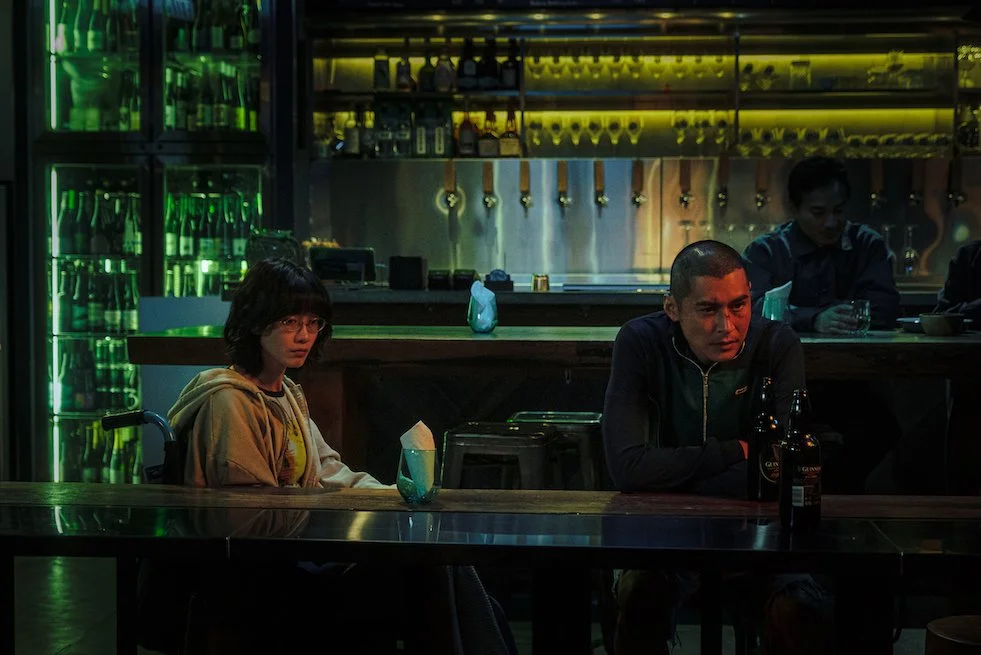
The comparisons to Lee Chang-dong’s Oasis, Ben Lewin’s The Sessions and even Jacques Audiard’s Rust and Bone are likely to arise, because any time someone who’s not “normal” or “complete” wants sex it’s a whole thing. But Tam has more on her mind than just awakening sexuality. Someone Like Me is also about agency and identity, and what it means to navigate the world, to navigate Hong Kong, as a person with a disability; in flashback Ken’s sister (Kate Yeung Kei) demonstrates another angle on the issue, illuminating Ken’s insecurities. To suggest it’s frustrating and lacking dignity is only part of it. This is where Liew steps in with a sensitive and layered performance that makes us understand Mui, recognise her and empathise with her. On more than one occasion you may feel like grabbing her and pleading with her to avoid the poor choices we can all see coming, but it’s hard to dispute her right to make the same poor choices as every other woman. Tam and Liew never reduce Mui to a symbol. But in the third act Tam gives in to some unnecessary melodrama that diverts attention from Mui’s road to self-determination and her eye-opening connection with Ken, which form the far more engaging backbone of the story. Luckily, the ambiguous closing frames reclaim most of that attention.