
MOve over Hirokazu Kore-Eda. Sho MIyake makes an argument for himself as one of japan’s best working filmmakers.
Two Seasons, Two STrangers
Director: Sho Miyake • Writer: Sho Miyake, based on the manga by Yoshiharu Tsuge
Starring: Shim Eun-kyung, Shinichi Tsutsumi, Yuumi Kawai, Mansaku Takada, Shiro Sano
Japan • 1hr 29mins
Opens Hong Kong December 18 • I
Grade: B+
Sho Miyake has an uncanny knack for creating quiet, observational drama that doesn’t put you to sleep. No, truly. That’s a gift. He knows when to stretch out a moment, when to hold a shot, when to move on and when to let the space tell the story. Those are just a few of the reasons the COVID boxing drama Small, Slow But Steady and the OCD characters of All the Long Nights packed such a punch. Miyake’s films are purpose-built to be mulled over after you leave the theatre and revel in the idea of ideas. His Locaro Golden Leopard-winner Two Seasons, Two Strangers | 旅と日々 is less story-driven than his last two films; not much happens in the way of action yet it’s still a movie of contemplation. That also doesn’t make it any less emotionally insightful than his earlier work.
Based on two manga by cult artist Yoshiharu Tsuge, A View of the Seaside and Mr. Ben and his Igloo, rolled into and intercut into one story, Two Seasons, Two Strangers fixates on isolation, either by choice or by circumstance, and the ironic need to connect to other people. Visually (with help from regular cinematographer Yuta Tsukinaga), in the characters and in what narrative momentum there is, Two Seasons, Two Strangers constantly sets up those fundamental notions in opposition to each other and then turns around to contrast how they nonetheless connect to each other. It’s almost a sleight of hand that Miyake has, at this point, mastered.
Horror, as seen by writers
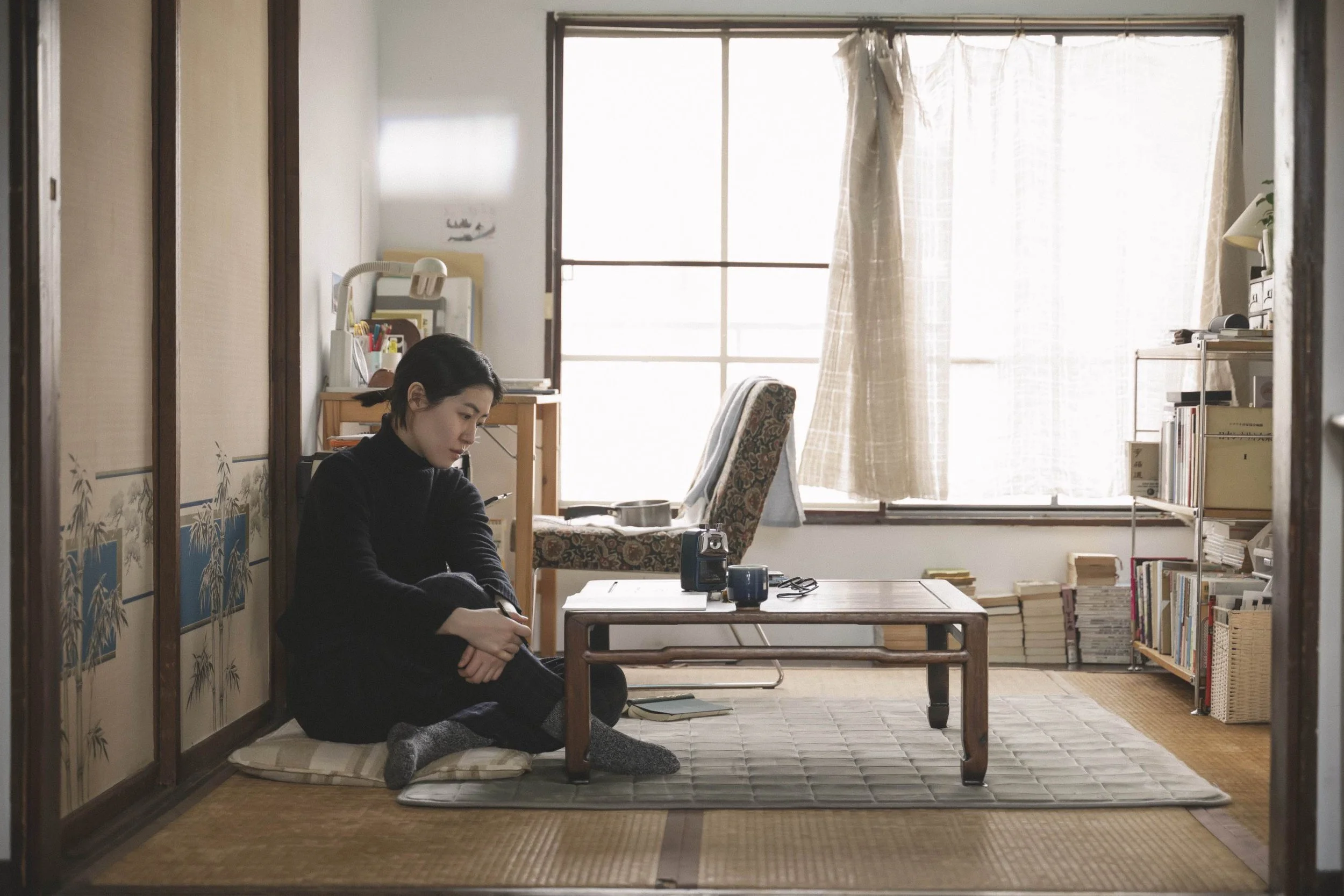
Two Seasons begins with Lee (Shim Eun-kyung, The Journalist, Sunny), a catastrophically blocked Korean writer living in Japan and struggling with her next screenplay. The initial scribblings are the basis for the first part of the film, an interlude about Nagisa (Yuumi Kawai, Plan 75, Teki Cometh) and Natsuo (Mansaku Takada, Pachinko) meeting on a summertime beach. They don’t say an awful lot, and when they do they tend to disagree, yet somehow form a bond strong enough to see them through a rager of a typhoon. Breaking up their story, we get back to Lee and a filmmaker taking part in a Q&A at a school where the film about Nagisa and Natsuo on the beach (within the film) has been screened; Lee wrote the script. Later on she tells her producer and agent (maybe), and a film professor Uonuma (Shiro Sano) she’s still having issues writing, which leads to Two Seasons’ seamlessly woven in second part.
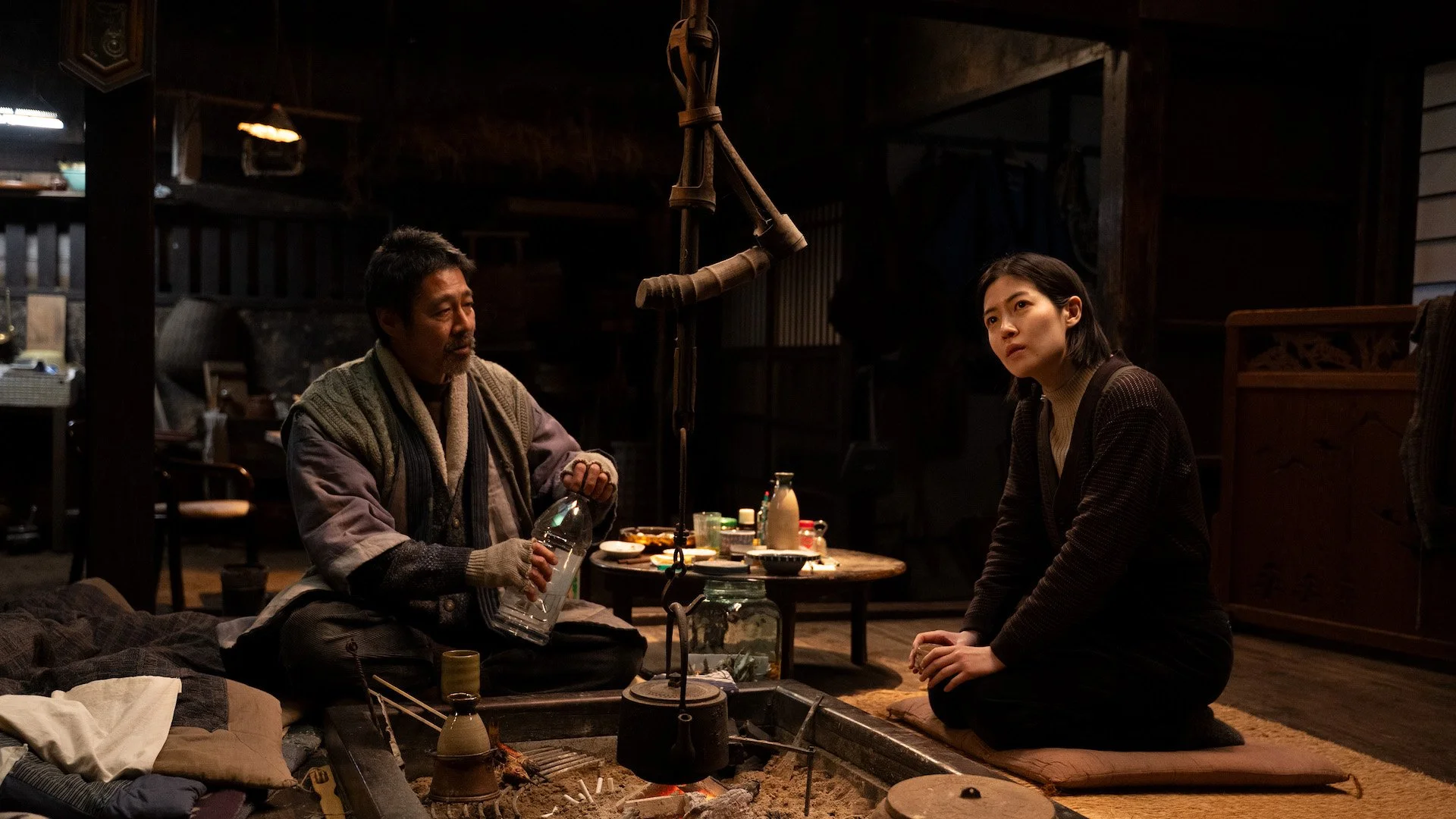
Thinking a getaway to a secluded location that will force her to focus on writing is the way to fix her writer’s block, Lee travels to northern Japan and promptly gets stuck there with no place to stay thanks to a blizzard that came out of nowhere. She winds up staying at a ramshackle inn of last resort run by Benzo (veteran Shinichi Tsutsumi), an out-of-the-way dump with no heat and bad food (made by Benzo). But like the strangers on the beach, Lee and Benzo both, erm, thaw out emotionally during a few seemingly random discussions about art, and a side trek to his ex-wife’s house and a later run-in with the local constabulary.

Two Seasons, Two Strangers is a singularly, and quite intentionally, layered film, constructed with elegant symmetry – the mirroring of the summer rain and winter snow, the two women travelling to find something without knowing exactly what they’re looking for, and of being strangers in proverbial strange lands – that really only comes into sharp relief when you think back on it. Every Academy ratio shot has an intimate point to make, and each of the actors’ quietly affecting performances echoes with loneliness, but also some wry humour and earned wisdom. Miyake comtemplates the distances between us, creativity and authorship, our connection to or disconnection from nature and the unspoken ways in which we can inspire each other, but never in a way that feels as if he’s bringing a cudgel down on our heads. He luxuriates in watching Lee (if there’s a “main character” it’s her) shake off both her personal and professional stagnation, which in many ways can be said of Benzo too, the cranky old guy in the boondocks that’s let his traditional inn fall into disrepair because he’s still stewing over a failed relationship. There’s not a lot to say about Two Seasons, Two Strangers because there’s not a lot of plot, which too often has usurped theme and thought in movies these days. Two Seasons, Two Strangers is a film you let wash over you, and remind you that not all storytelling demands a conventional story.