
Feeling So-so
Sometimes it’s possible to be a little too lyrical and painterly.
A New Dawn
Director: Yoshitoshi Shinomiya • Writer: Yoshitoshi Shinomiya
Starring [Japanese]: Riku Hagiwara, Kotone Furukawa, Miyu Irino, Takashi Okabe
Japan • 1hr 20mins
Opens Hong Kong April 16 • IIA
Grade: B-
A New Dawn | 花緑青が明ける日に is a very pretty film. The solo debut by Makoto Shinkai (Your Name.) and Tomonori Sudo (The Garden of Sinners: Future Gospel) artist Yoshitoshi Shinomiya is a lightweight fable that has an almost anti-anime, watercolourish aesthetic to it that sets its apart from the industry’s giants; it’s distinct enough to have earned a slot in competition at Berlin a few months back. It comes by that watercolour vibe honestly, as before jumping into animation Shinomiya studied painting. And it must be said, it makes A New Dawn visually engaging, which is a good thing. Because despite the slight running time and environmental message, the film struggles to get across the finish line. There’s lyrical, low-key and thoughtful, then there’s coma-inducing. A New Dawn is a little bit of both.
The film revolves around the reunion of Keitaro Obinata (Riku Hagiwara), essentially a shut-in living in his missing father Eitaro’s (Takashi Okabe) old fireworks factory in Niura City; his older brother Sentaro, who everyone calls Chicchi (Miyu Irino), who now happens to be on Niura’s city council; and their childhood pal Kaoru Shikamori (Kotone Furukawa), living in Tokyo and working as a projection mapper, whatever that is. Keitaro’s neighbours, nearby bizniz folks and city councillors come to the 300-year-old Obinata Fireworks one day to warn him that he’s going to be forcibly evicted from the property in 48 hours or some such and he better clear out, which prompts the visit from Chicchi and Kaoru, the reminiscing and one last shot at completing Eitaro’s mythic, positively cosmic Shuhari firework before it’s too late.
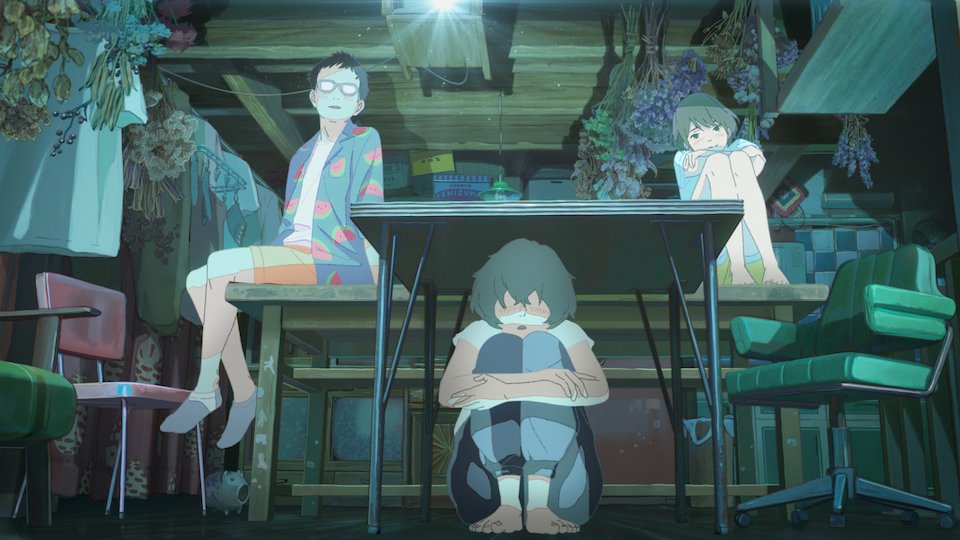
Most of the action
Once again, the primary story rests on a trio of young adults and their ongoing fixation on their common childhood (looking at you, 5 Centimeters Per Second), and a moment that, I guess, was so defining they refuse to leave it behind. There’s an “event” from the past that Shinomiya (who’s also writer) teases out as a world-altering moment that sent Kaoru off to Tokyo as soon as was humanly possible and drove a wedge between the brothers; Chicchi is working for The Man. Their mother, notably descended from pirates, has been dead for years, and Eitaro vanished after giving up on the viability of the mysterious Shuhari. Shinomiya props up the thin emotional story with more relevant and resonant B-plots that touch on gentrification, urban decay and development, and climate change, which are fundamentally more engaging than the central examination of the loyalties of youth and past trauma – and really, can we all start being a bit more judicious with the use of this word? Since the Obinata patriarch vanished, Keitaro has been locked in the old building trying to finish the Shuhari that’s now a symbol of the legacy Keitaro was forced to inherit.
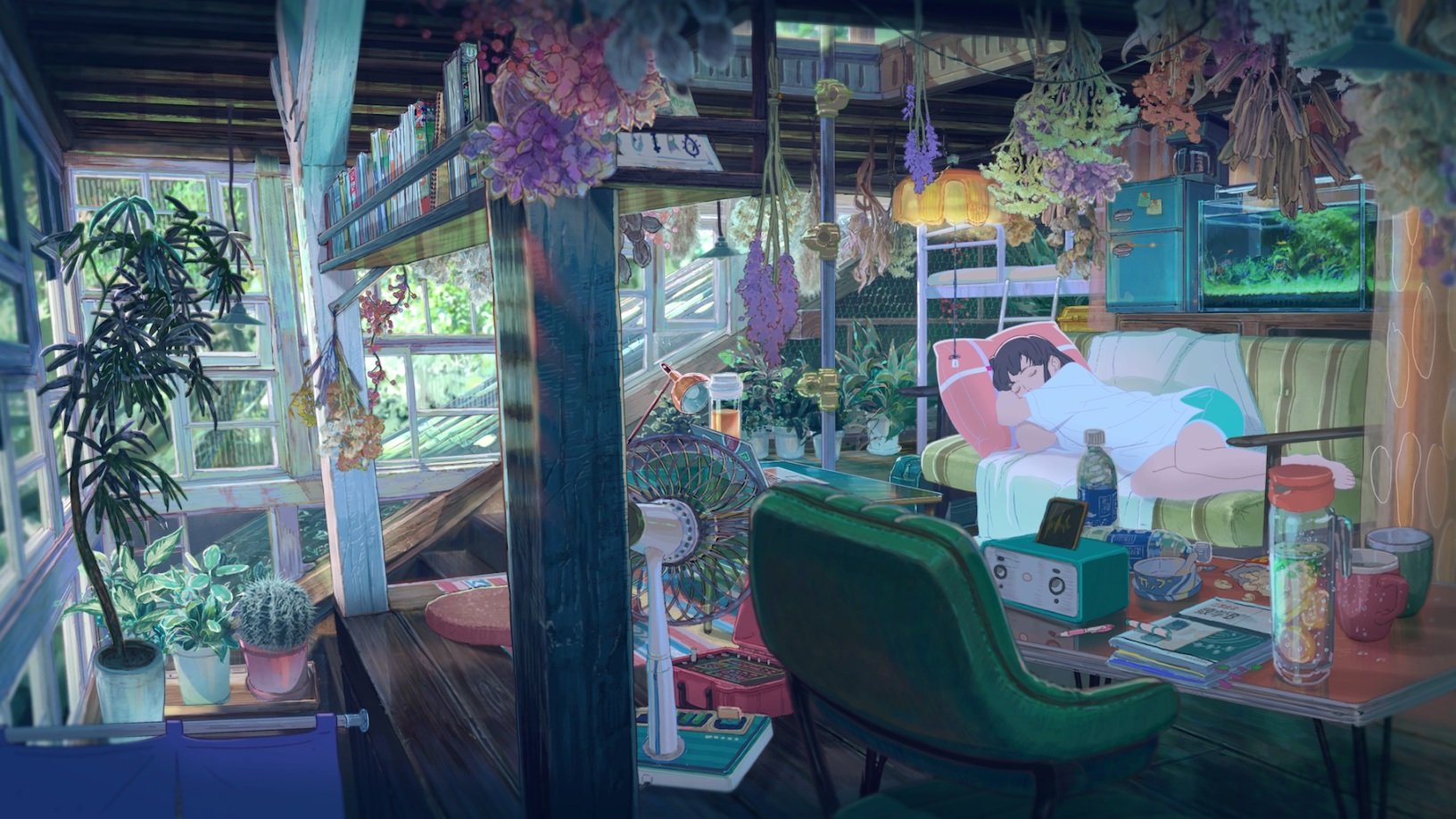
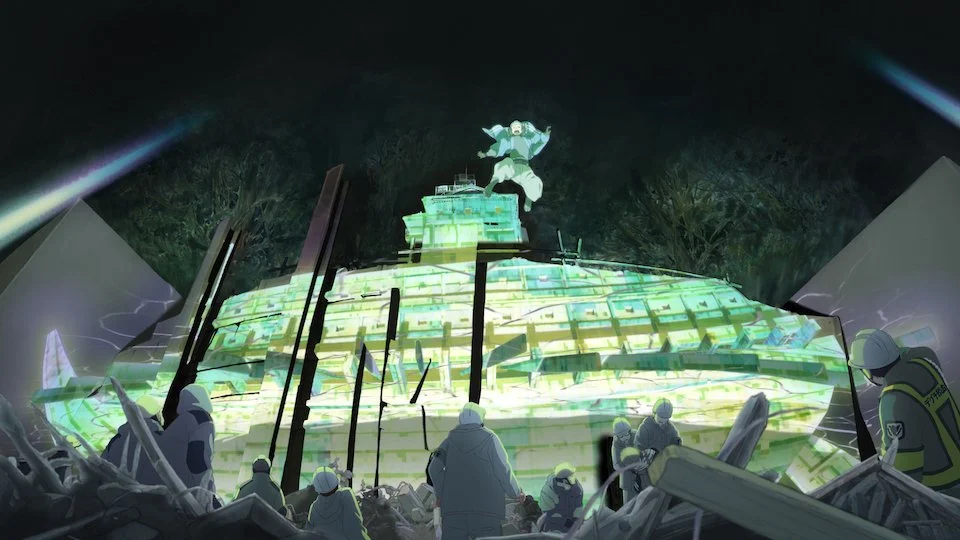
Ironcially, A New Dawn’s truncated running time makes the consciously slow pace feel like an eternity at times, and it also makes for some cluttered storytelling, with so much going on and so much to say and not doing any of it particularly well. Did I mention it also tries to wrestle with the loss of heritage and tradition in modern Japan? Yeah it’s a lot, and the characterisations and connections are tenuous at best. The relationships between Keitaro, Chicchi and Kaoru are barely sketched out, and it’s almost as if Shinomiya assumed that anyone watching would be so familiar with the form they’d fill in their own blanks. But thankfully it does have its art going for it; Shinkai hired Shinomiya for a reason. Complementing the watercolour is a pastel palette that softens the images, and dashes of stop-motion mixed in with the retro hand drawn 2D animation. The lush green of Niura of the past makes way for the solar panels and parched land of the present, a graceful bit of unspoken commentary because, as they saying goes, a picture is worth a thousand words. The muddled script makes it difficult to guess what Shinomiya might be suggesting by the trippy ending, one that recalls Kenichiro Akimoto’s All You Need Is Kill, but at least A New Dawn goes out with a bang.